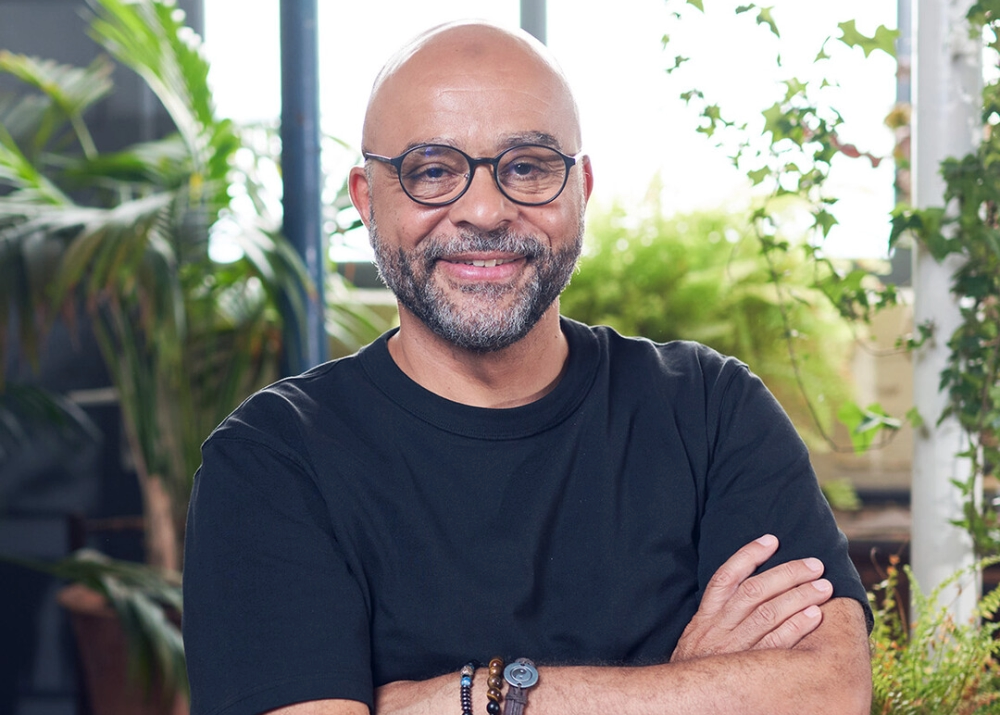
Some leaders build their authority through success. Mo Gawdat built his through the collision of enormous success and unbearable loss — and what he chose to do with that collision.
By his own account, Gawdat had already “made it” by his late twenties: a rising career across some of the world’s biggest technology companies, financial comfort, the external markers of a life going right. And still, by his own admission, he was deeply unhappy. That contradiction — success without peace — became the question he spent the next decade trying to answer, using the only tools he fully trusted: logic, systems, and engineering.
A Career Built Inside the World’s Biggest Tech Companies
Gawdat’s path started at IBM Egypt as a systems engineer, before moving through NCR and then Microsoft, where he spent years across emerging markets. In 2007, he joined Google, where he helped launch a significant share of the company’s operations across new markets worldwide. That work eventually led him to Google X — the company’s famed “moonshot factory,” home to projects like self-driving cars and high-altitude internet balloons — where Gawdat rose to Chief Business Officer.
It’s the kind of career trajectory most executives spend a lifetime chasing. For Gawdat, it was the backdrop to a much harder personal experiment: could happiness itself be engineered, the same way a product or a business could?
The Loss That Tested Every Theory He Had
In 2014, Gawdat’s son, Ali, died unexpectedly during what should have been a routine medical procedure. It is, without question, the defining moment of his story — not because of the tragedy alone, but because of what he did with it. Seventeen days after Ali’s death, Gawdat began writing. The happiness framework he’d been developing for years was no longer theoretical. It was the only thing standing between him and despair, and he had to find out if it actually held.
It did. That writing became Solve for Happy: Engineer Your Path to Joy, a book dedicated to Ali that reframed happiness not as luck or circumstance, but as something closer to a solvable equation. It launched what Gawdat calls his mission — One Billion Happy — an ongoing effort to bring that framework to as many people as possible.
From Engineering Happiness to Engineering Trust in AI
Gawdat didn’t stop at happiness. Drawing directly on his years inside Google X, he turned his attention to artificial intelligence, warning early and clearly about the pace at which the technology was advancing in Scary Smart. He followed it with That Little Voice in Your Head, on managing the mind’s own internal noise, and Unstressable, on building resilience against modern life’s compounding pressures. Now, his focus sharpens further with Alive, a book confronting what it actually means to build a meaningful human life in a world increasingly shaped by artificial intelligence.
An Approach That Refuses to Separate the Personal From the Professional
What makes Gawdat’s story land differently in a business context is that he never pretends the two lives — corporate executive and grieving father — are separate. His frameworks for happiness, for handling AI disruption, for managing the mind under pressure, are all extensions of the same instinct: take something enormous and overwhelming, and break it down into a system a person can actually act on.
He now serves as Chief AI Officer at Flight Story, hosts the podcast Slo Mo, and continues building ventures at the intersection of technology and human wellbeing. But the core of his authority was never his titles. It was his willingness to be publicly, rigorously honest about what success actually costs — and to hand others the same engineering mindset that helped him survive the worst thing that ever happened to him. For business leaders navigating their own versions of disruption, that honesty is the real credential.