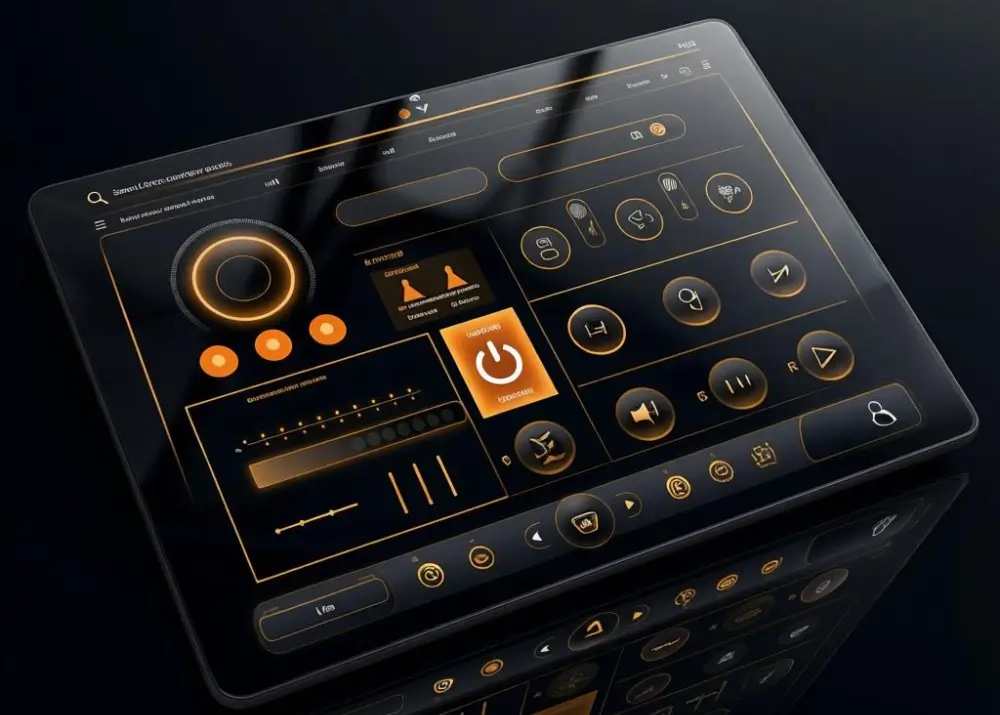
Ask a designer what they do, and ten years ago you’d have gotten an answer about screens. Layouts, colors, buttons, the placement of a menu, the weight of a headline. Ask that same question today, and the honest answer is getting harder to give, because the thing designers actually spend their time deciding has quietly moved somewhere else entirely.
It moved to judgment.
Not the kind of judgment that picks a font. The kind that decides what a system is allowed to do without asking first, what it should surface versus bury, what deserves a human’s eyes before it goes any further. That’s a different job than the one design schools trained people for. And it’s arriving faster than most organizations are ready to admit.
The Part That Got Easy, and the Part That Didn’t
Here’s what nobody in the industry likes to say out loud: a huge share of what design work used to consist of has become trivial. Laying out a screen, generating a handful of visual directions, producing clean, competent, forgettable interfaces — a machine can do that now, in the time it takes to make a coffee. If your value as a designer was tied to how fast you could push pixels, that value just evaporated. Not slowly. Almost overnight.
But here’s the part that got harder, not easier: knowing which pixels were worth pushing in the first place.
Because a system that can generate anything instantly still needs someone to decide what it should generate. What information a user actually needs to see in this moment, versus what would just clutter their thinking. What should require a deliberate, visible confirmation, and what’s safe to happen quietly in the background. What the system should be allowed to infer about a person, and what it has no business assuming at all. None of that is a visual problem. It’s a judgment problem, dressed up in a visual outcome.
Taste Was Always There. Now It’s Exposed.
Designers have always talked about taste, usually in a slightly embarrassed way, like it was too subjective to defend in a business meeting. That’s changing fast, because taste is no longer a nice-to-have layered on top of execution. It’s becoming the entire job.
When a system can produce a hundred competent versions of anything in seconds, the question stops being “can we build this” and becomes “which of these should exist, and why.” That’s a judgment call, and judgment calls are exactly the kind of decision that resists automation, because they require a point of view. A machine can optimize toward an objective you give it. It cannot tell you which objective is worth optimizing for, and it certainly can’t tell you when the technically correct answer is still the wrong one for a real human being sitting in front of a screen, trying to get through their day.
That’s taste. Not decoration. Discernment.
Accountability Doesn’t Automate
There’s a second shift happening alongside taste, and it might matter even more: accountability.
When software followed fixed rules, accountability was relatively simple to trace. Someone wrote the logic, someone approved it, and if it broke, you could usually find the seam. AI-driven systems don’t work that way. They make probabilistic calls, they behave differently depending on context, and their reasoning isn’t always something a person can fully unpack after the fact. Which means someone, somewhere, has to take responsibility for what the system does on a user’s behalf, before it does it — not after something goes wrong.
That responsibility is landing, whether the industry planned for it or not, on the people who shape how these systems present themselves to humans. Not because designers write the algorithms. Because designers decide how much control a system reveals, how clearly it explains itself, and how easy it is for a person to say no. A brilliant model wrapped in a careless interface isn’t a technology failure. It’s a judgment failure, and it will get treated as one, by users and regulators alike.
This is uncomfortable for an industry that spent years fighting for a seat at the table by pointing to metrics and mockups. Judgment doesn’t show up cleanly on a slide. You can’t screenshot accountability. But it’s exactly the kind of value that survives automation, because it’s the one thing a system can’t generate on its own behalf.
What This Actually Demands of Leaders
For business leaders building AI-driven products, the practical implication is uncomfortable and simple at the same time: hiring for execution speed is now hiring for the wrong thing. The designers worth paying for are the ones who ask better questions about what a system should do, not the ones who can produce more screens per week. That’s a hard shift for organizations built around output, because judgment doesn’t scale the way production used to. You can’t just add more people to get more of it. You have to protect the people who already have it, and give them the authority to say no.
The interface was never really the product. It was always just the visible edge of a much bigger decision about what a piece of technology is allowed to do to, or for, the person using it. AI didn’t create that truth. It just stripped away everything that used to hide it.
What’s left, once the pixels take care of themselves, is the only part of design that was ever really the point.