Technology has transformed nearly every aspect of modern life. Communication became mobile. Commerce became digital. Healthcare became data driven. Yet one category remained surprisingly unchanged: physical recovery and wellness.
Massage therapy, recovery routines, and body maintenance continued to rely heavily on inconsistency, limited accessibility, and fragmented experiences. While consumers embraced wearable devices, personalized health tracking, and AI powered fitness systems, recovery itself often remained difficult to standardize or scale.
Eric Litman saw this gap long before most people recognized it as a market opportunity.
A serial entrepreneur with a career spanning enterprise technology, mobile advertising, venture capital, and robotics, Litman has spent decades building companies at the intersection of technology and human behavior. His entrepreneurial path began unusually early. Raised in Saint Thomas in the U.S. Virgin Islands, he graduated high school at 15 before eventually working at NeXT, Steve Jobs’ technology company, while still in college.
That early exposure to visionary product thinking would shape how he approached innovation for the next three decades.
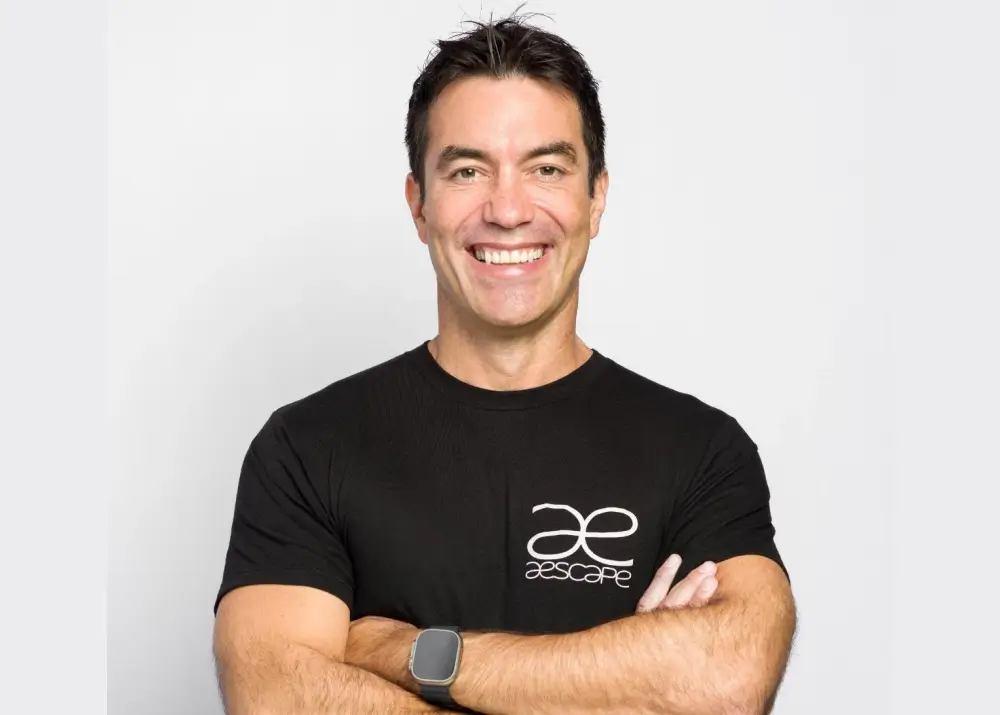
Today, as founder of Aescape, Litman is leading one of the most ambitious experiments in wellness technology: combining robotics, AI, and human centered design to create fully automated massage and recovery experiences designed to help people feel and perform better.
His work reflects a broader shift taking place across the wellness industry itself. Recovery is no longer viewed as a luxury or occasional indulgence. Increasingly, it is becoming part of how people think about sustainable performance, longevity, and preventative health.
From Internet Infrastructure To Human Performance
Before entering wellness technology, Litman built a reputation as a repeat entrepreneur across multiple waves of technological change.
After working in secure network systems for the U.S. Department of Defense, he co founded Proxicom, one of the early internet professional services companies during the first generation of web transformation. The company later went public on NASDAQ before being acquired during the dot-com era.
He later founded Medialets, a mobile advertising and analytics platform that helped brands navigate the shift toward mobile first media consumption. The company was eventually acquired by WPP, one of the world’s largest advertising organizations.
Across each venture, a pattern emerged.
Litman consistently positioned himself at moments where technology was beginning to reshape human behavior at scale.
The transition from desktop to internet.
The transition from internet to mobile. And now, the transition from manual wellness to intelligent recovery systems.
Building Aescape
The idea for Aescape emerged from a deeply personal frustration.
Litman experienced recurring physical pain and found traditional massage experiences inconsistent, difficult to schedule, and hard to personalize. Instead of viewing the issue as a service inconvenience, he saw it as a systems problem waiting to be solved through technology.
Founded in 2017, Aescape combines robotics, artificial intelligence, and body mapping technology to deliver personalized massage experiences designed to adapt to each individual user.
But Litman’s vision extends beyond robotics alone.
He frequently emphasizes that the future of wellness will not be built through isolated health trends or disconnected products. It will emerge through integrated systems that combine personalization, data, and human performance science.
This thinking aligns with broader industry trends. Global wellness markets continue expanding rapidly as consumers increasingly prioritize recovery, preventative health, stress reduction, and longevity focused lifestyles.
At the same time, AI powered personalization is transforming how individuals interact with fitness, health, and wellbeing technologies.
Aescape sits directly at the intersection of these movements.
Human Centered Technology
One of the most distinctive aspects of Litman’s leadership philosophy is his insistence that technology should amplify human wellbeing rather than replace human connection.
In conversations about robotics and AI, public narratives often focus on automation replacing people. Litman frames the conversation differently. He views intelligent systems as tools that can help humans perform better, recover faster, and extend long term quality of life.
This perspective reflects a broader shift occurring across technology leadership itself.
The most influential founders today are increasingly being evaluated not simply on technical innovation, but on how responsibly and meaningfully they integrate technology into human experiences.
For Litman, the future of wellness is not about removing humanity from care. It is about creating systems that make recovery more accessible, personalized, and scalable.
The Future Of Wellness Technology
As AI continues reshaping industries, wellness technology is emerging as one of the next major frontiers.
Consumers are becoming more proactive about health optimization. Recovery is increasingly viewed as essential to long term performance rather than reactive self care. Data driven health monitoring is moving from elite athletes to mainstream users.
Litman believes these trends will fundamentally reshape how people think about longevity and daily wellbeing.
His recent focus on Healthspanners, a longevity centered initiative, reflects that expanding interest in preventative and data informed health systems.
At the center of his work remains a consistent belief: technology becomes most powerful when it solves deeply human problems.
Whether building internet infrastructure, mobile advertising systems, or AI powered wellness platforms, Litman has repeatedly positioned himself at the edge of emerging behavioral shifts before they become mainstream.
His career offers a larger lesson for modern innovation leaders.
Industries evolve when leaders stop viewing technology as the destination itself and start viewing it as a tool for improving how people live, recover, and perform.
Because ultimately, the future of wellness may not be defined by how advanced technology becomes.
It may be defined by how human it allows people to remain.