Organizations are investing heavily in AI-powered tools to capture knowledge.
Meetings are recorded. Conversations are transcribed. Processes are documented automatically. Information is organized and made searchable in ways that were unimaginable just a few years ago.
These advances are creating tremendous opportunities for businesses seeking to preserve and transfer organizational knowledge.
Yet one important question remains: Can AI really capture what an organization knows?
The answer is yes, but only up to a point.
AI is becoming increasingly effective at capturing information. Knowledge transfer, however, is much more than information capture. Understanding that distinction may determine how effectively organizations preserve what they know in the years ahead.
What AI Does Exceptionally Well
There is no question that AI is transforming how organizations collect and organize information.
AI can process large amounts of data quickly and consistently. It can identify patterns, summarize conversations, create structure, organize content, and generate documentation far faster than most people.
These capabilities can significantly accelerate knowledge-transfer initiatives.
Organizations no longer need to start from a blank page. Instead of spending countless hours manually documenting information, teams can leverage AI to capture discussions, generate initial drafts, and organize knowledge in a way that is accessible and searchable.
This is a meaningful advancement. But it is only part of the picture.
The Difference Between Information and Knowledge
Many organizations assume that if a meeting has been recorded, a process has been documented, or a screen has been captured, knowledge transfer has occurred.
In reality, those activities often capture information, not knowledge.
- A screen recording can show someone where to click.
- A process document can explain what steps to follow.
- A transcript can capture what was said.
- What these tools often fail to capture is context.
- Why is the process designed that way?
- Why does one customer receive a different level of service than another?
- Why was a particular decision made years ago that still influences operations today?
- Why does an experienced employee handle certain situations differently than what is written in the procedure?
The answers to those questions often contain the most valuable organizational knowledge.
Knowledge transfer is not limited to work instructions or process documentation. It also includes judgment, experience, lessons learned, historical context, customer understanding, business rules, best practices, and organizational memory.
These elements transform information into understanding.
Where Human Expertise Still Matters
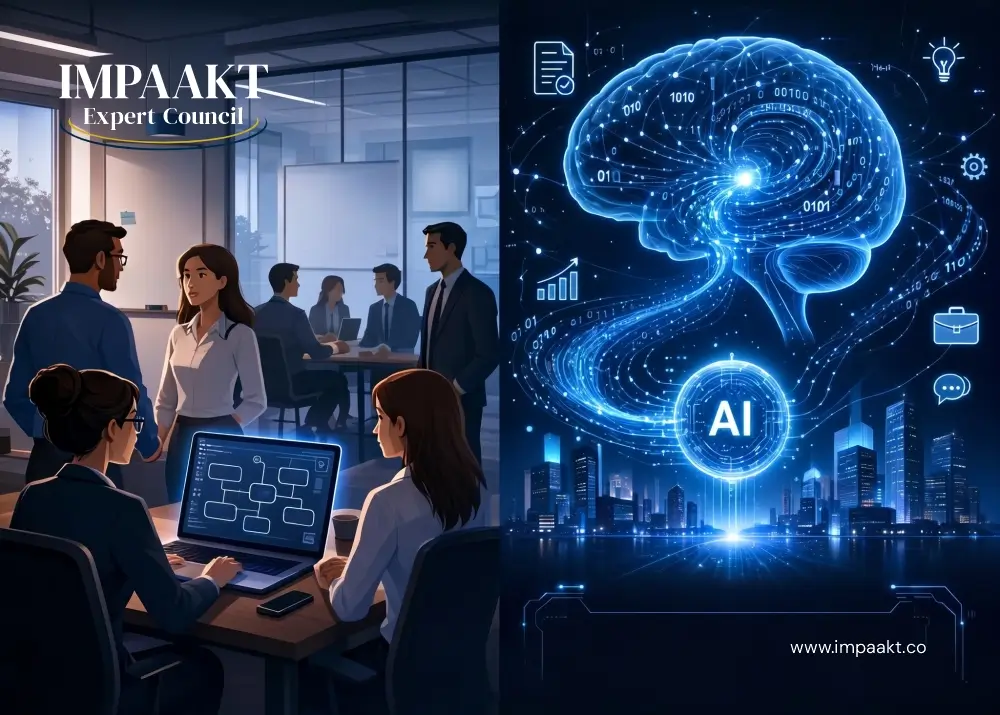
This is where human involvement remains essential. AI can ask questions. It can suggest areas for exploration. It can help identify patterns and gaps in information. But someone still needs to determine which questions matter.
Someone needs to challenge assumptions, identify blind spots, uncover exceptions, and explore the reasoning behind decisions.
Consider a process that appears straightforward on paper. AI may successfully document every step. However, an experienced employee may reveal that a long-standing customer requires a different approach because of a unique situation that occurred years ago.
Or they may explain that a particular approval step was added after a costly mistake taught the organization an important lesson.
Those insights rarely emerge from a simple recording or automated process capture. They emerge through conversation, exploration, and experience. They emerge when someone asks not only, “What do you do?” but also, “Why do you do it that way?”
That distinction is critical.
The goal of knowledge transfer is not simply to document activities. It is to preserve the understanding behind those activities.
The Future Is Human Expertise and AI Working Together
Some believe that AI will eventually automate knowledge transfer entirely.
I see the future differently.
As AI continues to improve, it will become an increasingly valuable partner in the knowledge transfer process. It will help organizations gather information more efficiently, identify gaps more quickly, and organize knowledge more effectively than ever before.
At the same time, human expertise will remain essential.
Knowledge-transfer professionals, leaders, and subject-matter experts will spend less time documenting information and more time uncovering context, validating assumptions, identifying what is truly important, and ensuring that critical organizational knowledge is preserved.
The future of knowledge transfer will not be defined by AI alone.
It will be defined by how effectively organizations combine AI capabilities with human expertise. Organizations that successfully combine both will gain more than better documentation. They will preserve the context, judgment, and organizational memory that make them unique.
Because the goal is not simply to capture what people do. It is to preserve the understanding that allows an organization to do it well.