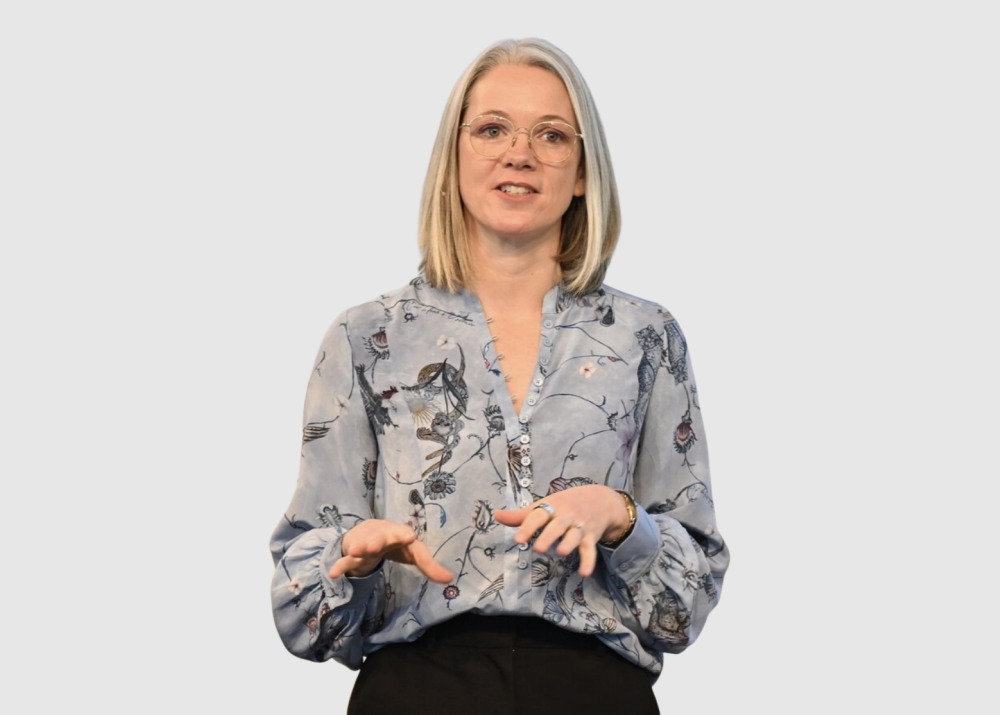
Depression doesn’t keep office hours. The worst moments often arrive at a time, when therapy offices are closed and help feels impossibly far away. Clinical research psychologist Alison Darcy recognized this gap after years of treating patients with eating disorders, watching people struggle in the void between sessions.
Her answer wasn’t another wellness app. It was something far more ambitious: an AI companion trained in cognitive behavioral therapy that could offer genuine support, anytime, anywhere.
The Unconventional Path to Digital Therapeutics
Darcy’s journey started at University College Dublin, where she studied psychology as an undergraduate. But instead of following the traditional clinical path, she made a surprising detour. She moved to London to work as a software developer at an investment bank, diving headfirst into the world of code and systems.
That combination proved prescient. When the investment bank was acquired during the dot-com crash, Darcy found herself at a crossroads. She chose to merge both worlds, working with a charity to support people with eating disorders using digital tools. This work, which began more than 20 years ago, included creating one of the first online support groups for people with eating disorders.
The work revealed something crucial: technology could extend care beyond the therapist’s office, but only if designed with real clinical rigor.
Building AI That Actually Understands
At Stanford, Darcy collaborated with AI pioneer Andrew Ng, leading his Health Innovation Lab in Computer Science. The question driving her research was direct: could artificial intelligence meaningfully help people with mental health conditions?
In her clinical practice, Darcy saw the same problem repeatedly. There was no continuity between leaving inpatient care and entering the real world. Patients left structured treatment environments and fell into a support vacuum. She also recognized that very few clinicians had appropriate training to treat conditions like anorexia nervosa, creating massive gaps in access to quality care.
She pioneered the use of online learning methods to train clinicians, but eventually realized the scale of change she envisioned couldn’t happen within academia’s constraints.
Woebot: More Than a Chatbot
In 2017, Darcy founded Woebot Health, introducing the world to what she describes as a “relational agent” rather than just another chatbot. When asked to describe how to design an AI companion to help people feel happier, Darcy references Spock from Star Trek for logic, Kermit the Frog for insight without lectures, and her late friend Eric Bayer for compassion.
The platform is grounded in cognitive behavioral therapy, one of the most evidence-based approaches in mental health. Research suggests Woebot can reduce symptoms of depression and anxiety in two weeks. But what sets it apart is the design philosophy: this isn’t therapy replacement—it’s support that fills the gaps.
A spokesperson notes that Woebot has now been used by around 1.5 million people Time. The company has raised $123.5 million via multiple funding rounds, enabling partnerships with healthcare organizations and businesses to expand access.
Recognition and Real-World Impact
The mental health establishment has taken notice. In 2023, Darcy was named to the TIME100 AI list, recognition of the 100 most influential individuals advancing artificial intelligence. Darcy has authored more than 40 publications and been awarded research grants and contracts from the NIH, the Davis Foundation, and the American Psychiatric Association.
But the validation that matters most comes from users. Darcy recalls an email from an 89-year-old man who said the robot suggested he write a narrative to help process some of his thoughts; proof that the technology transcends demographic boundaries.
The Vision Forward
Darcy’s approach challenges conventional thinking about mental health technology. The company has learned that great mental health outcomes depend on supportive relationships, and they’re building technology that creates those relationships at scale.
Solutions are based on Cognitive Behavioral Therapy and include support tools for adults, adolescents, and new mothers. The company works directly with virtual primary care companies, payers, and integrated delivery networks.
As Darcy herself noted when receiving the TIME100 AI recognition, “We know this is just the start to the potential AI can bring to businesses and society alike, and we must work together to ensure its wide-ranging applications continue to be executed responsibly”.
For businesses looking to support employee mental health, Darcy’s work offers a template: combine clinical expertise with technological innovation, never lose sight of the human element, and build tools that meet people where they actually are—including at a time when they need help most.