The device in your pocket knows more about your mental state than you might think. How often you check it, where you go, when you sleep, who you talk to—these digital breadcrumbs paint a surprisingly accurate picture of psychological wellbeing.
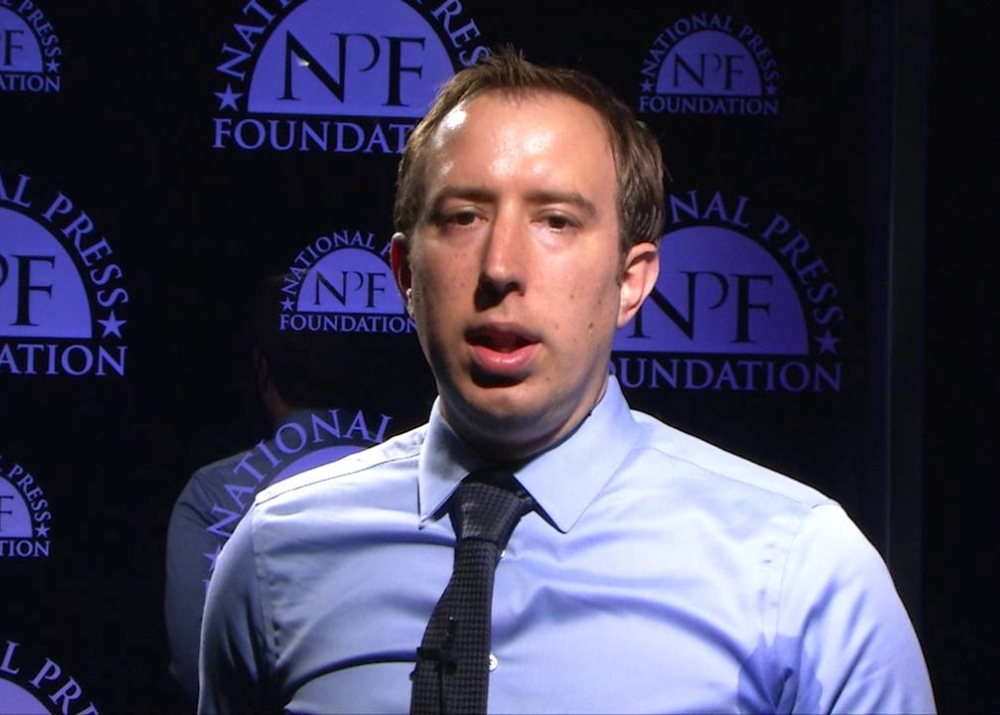
Dr. John Torous, Director of the Digital Psychiatry Division at Beth Israel Deaconess Medical Center and Assistant Professor at Harvard Medical School, has spent the last decade figuring out how to turn that data into better mental healthcare.
An Engineer Who Became a Psychiatrist
Torous didn’t take the typical path to psychiatry. He has a background in electrical engineering and computer sciences, receiving an undergraduate degree in the field from UC Berkeley before attending medical school at UC San Diego.
He completed his psychiatry residency, fellowship in clinical informatics, and master’s degree in biomedical informatics at Harvard. That unusual combination—deep technical knowledge paired with clinical training—positioned him perfectly to tackle mental healthcare’s biggest challenge: access.
The numbers are stark. During the COVID-19 pandemic, the number of adults in the U.S. reporting symptoms of anxiety or depression almost quadrupled from the previous year. Mental health needs were exploding while resources remained static.
Torous believes that in order to increase access to medical healthcare in a scalable, reliable way, it has to come down to a technology in the smartphone.
Building the Infrastructure for Digital Mental Health
Torous’s work spans multiple critical areas. His team supports mindapps.org as the largest database of mental health apps, based on app-evaluation criteria from the American Psychiatric Association and now including over 650 options. The database allows users to search by health condition, treatment type, privacy settings, or price.
But cataloging apps is just the beginning. The team also runs mindApps.ai for benchmarking AI chatbots, the mindLAMP technology platform for scalable digital phenotyping and interventions, and the Digital Navigator program to promote digital equity and access.
The mindLAMP Platform: Digital Phenotyping in Action
The mindLAMP platform represents Torous’s most ambitious work. The acronym stands for Learn, Assess, Manage, and Prevent, and it enables something called “digital phenotyping”—using data from smartphones and wearables to understand mental health in real time.
The platform consists of three major components: mindLAMP, the patient- and clinician-facing app and web dashboard; a data center providing secure storage and access to data; and Cortex, the data analysis platform.
The system can track everything from screen time and GPS location to calls and texts, analyzing patterns that correlate with mental health symptoms. For college students using the app, Torous’s team found they could identify personalized signals showing how smartphones primarily function as tools that patients and psychiatrists must put to use by figuring out what each signal means for each person.
This isn’t about replacing therapists. The COVID-19 pandemic accelerated an enormous technological shift in psychiatry, with virtual therapy sessions becoming the norm and most clinicians reporting no difference in outcomes compared to in-person visits. Torous’s vision is a hybrid model where technology augments human care rather than replacing it.
Publishing, Leading, and Setting Standards
The academic and clinical communities have recognized Torous’s leadership. He serves as editor-in-chief for the journal JMIR Mental Health, web editor for JAMA Psychiatry, and a member of various American Psychiatric Association committees.
Dr. Torous has published over 300 peer-reviewed articles and 5 book chapters on the topic. He directs the Digital Psychiatry Clinic at BIDMC, which seeks to improve access to and quality of mental health care through augmenting treatment with digital innovations.
His work has become essential infrastructure for the field. Torous leads the American Psychiatric Association’s panel dedicated to evaluating smartphone apps, helping establish standards in a Wild West marketplace where over 20,000 mental health apps exist with minimal oversight.
The Road Ahead
Torous remains clear-eyed about both the promise and pitfalls. Privacy concerns are real. Evidence gaps exist. Digital exclusion threatens to leave vulnerable populations behind.
His team developed one of the most comprehensive digital literacy training programs to ensure people can actually access and use these tools effectively.
For business leaders and healthcare organizations, Torous’s work offers a roadmap. The future of mental healthcare isn’t purely digital or purely human—it’s a carefully designed hybrid that uses technology to extend the reach and effectiveness of clinical care.
The smartphone in your pocket can be part of the solution to the mental health crisis. But only if we build the right systems, set the right standards, and never lose sight of the human beings behind the data.