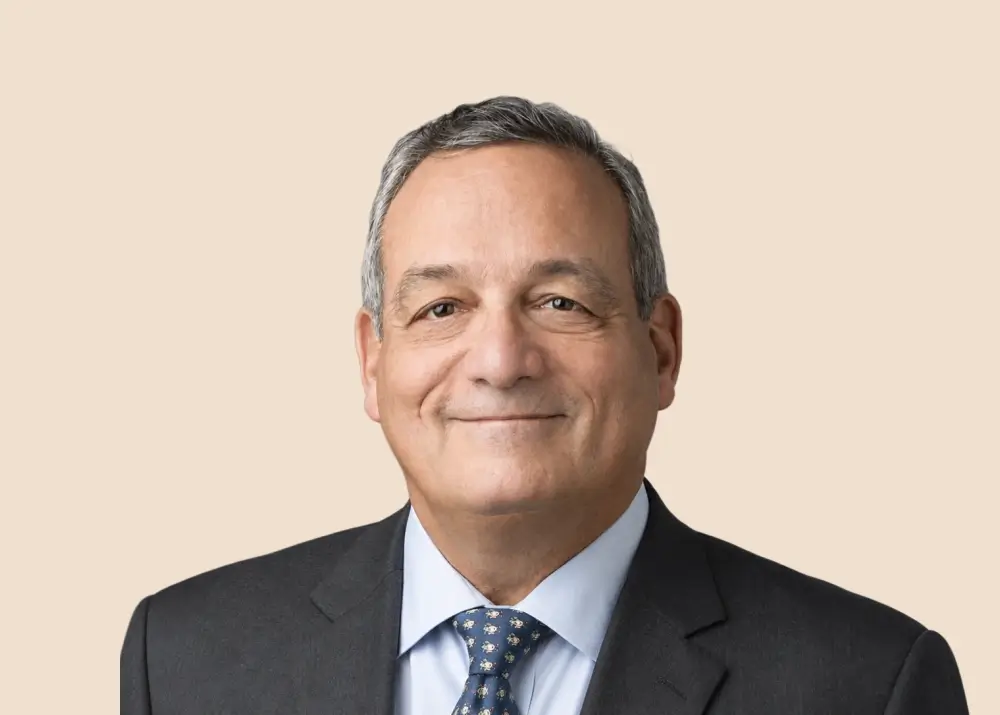
Every big merger has a moment before it’s a merger — when it’s just two phone calls and a person both sides trust enough to pick up. Most people never get near that room. Rob Kindler has been sitting in it for over forty years, through every kind of market this industry has thrown at dealmakers: the LBO boom, the dot-com crash, the 2008 crisis, and now the AI-driven wave of consolidation reshaping entire sectors. He didn’t just survive four decades of deal cycles. He kept getting the call.
Rob Kindler didn’t start out as a banker. He started as a lawyer at Cravath, Swaine & Moore, one of the oldest and most respected firms on Wall Street, joining in 1980 straight out of NYU Law. He made partner in 1987 and went on to co-head the firm’s M&A practice — a two-decade run that would have been a full career for most people. For Rob, it was the first half.
In 2000, he made the jump most lawyers talk about but never take: he crossed over to banking, joining JPMorgan as a managing director and rising quickly to global head of M&A. Six years later, he moved to Morgan Stanley, where he’d spend the next seventeen years as Vice Chairman and Global Head of M&A, eventually sitting on the firm’s Management Committee. That’s not a typical banking tenure. Most people in that seat burn out or get pushed out long before seventeen years. Rob didn’t.
What He Actually Did
Titles are one thing. What Rob advised on is the real story. Over the years, his name sits next to some of the deals that reshaped entire sectors — Comcast’s acquisition of AT&T Broadband, Time Warner Cable’s sale to Charter Communications, the Dow-DuPont merger, Time Warner’s sale to AT&T, and Bristol-Myers Squibb’s acquisition of Celgene. These weren’t quiet, mid-market transactions. They were the deals that showed up on the front page and got studied in business schools afterward.
He also stayed close to his own firm’s story. During the 2008 financial crisis, Rob advised Morgan Stanley on the emergency capital injection from Mitsubishi UFJ Financial Group — a deal that helped keep the bank standing while others didn’t survive the year. Later, he worked on Morgan Stanley’s acquisitions of Smith Barney, Solium Capital, E*Trade, and Eaton Vance, deals that pushed the bank into wealth management territory it hadn’t fully owned before.
Why the Move to Paul Weiss Mattered
In 2023, after seventeen years at Morgan Stanley, Rob left to join Paul, Weiss, Rifkind, Wharton & Garrison as a partner and Global Chair of M&A. It was a notable move — not a retirement, not a slowdown, but a full return to the legal side of dealmaking after two decades as a banker. Colleagues at the firm called him one of the most respected M&A practitioners in the world, and it’s hard to argue otherwise. Few people have sat on both sides of the table — lawyer and banker — at this level, for this long, and stayed relevant through every market cycle from the LBO era to the AI-driven consolidation happening right now.
What makes Rob’s story worth telling isn’t a single blockbuster deal. It’s the range. Telecom, pharma, financial services, media — he’s been in the room for all of it, across market crashes, boom years, and everything in between. That kind of staying power doesn’t come from luck. It comes from being the person boards trust when the stakes are highest and the timeline is short.