There’s a specific kind of rage that comes from being told you missed the window.
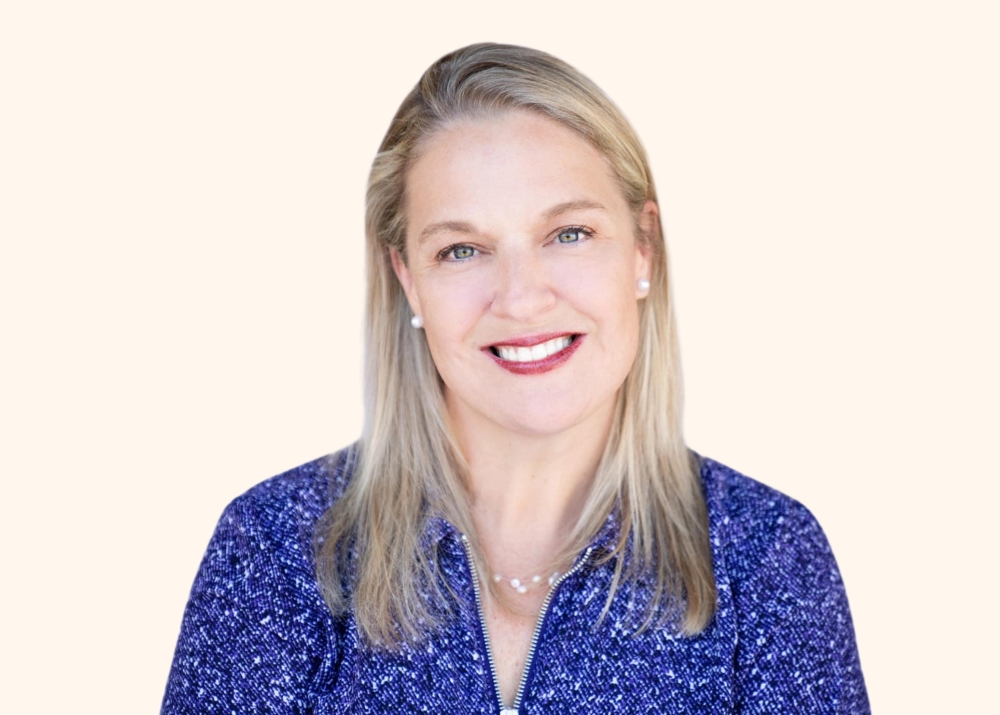
Naomi Allen’s five-year-old son was showing signs of acute anxiety. As a mother, she did what you’re supposed to do. She called the school. She searched provider directories. She sat on waitlists. She called therapists who didn’t call back. Months passed. Her son fell further behind. Finally, after nearly a year, they got into a program.
All this fiasco made her realized that the pediatric care system is broken, and Allen is not someone who accepts broken systems quietly.
The Career That Prepared Her
Allen wasn’t new to healthcare. She had spent two decades building some of the most successful health tech companies in Silicon Valley.
She started at McKinsey’s Silicon Valley office, helping build their West Coast healthcare practice. She was a founding team member at Castlight Health, working across operations, sales, and product from inception to IPO. She became Chief Growth Officer at Livongo, overseeing strategic growth initiatives and acquisition operations as the company prepared for its IPO.
She knew how to scale businesses. She knew how to build infrastructure. And she knew, intimately, that the pediatric mental health system was fundamentally broken.
In 2019, she co-founded Brightline with Giovanni Colella, a serial entrepreneur and one of her Castlight co-founders. The idea was straightforward: build the first behavioral health solution designed specifically for children and families. Not adults. Not general telehealth. A system built around the reality of how families actually live.
The Model
Brightline wasn’t just another telehealth platform. Allen designed it to solve the problems she had personally encountered.
Parents couldn’t get appointments? Brightline eliminated waitlists. Providers didn’t communicate with each other? Brightline used shared clinical records so therapists and psychiatrists worked from the same plan. Care felt disconnected from daily life? Brightline integrated virtual and in-person services so families could access care where and when they needed it.
The company offered therapy, psychiatric services, and psychological testing for kids up to age 18. Evidence-based. Outcomes-driven. Family-centered.
Within six years, Brightline served hundreds of thousands of children.
The Pivot
Growth wasn’t linear. In 2024, Allen made a decision that required both courage and pragmatism. Brightline had been pursuing a national footprint, targeting large employers. It wasn’t working. The economics were strained. The model needed refinement.
Allen pivoted. She shifted focus from a nationwide employer-based strategy to targeted geographies with direct-to-consumer pathways. She moved from purely virtual care to a hybrid model—opening physical clinics in key markets.
It was a public acknowledgment that the initial strategy needed recalibration. In an industry where founders often cling to failing models until investor patience runs out, Allen course-corrected early.
The Expansion
In April 2025, Brightline opened its first brick-and-mortar clinic in Brooklyn. By October, they had opened clinics in Lake Success and Manhattan. They announced a strategic alliance with Northwell Health, New York’s largest healthcare provider, creating direct referral pathways and coordinated care.
Demand surged. Families wanted in-person psychological testing for autism, learning disorders, ADHD. They wanted psychiatrists who could prescribe and monitor medication over time. They wanted continuity.
Allen also launched BrightLife Kids in California, a historic partnership with the California Department of Health Care Services offering free behavioral health tools and coaching to all families with children under 13—regardless of income, insurance, or immigration status. This wasn’t a pilot program. It was statewide.
In March 2025, Allen was named to Inc. Magazine’s Female Founders 500 list. In May, Brightline received the MedTech Breakthrough Award for Best Mental Health Solution Provider, selected from over 4,500 global nominations.
In October 2025, Allen transitioned from CEO to Executive Chair of Brightline’s board, bringing in Kari O’Rourke—a certified nurse practitioner with over 20 years of healthcare leadership experience—as the new CEO. Allen’s focus shifted to corporate strategy and long-term growth, while O’Rourke scaled clinical operations.
The Personal Philosophy
Allen doesn’t talk about entrepreneurship in abstract terms. She talks about her morning routine—waking up at 5 a.m. to exercise on her Peloton, then getting back in bed to pretend she’s still asleep so her three kids can wake her up and snuggle before the day starts.
She talks about hiring people with “so many things going on in their lives” because they know how to prioritize and execute. She talks about making sure Brightline employees had access to mental health benefits from day one, even when the company was tiny, because “we have to support our own team first.”
She holds an MBA from Stanford Graduate School of Business and an undergraduate degree from UNC Chapel Hill. She sits on the board of Bright Health. She advises startups. She speaks frequently on health tech and behavioral health.
But the credential that matters most is the one she earned before founding Brightline: mother of a child who needed help and couldn’t get it.
What She Built
Pediatric mental health was, and remains, a crisis. One in three young people between 18 and 25 struggle with mental health issues. Emergency room visits related to children’s mental health have sharply increased. Waitlists stretch for months. Providers are scarce. Families are desperate.
Allen didn’t write a report about it. She built the alternative.
Brightline is now backed by Boston Children’s Hospital, Northwell Health, Blue Cross Blue Shield of Massachusetts, Google Ventures, KKR, and Oak HC/FT. The company is expanding into New Jersey and Connecticut in 2026. Half of the planned clinics will be in the tri-state area.
For healthcare executives evaluating how to address pediatric behavioral health within their systems, Brightline offers proof of concept. Hybrid care models work. Family-centered approaches scale. Direct partnerships with health systems create referral pathways that actually function.
Allen built Brightline because the system failed her son. Now, hundreds of thousands of families have access to care that didn’t exist seven years ago.
That’s not just a success story. That’s infrastructure.