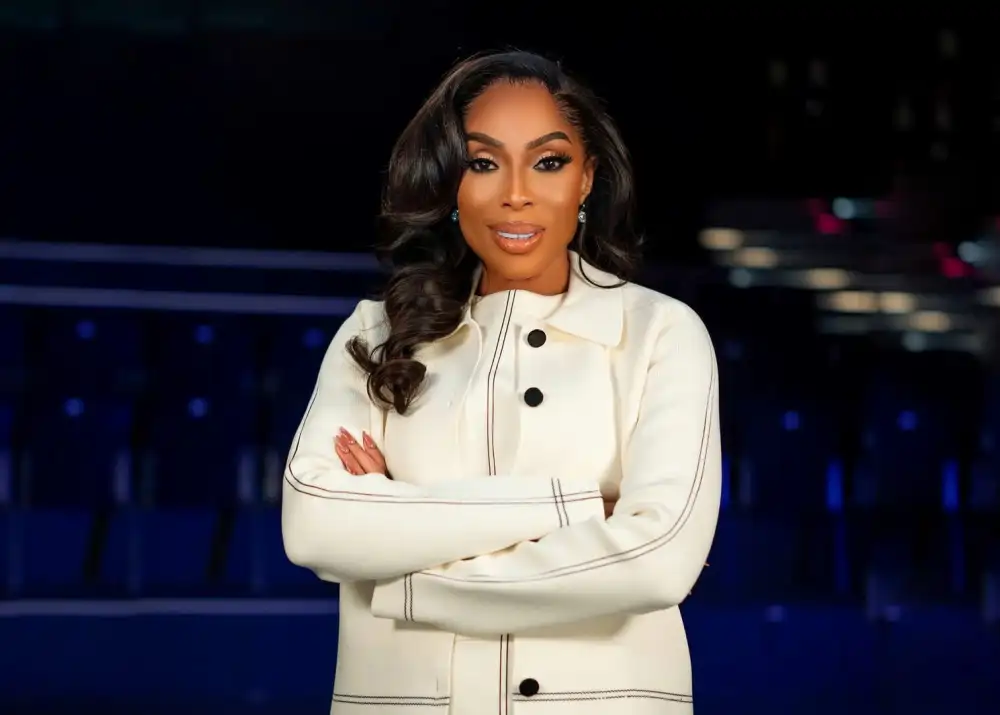
For decades, the stories the world consumed about Africa were mostly made elsewhere. Documentaries about crisis. News packages about conflict. A continent talked about rather than heard from. Meanwhile, African audiences watched imported drama and comedy because there was not enough locally made work at the quality and scale they wanted.
Mo Abudu decided to fix the supply side.
She did not start in media
Mo was born in London to Nigerian parents, spent part of her childhood in Nigeria with her grandparents, and returned to England for school. She trained in human resources and took a master’s degree at the University of Westminster. Her early career had nothing to do with television. She ran human resources and training for ExxonMobil in Nigeria, then started her own recruitment firm, and was behind the development of a hotel project.
That matters. By the time Mo entered media, she already knew how to hire, structure a company, raise capital and manage an operation. She was not a creative looking for a business. She was an operator who chose a creative industry.
The talk show was the proof of concept
Her first television venture was Moments with Mo, which she created, produced and presented. It became the first syndicated daily talk show on African regional television, carried across a wide stretch of the continent. Her guests ranged from celebrities to heads of state, including Hillary Clinton. She also created The Debaters, a show built around oratory and giving young Africans a platform to be heard.
The comparisons to Oprah Winfrey started here, and Mo has said she takes them as an honour. But the format was only a step. What she had proved was that African audiences would show up in numbers for polished, locally made programming.
Built a company, then an industry
In 2013, Mo launched EbonyLife TV on the DStv platform. Forbes Africa recognised her as the first African woman to own a pan-African television channel. EbonyLife Films followed in 2014, and she began producing feature films including Fifty, The Wedding Party, Chief Daddy, The Royal Hibiscus Hotel, Your Excellency and Òlòtūré.
Then the international side opened up. EbonyLife signed production and development arrangements with Sony Pictures Television, Netflix, AMC Networks, BBC Studios, Starz and Lionsgate, Westbrook Studios and Will Packer Productions. Her Netflix series Blood Sisters landed on the platform’s global top ten. Her film Elesin Oba, The King’s Horseman premiered at the Toronto International Film Festival.
Here is the part that separates Mo from a successful producer. She kept building infrastructure around the content. EbonyLife Place opened in Lagos as a lifestyle and entertainment resort with cinemas, restaurants and event space. The EbonyLife Creative Academy, launched in partnership with the Lagos State government, offers free practical training in filmmaking and production.
She was solving her own bottleneck. If you want to produce at international standard from Lagos, you need trained crews, finishing facilities and venues. Nobody was going to build those for her.
Recognition followed the work
Mo has appeared on the Forbes list of the world’s most powerful women. The Hollywood Reporter has repeatedly named her among the most powerful women in global television and film. She chaired the International Emmy Awards Gala, the first African to do so, and sits on the board of the International Academy of Television Arts and Sciences. She is a member of the Academy of Motion Picture Arts and Sciences. Nigeria awarded her a national honour. Harvard Business School turned EbonyLife into a teaching case.
She holds honorary doctorates from Babcock University and the University of Westminster, and has spoken at Harvard, Wharton, Oxford and Cambridge.
What Mo understood that others missed
The easy read is that Mo changed the narrative about Africa. That is true but soft. The harder read is more useful.
Mo treated distribution, financing and talent supply as the real constraints, and went after all three. She did not lobby global studios to tell African stories properly. She built a company capable of co-producing with them as an equal, then built the school and the facilities that would let the next set of producers do the same.
She started her media career at an age when most people are consolidating, not beginning. That is the part worth remembering.