Distribution used to be the hard part of media. Now it is free and infinite, and the difficulty has moved. Anyone can publish. Anyone can amplify. Falsehoods travel faster than corrections, and the platforms that carry both are built to reward engagement rather than accuracy.
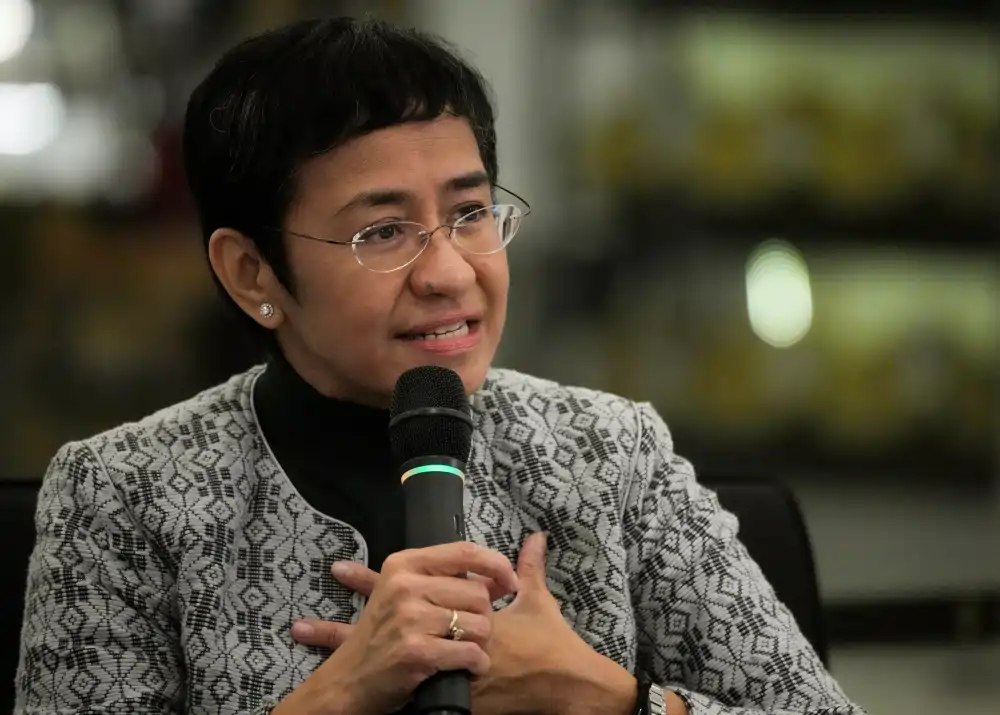
Maria Ressa saw this coming earlier than almost anyone running a newsroom, because she was building one on those platforms by design.
Nearly four decades of reporting before the startup
Maria was born in Manila and moved to the United States as a child. She studied at Princeton, returned to the Philippines and later took a master’s degree at the University of the Philippines Diliman. She spent close to two decades with CNN, opening and running its Manila bureau and then its Jakarta bureau, where she reported extensively on the growth of terrorist networks in Southeast Asia. She wrote books on the subject, including Seeds of Terror and From Bin Laden to Facebook.
She then returned to Manila to lead multimedia news operations at ABS-CBN, one of the largest news organisations in the country, managing a very large newsroom. So when Maria co-founded a startup, she was not a first-time operator experimenting. She had run scale before and knew what she was walking away from.
Rappler started on the platform
Rappler began as a Facebook page in 2011 and became a full website on the first day of 2012. Maria built it with a group of experienced journalists and technology entrepreneurs, including Glenda Gloria, Chay Hofileña, Lilibeth Frondoso and Nix Nolledo.
The design choice was deliberate. Rappler was among the first news organisations in the Philippines to use social media and crowdsourcing as core distribution and reporting infrastructure rather than as a marketing channel bolted on afterwards. Maria was betting that a digital-only newsroom, native to the platforms its readers already lived on, could compete with legacy broadcasters.
It worked. Rappler became one of the country’s significant news sources quickly.
The same platforms then became the threat
Maria’s reporting turned to how social media was being used to spread disinformation, harass critics and shape public opinion. Rappler covered the Duterte administration’s anti-drug campaign and the killings carried out under it, along with government corruption.
What followed was not commercial competition. It was legal pressure. The securities regulator moved to revoke Rappler’s licence on foreign ownership grounds, which the company disputed. Maria was arrested on a cyber libel complaint. She was convicted in 2020, a decision upheld by the Court of Appeals, and appealed to the Supreme Court. Tax evasion charges were filed and later dismissed, with acquittals in those cases and in the ownership case. She posted bail repeatedly to remain free while continuing to run the company.
As of early 2026, the cyber libel appeal was still before the Supreme Court, with the Office of the Solicitor General recommending acquittal on the grounds that the case was filed outside the legal time limit.
Through all of it, Rappler kept publishing. That is the operational fact that most retellings skip. Maria was managing a business, a payroll and a newsroom while the legal machinery was pointed at her personally.
Recognition, and what it cost
Maria was named among Time’s Persons of the Year in 2018 for work defending press freedom. In 2021 she received the Nobel Peace Prize jointly with Dmitry Muratov, for efforts to safeguard freedom of expression. A documentary, A Thousand Cuts, followed Rappler’s fight. She wrote How to Stand Up to a Dictator, and has since taught at Columbia University.
What Maria’s story says to anyone building a business
Maria’s case is not a comfortable one, and it should not be flattened into an inspirational poster. She spent years in courtrooms, on bail, with a prison sentence hanging over her, while her company’s licence was under attack.
The business lesson underneath it is sharp. Maria built an organisation whose only real asset was credibility. Not reach, not a broadcast licence, not an advertising base. When the pressure came, that asset was the thing that held. Readers stayed, international support arrived, and the company survived because people believed the work.
She also understood the platform risk before the industry did. Maria used social media to build Rappler and then reported honestly on what those same platforms were doing to public discourse, even though it made her a target.
Most founders will never face what Maria faced. Every founder should think as clearly as she did about what their business would still have if everything else was taken away.