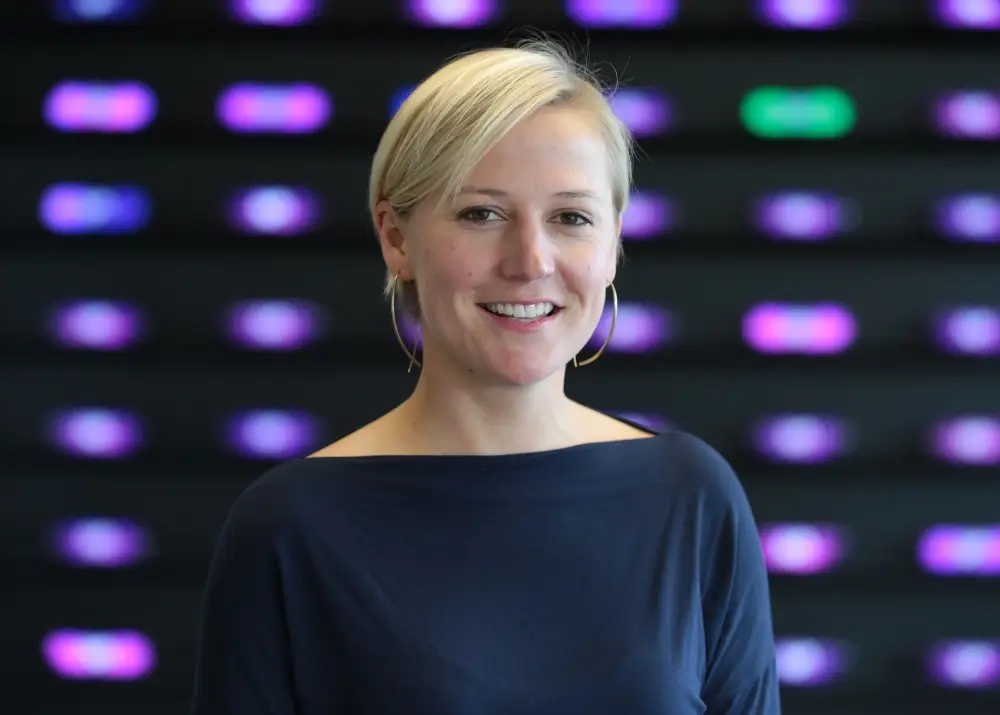
There’s a moment, right before someone taps “confirm,” when trust either holds or breaks. It happens when a stranger decides to spend the night in someone else’s home. When a rider steps into a car they didn’t choose. When a business owner routes its revenue through software it has never met in person. That moment isn’t an accident, and no amount of clever AI can manufacture it after the fact. It is designed — deliberately, invisibly, at scale — by people like Katie Dill.
Learning Design Where the Stakes Were Real
Katie’s path runs through three of the most scrutinized product experiences in modern tech. She started at Airbnb, as director of experience design, at a company built by founders who treated design as core DNA rather than a finishing touch. The challenge there wasn’t abstract — it was making the strange, slightly uncomfortable idea of staying in someone else’s home feel warm, safe, and worth doing again.
From Airbnb, she moved to Lyft, taking on the head of design role and eventually reporting directly into the CEO’s executive team — a rare seat for a design leader to hold. The work there was less about first impressions and more about rebuilding how design operated inside the company, breaking down walls between design, product, and engineering so they moved as one unit instead of three.
Today, she leads design at Stripe, overseeing everything from product design to brand, research, and content — the full surface area of how millions of businesses experience the company’s tools. It’s a different kind of trust problem than Airbnb or Lyft. Nobody worries about a stranger showing up at their door. But everybody worries about their money. Katie has spoken about how even a small crack in a checkout flow — a typo, a clumsy screen — can quietly erode a business owner’s confidence in a platform they’re trusting with revenue.
A Philosophy Built on Beauty and Function, Not One or the Other
Katie has pushed back publicly on the idea that businesses have to choose between beautiful design and functional design, as if the two were opposites. Her argument is simpler than that: beauty is a signal. It tells a user someone cared enough to sweat the details they’ll never consciously notice, and that care builds the kind of confidence that keeps people coming back. It’s a very B2B insight dressed up in consumer language — trust, after all, is the actual product being sold in fintech and marketplaces alike.
She’s also been vocal about leadership itself, not just craft. She has talked about a formative moment early in her time at Airbnb, when her own team confronted her about how the design function needed to change — and how choosing to listen, rather than defend her position, reshaped how she leads to this day. It’s the kind of leadership lesson that doesn’t show up in a portfolio, but shapes everything a portfolio eventually contains.
Her recognition reflects that range. She’s been named among Business Insider’s people changing the tech industry, included in Fast Company’s list of the most creative people in business, and honored by Girls in Tech as their Creator of the Year — a spread of recognition that spans craft, leadership, and industry influence rather than sitting in just one lane.
The Lesson for Business Leaders
Katie’s career makes an argument that AI-era businesses need to hear clearly: as products get faster and smarter, the margin for error on trust gets thinner, not thicker. An AI feature that moves fast but feels careless will lose a customer just as quickly as a clunky one. Design, in her world, isn’t about making things pretty. It’s about making people feel safe enough to hand over something valuable — a home, a ride, a company’s revenue — and trust that it will come back to them intact.
That is precisely the discipline this AI moment demands.