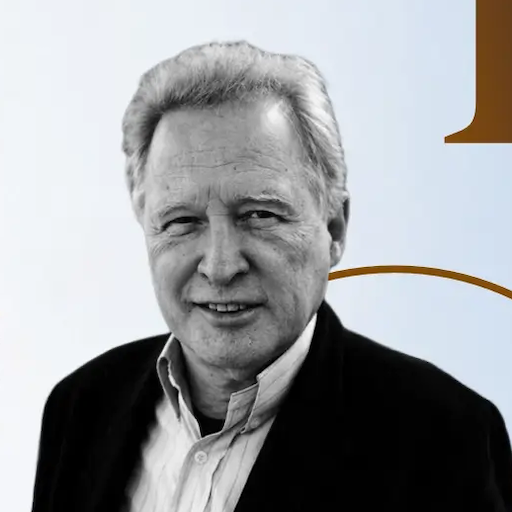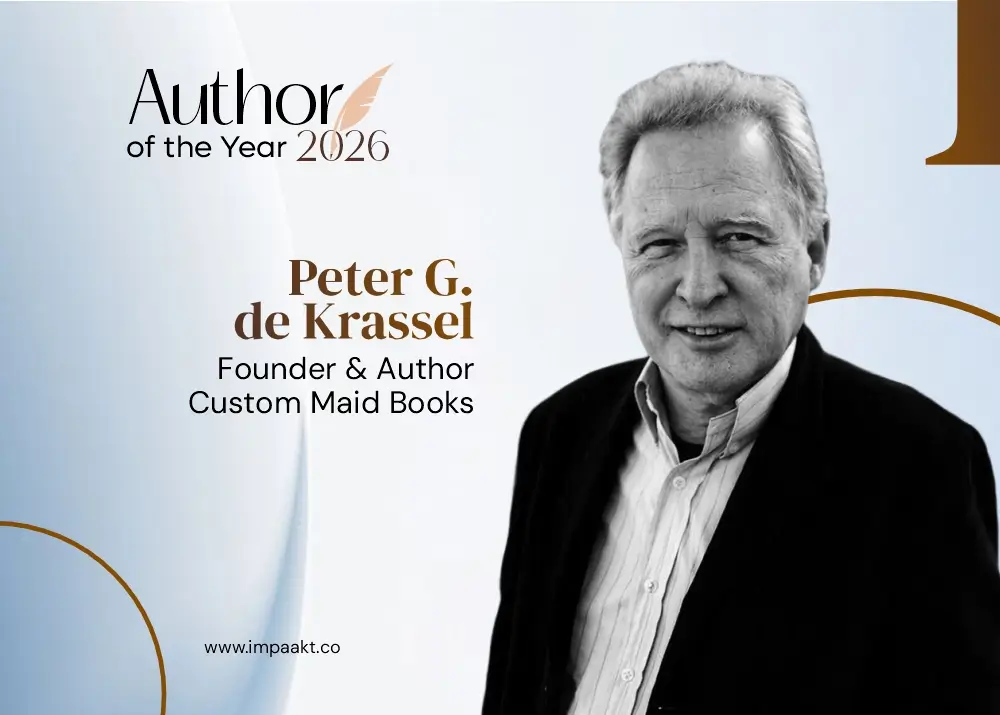
History doesn’t whisper to Peter G. de Krassel. It has always spoken to him in full volume.
From photographing civil rights protests in the 1960s to standing at the crossroads of global politics, trade, and culture, his life has unfolded alongside some of the most defining moments of the modern world. But what sets him apart is not just proximity to history, it is his instinct to question it. To sit across ideologies, not within them. To understand power not as a fixed structure, but as something constantly negotiated between people, systems, and stories.
Over the decades, his journey has moved fluidly across disciplines. Law, banking, politics, international business, and now authorship. Yet, beneath these transitions lies a consistent current: a restless, analytical mind driven by dialogue, dissent, and the pursuit of uncomfortable truths. Whether bridging Eastern and Western business interests, challenging geopolitical decisions at global forums, or introducing cultural exchanges in unexpected territories, de Krassel has consistently operated where worlds collide and conversations matter most.
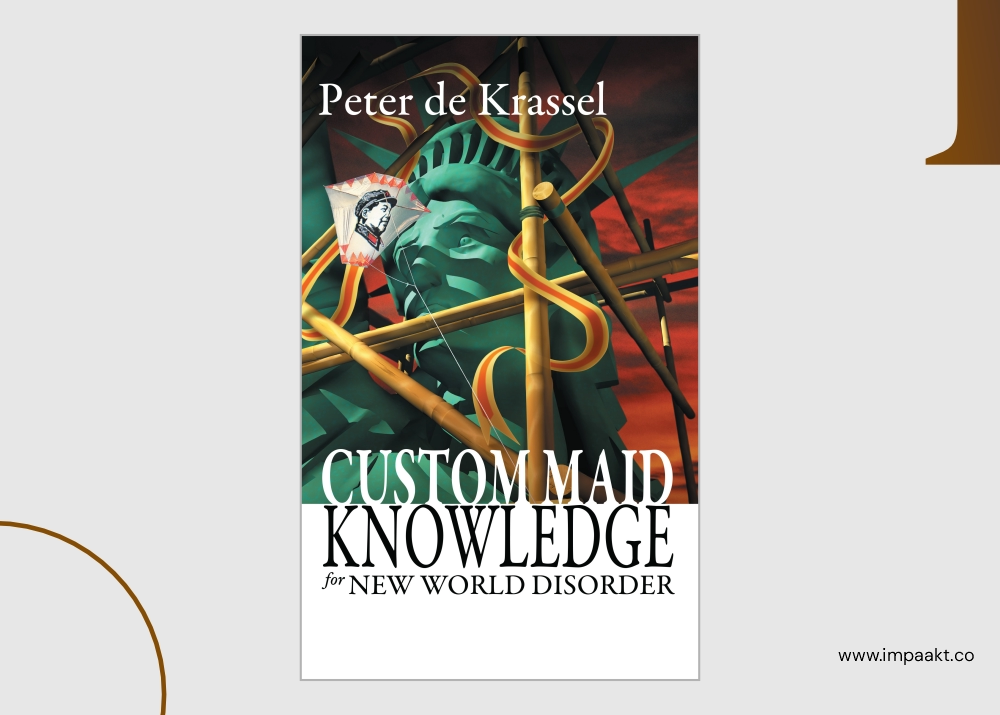
That same perspective fuels his Custom Maid for New World Disorder series, where he reframes global systems with a sharp, almost provocative lens. His writing does not seek agreement. It demands reflection. It questions the roles people unknowingly accept and the systems they continue to sustain.
At a time when conversations are shrinking into echo chambers and opinions are often rehearsed rather than explored, de Krassel stands for something increasingly rare: the discipline of thinking differently, and the courage to say it out loud.
Drawn by the sharpness of his worldview and the weight of his lived experiences, we stepped into a conversation with him to explore the ideas, contradictions, and convictions that shape his work.
Here are the excerpts from the interview:
Peter, you’ve lived through defining global moments, from civil rights protests to geopolitical shifts and international trade. When you look back, what experiences most shaped the way you see the world today
Honestly, discussing different points of view about political systems, culture, and history—as seen through the eyes of people from different countries and their perceptions of how good or bad America and Americans are—has shaped my worldview.
Two examples that exemplify how I see the world today and America’s global role are:
(1) Living in Palau in the early 1990s, when I was retained by the Traditional Chiefs of Palau to sue the US government to stop it from moving its military bases from the Philippines to Palau. This resulted in me suing the Department of the Interior, which was the Trustee of Palau, and representing Palau at the UN Trusteeship hearings in May 1994 after filing the lawsuit in Washington, DC. I also held a press conference at the Washington Press Club, inviting the media to come to New York and attend the Trusteeship hearings; and
(2) Getting frozen embryos from cows in Texas to Mongolia to increase the milk yield of cows there.
The first example in Palau reflects America’s ugly imperial role in subjugating people to poverty, alcoholism, and drug addiction in order to control their political leaders and bend them to the whims of America. In Mongolia—which had been under the thumb of imperial Moscow and the Soviet Union, and was also mistreated—it shows how America can be benevolent. When Mongolia became an independent country, America helped it modernize and transition from a communist centrally planned economy to a capitalist economy.
Your journey spans photography, law, banking, politics, and now writing. Was there a common thread guiding these transitions, or did each phase emerge from the moment?
The common thread is creative energy that merges with time and age—a logical progression.
You documented protests and political unrest in the 1960s. How did witnessing those moments firsthand influence your belief in dialogue, dissent, and public discourse?
They reinforced my belief in discussion, debate, and the honest exchange of points of view to achieve the best results.
After decades in law, banking, and global ventures, what drew you toward writing the Custom Maid for New World Disorder series?
I concluded that We the People are like maids, constantly cleaning up the mess that career politicians make—and then, somewhat foolishly, paying for the cleanup in the form of taxes. As someone who lives in Asia, where maids are plentiful, I have not found a maid who will pay me for the privilege of cleaning up my mess. So I question why and how we, the people, do.
 Your upcoming book tackles one of the most sensitive geopolitical conflicts of our time. What responsibility do you feel as an author when writing about topics that are deeply emotional and politically charged?
My responsibility, as an author writing non-fiction, is to be as honest and objective with historical facts as possible—without being emotional or politically charged.
In your new book, you propose a shift in how the two-state solution is understood. What do you think is missing from current global conversations on this issue?
Looking at historical Palestine as a whole, rather than limiting the two-state solution discussion to Gaza and the West Bank.
You strongly advocate for open dialogue and debate. Why do you believe this has become so difficult today — and what are we losing because of it?
I believe social media is responsible for channeling and controlling how people interact, forcing them into echo chambers of like-minded individuals instead of encouraging interaction and the exchange of different points of view. As a result, collegial dialogue, conversations, discussions, and debates are sorely lacking.
 Do you see your books as arguments, conversations, or invitations for readers to think differently?
They are invitations to be open-minded and think differently.
If you had to describe the current global moment in one sentence — politically, socially, and culturally — how would you define it?
A chaotic world disorder that needs a new way of thinking and acting to restore order.
When readers look back on your work years from now, what do you hope they’ll say Peter G. de Krassel contributed to — not just as an author, but as a thinker and observer of his time?
Real, peaceful change.