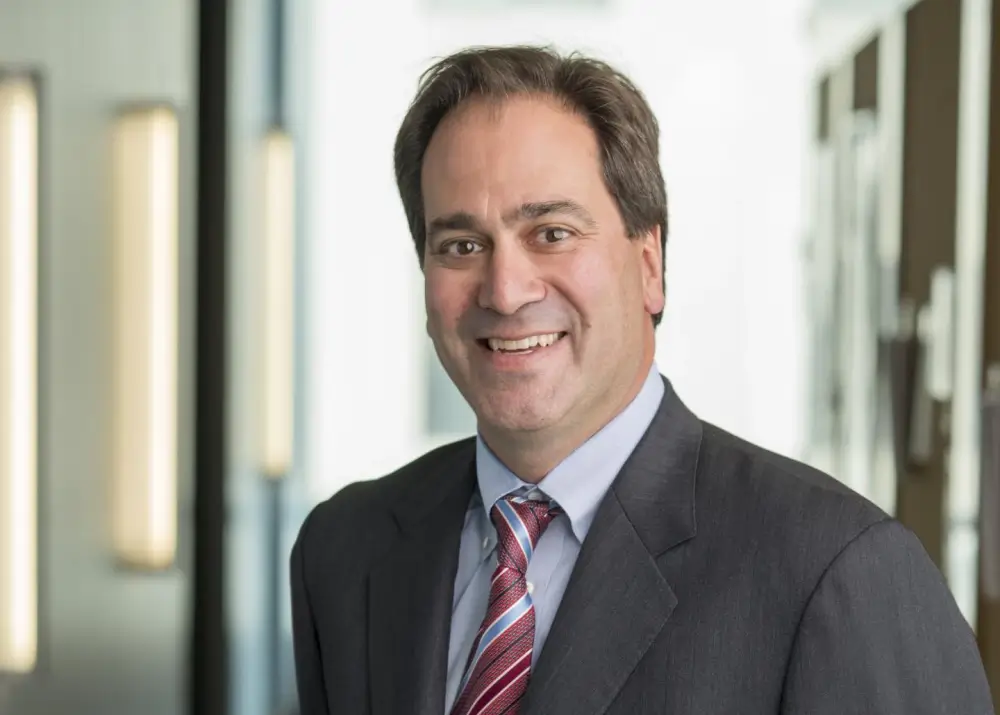
The world changed in 1996, but most people didn’t notice. In a Northwestern University laboratory, a chemist was reimagining the fundamental rules of materials science. Chad Mirkin looked at nanoparticles and saw something no one else did—atoms waiting to be assembled like Lego blocks, with DNA strands as the connectors. That insight didn’t just advance science. It built an industry.
Today, Mirkin’s spherical nucleic acids power diagnostic systems in over half the world’s top hospitals. His innovations sit at the intersection of chemistry, medicine, and manufacturing, turning theoretical breakthroughs into commercial reality. The 10th person ever elected to all three branches of the U.S. National Academies, Mirkin has built a career on one principle: make the invisible tangible, then make it indispensable.
The Education of a Cowboy Chemist
Born in Phoenix, Arizona in 1963, Mirkin earned his bachelor’s from Dickinson College in 1986 and his PhD from Penn State in 1989. His doctoral work focused on organometallic chemistry—what he calls the “cowboy” field of inorganic chemistry. That rebellious streak shaped everything that followed. At MIT as a postdoctoral fellow, he worked on microelectrode devices under Mark S. Wrighton, learning to bridge the gap between molecular synthesis and practical applications.
In 1991, at just 28, Mirkin joined Northwestern University. His mandate was deceptively simple: control the architecture of molecules and materials at the 1-100 nanometer scale. What he built there became a factory for breakthroughs.
Building With DNA and Nanoparticles
Mirkin’s defining insight came from asking a different question. Instead of treating nanoparticles as passive subjects to be studied, he asked: what if they could be programmed? His answer was spherical nucleic acids—densely packed arrangements of DNA or RNA on nanoparticle surfaces. These SNAs behaved like synthetic atoms, binding to specific targets with precision that natural systems couldn’t match.
The implications cascaded across industries. Luminex’s FDA-cleared Verigene system, built on Mirkin’s SNA technology, now operates in hospitals worldwide, detecting infections and antibiotic resistance in hours instead of days. Seven drugs based on his work entered human clinical trials. His 1999 invention of dip-pen nanolithography—recognized by National Geographic as one of the top 100 discoveries that changed the world—enabled manufacturers to write chemical patterns at scales previously thought impossible.
By 2010, Mirkin was the most cited chemist in the world based on total citations over the prior decade. His work didn’t just generate papers; it generated patents. Over 1,420 applications worldwide, with more than 450 issued. Each one represented a technology someone could build.
The Entrepreneur’s Calculation
Mirkin understood something many academics miss: publications change minds, but companies change markets. He co-founded multiple ventures to commercialize his discoveries. NanoInk brought dip-pen nanolithography to semiconductor manufacturers. Nanosphere, later acquired by Luminex for 83 million dollars, transformed diagnostic medicine. Exicure is developing SNA-based immunotherapies. TERA-print produces desktop nanofabrication systems. Azul 3D is reimagining industrial 3D printing with his high-area rapid printing technology.
The pattern is consistent—identify a technical breakthrough, build the infrastructure to manufacture it, scale it to meet market demand. Mirkin doesn’t just invent technologies; he architects their path to adoption.
From the Lab to the White House
From 2009 to 2017, President Barack Obama appointed Mirkin to the President’s Council of Advisors on Science and Technology. He co-chaired the “Engage to Excel” report, addressing how to retain and engage undergraduate STEM students in their critical first two years. In 2011, he joined Obama and then-Secretary of State Hillary Clinton at the APEC summit in Honolulu, discussing game-changing technologies with world leaders and Fortune 500 executives.
Mirkin’s influence extends beyond research and entrepreneurship into science policy. He founded and edits Small, one of nanotechnology’s premier journals, and serves on editorial boards ranging from ACS Nano to the Journal of the American Chemical Society. He has authored over 930 manuscripts, delivered 880 seminars, and trained generations of researchers who carried his methods into new fields.
What Drives the Builder
Mirkin operates with a clarity that comes from seeing molecules as tools, not mysteries. In a recent interview, he described his approach: understanding and controlling architecture at the nanoscale enables everything else—sensing, drug delivery, lithography, catalysis, optics. Build the right structure and the applications follow.
His lab at Northwestern resembles an institute within a university, drawing specialists from chemistry, biology, engineering, and medicine. Postdocs arrive from different disciplines, contributing diverse skills while absorbing Mirkin’s philosophy: the right molecule, synthesized the right way, can answer questions others haven’t thought to ask.
The Road Ahead
With over 250 national and international awards—including the Kavli Prize in Nanoscience, the King Faisal Prize, and the 500,000-dollar Lemelson-MIT Prize—Mirkin has the credentials of a scientific elder statesman. But his approach remains resolutely forward-looking. Recent work explores polyelemental heterostructures, machine learning-accelerated materials design, and next-generation lithography techniques.
Information scientists at CAS, a division of the American Chemical Society, identified Mirkin’s contributions to supramolecular chemistry and nanomaterials as potential Nobel Prize territory, noting that “Mirkin’s work set up the foundation of modern nanotechnology and development of related diagnostic, therapeutic, and material applications.”
The assessment understates the impact. Mirkin didn’t just lay foundations—he built the structures on top of them, then showed others how to build more. His legacy isn’t in discovering what nanoparticles can do. It’s in making them do it, at scale, in hospitals and factories and laboratories around the world.