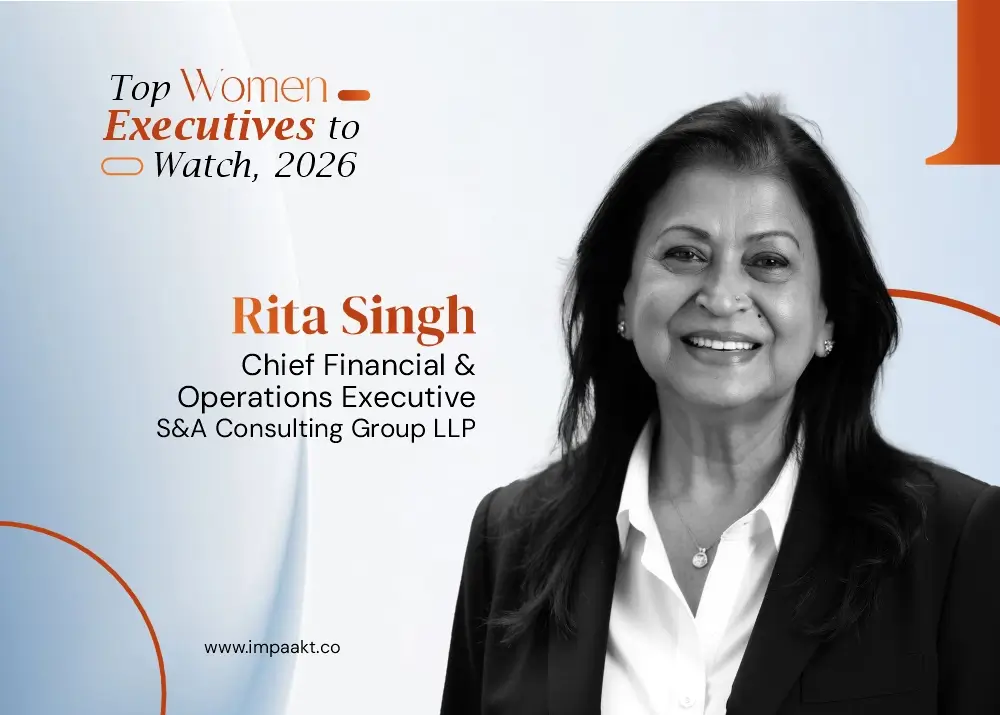
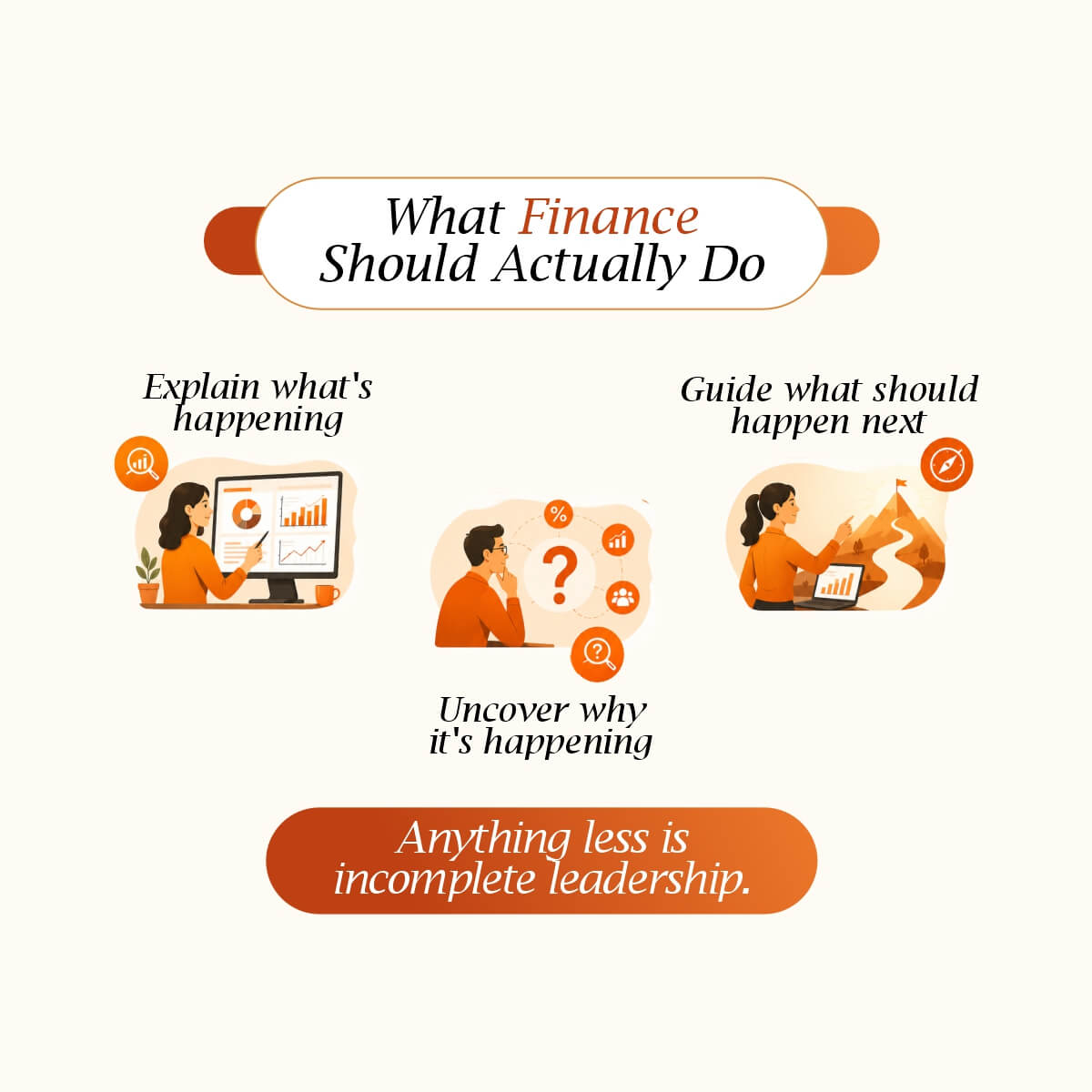
Finance has long been treated like the rearview mirror of a business, reporting what’s already happened. But the leaders shaping the future are using it differently. They’re turning it into a forward-looking compass, one that guides decisions, culture, and growth in real time. The shift is subtle but powerful. It’s no longer about closing books. It’s about opening possibilities.
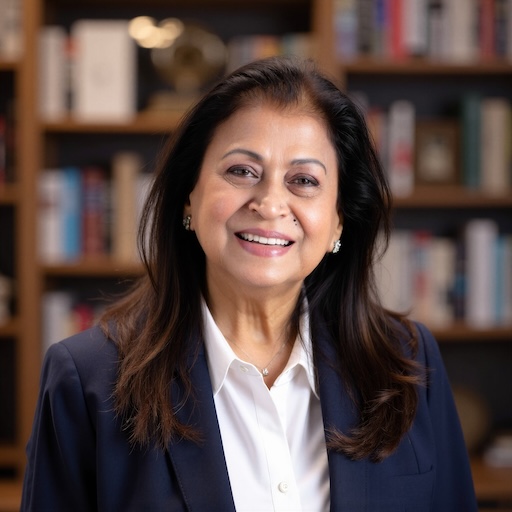
Rita Singh has been operating in that space long before it became a conversation.
Over 35 years, she has redefined what it means to lead from finance and operations. Starting from building a business from scratch to becoming a strategic force behind organizational turnarounds, her journey reflects a consistent refusal to stay confined to traditional roles. She doesn’t just interpret numbers. She questions them, challenges them, and uses them to uncover the deeper operational truths that many overlook.
What makes her leadership stand out is not just the outcomes she has delivered, but the way she approaches them. Rooted in curiosity, strengthened by relationships, and driven by a belief that people are at the core of every successful transformation, Rita brings a rare balance of discipline and empathy to the table.
Her journey today is less about scale and more about significance. About building businesses that last, and more importantly, making an impact that does too.
That made one thing inevitable. We had to understand the mind behind this approach. So we got into a conversation with Rita Singh to explore the journey, the lessons, and the philosophy that continue to shape her leadership.
Here are the excerpts from the interview:
You’ve spent over 35 years shaping businesses through financial and operational leadership. Looking back, what are the defining moments that shaped your journey into becoming a Chief Financial & Operations Executive?
Shifting from Mother Role to Business Partner:
A number of things come to mind. I could write an entire chapter on the defining moments. Here are just a few: I believe my role as mother, homemaker and business partner starting a new business from ground zero with my husband Nipendra Singh was not only challenging but, it made me aware of the opportunities that exist outside the home and it made me aware of my strengths which can stretch very far.
Stepping Outside the Finance Function:
I was never satisfied by just being an accountant doing accounting and taxes. I knew that a business needs more than just accounting and taxes. Curiosity and understanding are the “why” behind the numbers. I started seeing the business with a strategic lens and this not only led to our business growing exponentially, but we saw ourselves as strategic partners in our client’s growth.
This cross-functional experience was crucial for building the operational knowledge required for a COO role.
I chose to Adopt a “Curiosity” Mindset: Just being a “number cruncher” was not enough for me as I see myself as someone who asks probing questions about the business, looking for the operational root causes behind financial trends.
Cultivating Strategic and Collaborative Relationships:
I like to collaborate with other sharp minds. Building strong, trusting relationships with community organizations and their members will always remain near and dear to my heart. I was able to find some good mentors and at the same time served as a mentee to others
Leadership often evolves with experience. How would you describe your leadership philosophy today, and how has it changed since you started?
My current leadership philosophy is a transformational, servant-leadership approach focused on empathy, compassion, empowerment, and building trust to foster a collaborative, high-performing team.
Initially, I may have focused more on direct supervision, tasks, and getting results. Today, I focus on empowering others, building relationships, and fostering a supportive culture.
At S&A Consulting Group, you’ve been instrumental in helping organizations with corporate turnarounds and international growth. Could you share a success story that you’re especially proud of?
S&A Consulting Group’s proud success story, led by my business partner, Nipendra “Nip” Singh, which involved transforming a manufacturing client facing critical, high-scrap and cost issues into a profitable and efficient operation. By applying specialized expertise in investment casting and, in particular, focusing on the core principles of People, Relationships, and Resources, we were able to guide the company through a comprehensive turnaround.
This project, which has been emblematic of our work over the past 30+ years, involved:
- Operational Turnaround: Addressing high scrap rates and inefficient production processes to immediately improve cash flow.
- Strategic Growth: Moving beyond simple survival to implement a “greenfield or brownfield” expansion strategy, setting the client up for long-term international growth.
- Leadership Development: Shifting the company culture to empower employees with a “design mindset” and a focus on innovation, which is essential for sustaining long-term, profitable growth.
This case stands out because it not only resolved an immediate financial crisis but transformed the organization’s operational and leadership capabilities, allowing them to compete on a global scale.
You’ve implemented innovative cash flow strategies for global clients. In today’s uncertain economic climate, what’s the one financial principle you believe every business leader must embrace?
The answer is to pay a high degree of attention to your business financial management system. Cash flow is the heart of your business. If there’s one thing we have learned since 2020, it’s that change can happen— it can come quickly, fiercely, and very unexpectedly. Hire a good financial person, build strong relationships with your clients, suppliers, and vendors. There is a funny adage, “If You Think It’s Expensive to Hire a Good Accountant. Try Hiring a Cheap One.” This same principle applies to all departments. Ensure that you have the right people in the right places.
Always remain adaptable and look for opportunities and new ways to do business to add new products and services. Even on the best days, an owner should always be looking for opportunities to be more successful. This financial lesson has been reiterated multiple times in recent years.
Strategic re-engineering is about breaking old systems to build better ones. What’s the toughest system you had to dismantle — and how did you rebuild it stronger?
When we started our business, technology was barely used in the consulting business. Most of the processes we used were manually performed. The problem is, unlike wine and friends, software does not get better with age.
Eventually we started seeing the change, and we began to adopt new technology, saving our files and data from hard copy physical files to cloud-based, a new way of doing business. Some of our team members and clients did not want to make the change, but we took a lot of time to sit down with our clients and with our internal team to explain how dismantling the old habits would give us more efficiency in our workflow.
As an executive coach, you’ve helped leaders develop entrepreneurial mindsets. What’s one recurring blind spot you see in even the most accomplished executives?
One of the most recurring and significant blind spots I see is highly accomplished executives attempting to adopt an entrepreneurial mindset. This blind spot is often driven by a combination of overconfidence. Like belief in a “Know-It-All” Attitude: Executives often believe they need to have all the answers, which prevents them from listening to their team or exploring new ideas.
Secondly, I see Micromanagement, which is an attempt to control outcomes, they hold on too tightly to processes, which suppresses team creativity and prevents scaling.
Third is the Inability to Embrace Risk: They often fear failure and are risk-averse, which is fatal for entrepreneurship.
To bridge this gap, these leaders need to shift from being “know-it-alls” to “learn-it-alls” by embracing humility and actively seeking feedback from their team to identify these hidden, damaging behaviors.
You’ve moderated, coached, and spoken at global forums. What’s the most surprising leadership insight you’ve gained from the leaders you’ve coached?
I can share at least 5 key insights that I have personally benefited from:
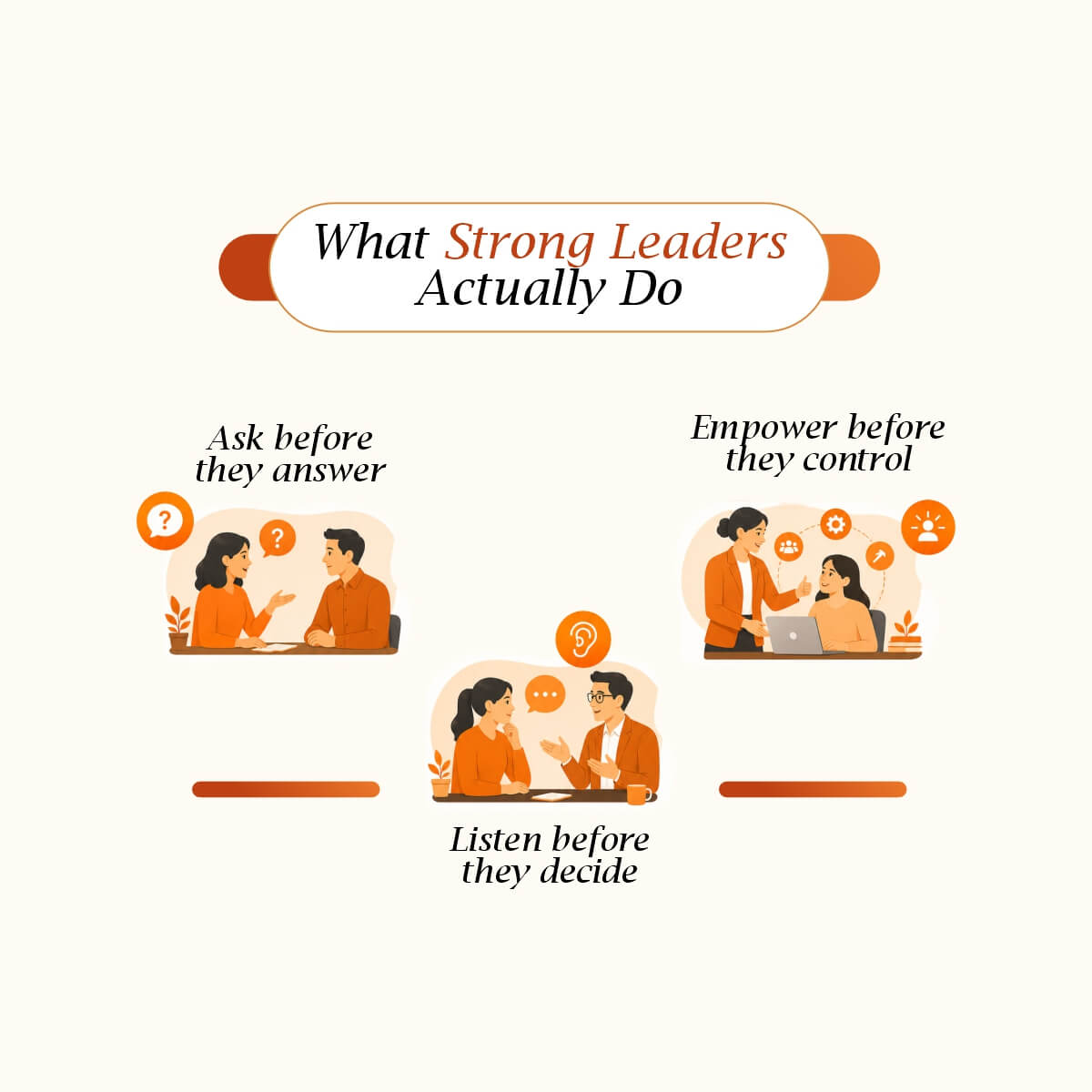
- The best leaders don’t speak first, they ask first.
- Leaders listen more. They foster higher engagement and better results by asking, “What do you think we should do?”.
- Leaders have empathy, kindness, and compassion for others.
- While many new leaders feel pressured to provide immediate answers, the highest-performing, most impactful leaders intentionally act as “stress absorbers” and curiosity-driven coaches, rather than just command-and-control directors.
- The most successful, resilient leader isn’t about being the loudest voice, but about creating an environment where others feel empowered to find answers themselves.
With decades of leadership behind you, what new frontiers are you most excited to explore in the next phase of your journey?
In short, the next phase for me is not about doing more; it is about doing what is uniquely human, with a sharper, more strategic, and more empathetic focus.
Focusing on the Purpose-Driven Culture and social responsibility of S&A Consulting Group: Making our company purpose a lived experience that attracts and retains clients and top talent, rather than just a slogan and continues to give back to the global community in a very meaningful way.
When the world looks at Rita Singh as one of the “Top Women Executives to Watch,” what impact do you most want them to associate with your work?
I want to be remembered not just as a CPA, coach, or consultant but someone who made a difference in people’s lives with kindness, empathy, and compassion.
Even if I only change one life, I feel that I have profoundly impacted the world, as small, consistent actions and decisions often create significant, lasting changes. Focusing on a single positive decision or helping one person is enough to initiate a meaningful, long-term shift in someone’s, or your own, trajectory.
I believe wholeheartedly in The Power of One: You do not need to change the entire world at once; focus on helping just one person or making one small, positive change is often enough to shift a life trajectory.
Small Actions, Big Results: Life is shaped by daily, consistent, and intentional actions rather than just big, one-time moments. One day at a time, one moment at a time.
Lastly, what message would you like to give to the next generation of women aspiring to leadership roles in traditionally male-dominated spaces like finance and operations?
For the next generation of women, the message is to embrace your unique strengths, build a strong network of allies, be a lifelong learner and, most importantly, believe in your own potential. Be assertive, stay confident, and do not let others’ opinions define you.