A good idea can change a brand. A good bridge can change what happens to that idea once it leaves the strategy room.
Ideas have to travel. From consumer insight to product. From strategy to sales. From a brand story to a package sitting on a retail shelf. From a campaign to an experience that still feels consistent when the consumer encounters it somewhere else. Every transition creates a gap, and those gaps are where good strategies can quietly lose their power.
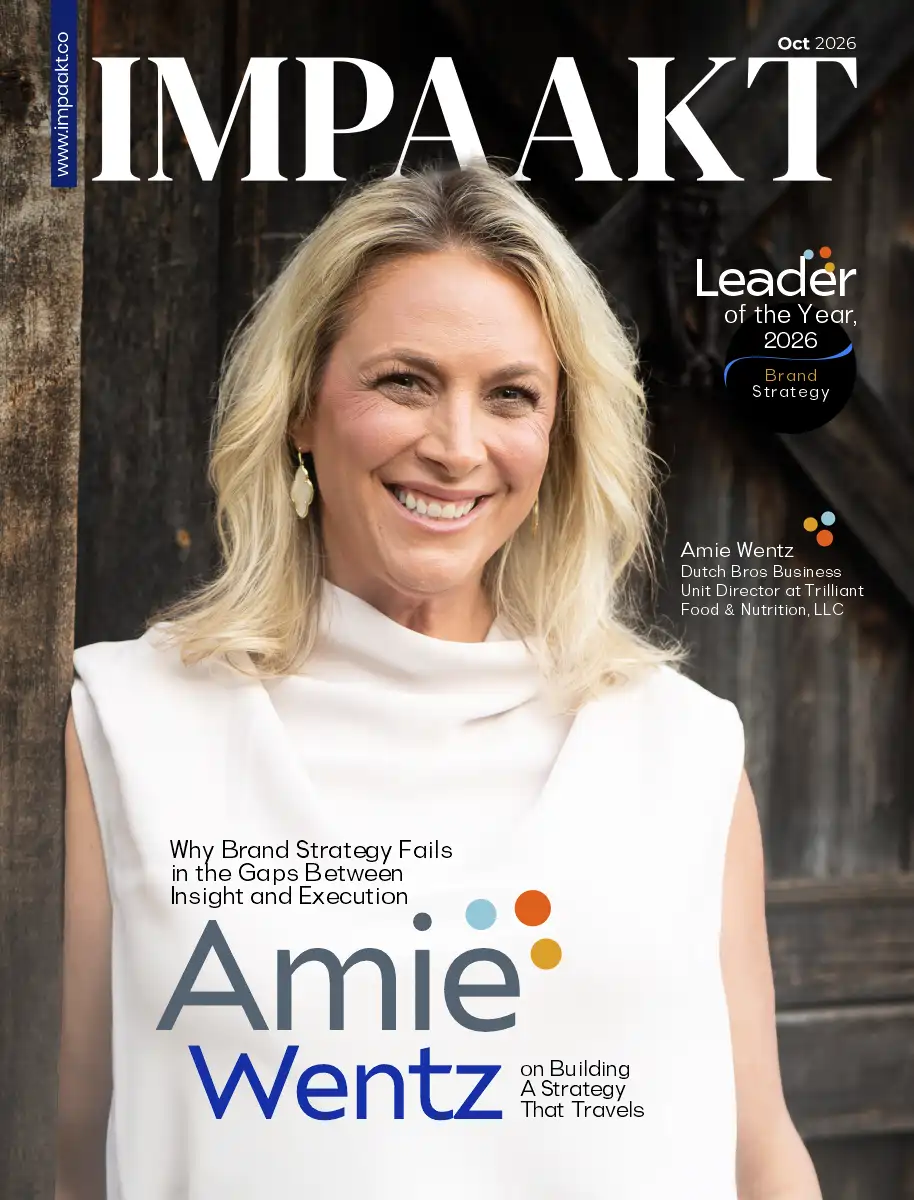
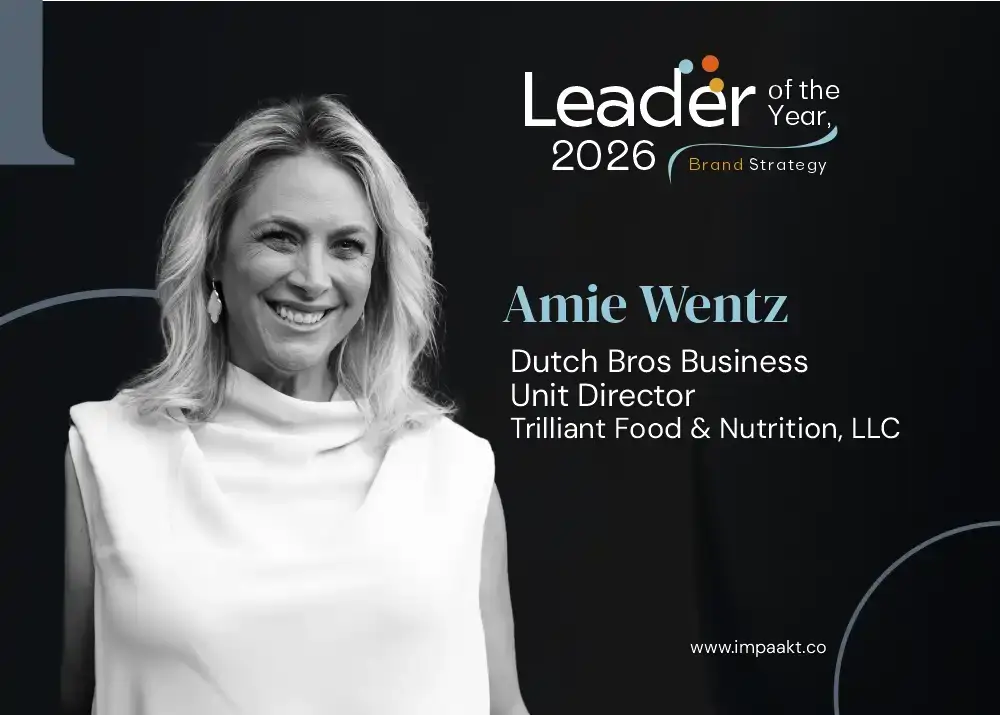
Amie Wentz has spent much of her career working in those gaps.
With more than 15 years of experience across Fortune 500 companies and high-growth consumer businesses, Amie has launched brands, revived businesses and shaped market-defining campaigns. But when she looks back at the work that created the most value, she does not describe it simply as strategy or execution. She describes herself as a bridge.
Her role has been to carry an idea across functions without losing what made it valuable in the first place. That could mean translating a consumer insight into action, making a strategy useful enough for sales teams to sell, or ensuring that a brand remains recognizable across every consumer touchpoint.
Her work with Dutch Bros Coffee illustrates that challenge beautifully. Bringing the brand into the home meant translating an experience built around shops, Broistas, energy and personalisation into products that could deliver a similar feeling without any of those physical elements present. Every detail had to carry the brand forward.
It is a philosophy rooted in a simple belief: brands fail in the spaces between ideas, decisions and execution.
Amie has made those spaces part of her job.
Inspired by her distinctive role as a bridge between insight, strategy and execution, we got into conversation with Amie Wentz to understand how she makes brand strategy travel, and what it takes to ensure that the idea arrives at every consumer touchpoint intact.
Below are the excerpts from the interview:
Amie, you’ve spent more than 15 years building, rebuilding, and scaling brands across Fortune 500 companies and high-growth consumer businesses. Looking back, what experiences shaped your philosophy that great brands are built not just to launch, but to last?
The most formative experience of my career has been watching category leaders fall to competitors who simply did a better job of connecting with the consumer and staying relevant to their lives. The difference was never the launch. The difference was what happened after.
Brands that hold the number-one position for decades share three traits. They know their consumer as a living, evolving human being — and treat that knowledge as perishable. They engineer relevance across innovation, messaging, touchpoints, and brand benefits simultaneously. And they refuse to play a “me too” game — they ask how to change the game entirely. Consumers do not fall in love with brands that mirror the market. They fall in love with brands that see them first.
Fortune 500 companies taught me that share is rented, not owned. High-growth businesses taught me the complement: brands that build consumer intimacy into their operating model as they scale convert early heat into lasting equity.
Your career has included launching entirely new brands, reviving struggling ones, and leading market-defining campaigns. Which challenge taught you the most about brand leadership?
Honestly, it isn’t one challenge — it’s all of them. COTTONELLE® taught me the stubbornness of habit: as adults, we abandon wet wipes not because the benefit changed, but because the social script did. The lesson: give consumers permission to adopt a behavior — you’re competing against a norm, not a brand.
Huggies® taught me the opposite: sometimes the barrier is inattention. New moms research everything except the one thing that spends the most time against their baby’s body. That insight became “How Will You Greet Your Baby.” When you make someone pause, you’ve earned the right to be considered.
Athenos was the cleanest puzzle of my career: people simply didn’t know what to do with feta beyond salads. “Food Needs Feta, You Need Athenos” worked because messaging and innovation moved as one; a campaign can open a consumer’s mind, but only the product portfolio can keep it open.
The through-line: brand leadership is a practice of diagnosis — the leader’s first job is to correctly name the barrier. So which challenge taught me the most? The one I’m in right now, Dutch at Home®, because it demands everything the others taught me at once.
You describe yourself as someone who “builds brands from scratch.” When you’re staring at a blank page, where does the strategy begin: with the consumer, the product, or the problem you’re trying to solve?
It always goes back to the consumer — specifically, tension points: the friction between what is wanted and what it actually delivers. The blank page is never actually blank; the consumer has already written the brief. My job is to find it.
Many companies launch products. Far fewer build brands that people actively seek out. What do you believe separates the two?
There’s no single ingredient. Celebrity-led launches drive quick sales, but are you acquiring a consumer with high lifetime value, or renting attention from someone else’s fan base? Trial is not a brand. Trial is an invitation. What you do after the consumer accepts it determines whether you’ve built something or merely sold something.
Three questions must be answered honestly before anything ships: What consumer need is genuinely being met? How is the product making her life easier? And how are you communicating with her — not at her? And launch is where most companies exhale — but it’s where brand builders lean in.
My clearest diagnostic is the gap between trial and repeat. The launch-minded company sees soft repeat and pours more trial into a leaking bucket; the brand-minded company goes back to the consumer and asks why she isn’t re-engaging. Launching a product is a moment; building a sought-after brand is a discipline. Products get bought. Brands get chosen.
One of your most exciting achievements has been leading the consumer packaged goods launch of Dutch Bros Coffee. What were the biggest strategic considerations in translating a beloved shop experience into products consumers could enjoy at home?
A small but important correction: at Dutch Bros Coffee®, we don’t call them cafés — they’re shops. From the parking lot to the Broistas’ smiles to the first sip, it’s all about the experience. We weren’t translating a product into retail. We were translating a feeling.
The first consideration was mission clarity: Dutch at Home® will never replace the shops — it extends them, growing the brand’s total share of stomach. The second was category reality: ground coffee and single-serve are declining, but consumers weren’t leaving coffee; they were leaving boredom. A declining category dominated by sameness isn’t a trap; it’s an opening.
The hardest was the translation problem: how do you recreate a fundamentally human experience with no Broista in the transaction? The energy had to live in the packaging, the flavor-forward identity in the product, the care in the details, the culture in the voice. Our test was simple: if a loyal shop customer picks this up, does it feel like us? “Close enough” meant we went back to work. We also preserved customization — at home, she isn’t just the customer, she’s the creative mind, building her drink her way.
Finally, five categories demanded discipline — each SKU is both a revenue line and a learning engine — and the work never ends: we keep checking and adjusting so that whether she’s in the drive-through or her own kitchen, it feels like the same warm, unmistakably Dutch Bros Coffee® moment.
You’ve transformed underperforming brands into category leaders, including turning a hummus brand into remarkable growth and leading a feta campaign that captured significant market share. When reviving an established brand, what questions do you ask before making your first strategic move?
My questions were forged in a real decision. Handed the Athenos portfolio, my mandate was blunt: recommend what we keep and what we exit. Pita Chips was a quick exit — broken economics. Feta was a definitive keep. Hummus, on paper, belonged in the exit column. But the consumer need was real and growing, and the barrier wasn’t the category — it was our execution within it.
I walked into my VP Heather Engwall’s office and said, “I think we need to keep and grow this one.” She pressure-tested it, then Tim told me: “You are so passionate about this, I am going to let you try. If you fail, fail fast and know when to walk away.” That taught me a core question: does this brand have a champion, and does that champion have air cover? Conviction without organizational trust dies in the first budget meeting.
The consumer research was unambiguous — make the recipe as clean as possible; you cannot market your way around a product that doesn’t deserve the message. Then the economics: our co-manufacturer and I struck an agreement that served his operations and our margins — always ask who else has to win for this brand to win. The turnaround worked — though business issues later forced an exit, which added my final question: does the broader business have the runway to let the revival breathe?
If you had to identify one element that businesses consistently underestimate when building brands, what would it be?
Without hesitation: the investment and the talent it takes to bring a brand to life. Everyone can see the finished brand; almost no one sees what it cost to build. Companies fund a brand’s birth generously and then starve its childhood. Brand-building is a multi-year capital commitment, not a marketing line item to be trimmed in a soft quarter.
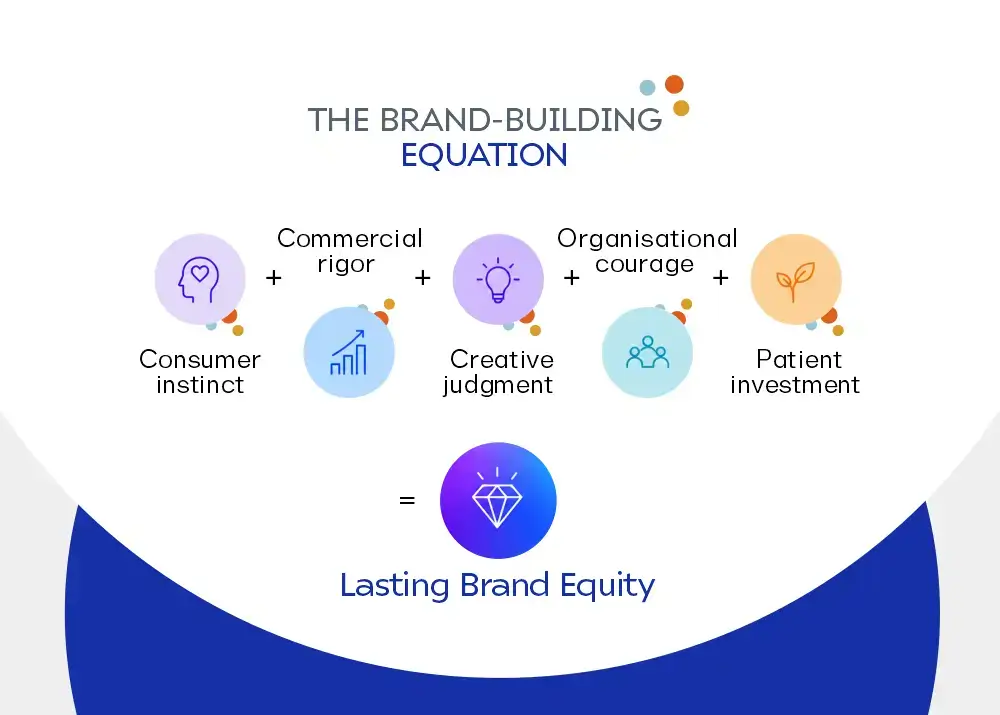
The talent gets underestimated even more than the money. The difference between a good brand team and a great one is not incremental; it is exponential — the rare combination of consumer instinct, commercial rigor, creative judgment, and organizational courage.
Underinvest in a factory and production stops next week; underinvest in a brand and everything looks fine for a year while affinity quietly decays. So budget for the brand you want, not the brand you have — and staff it the same way. Every great brand I’ve seen had both patient money and passionate people. Every brand I’ve watched fade was missing at least one.
Technology, AI, and data are changing the way brands connect with consumers. Which aspects of brand building will always remain fundamentally human?
I embrace technology, AI, and data enthusiastically — but the tools have changed; the job hasn’t. Brands are relationships between people, and four things will always remain human. Empathy: data can tell you repeat rates are soft; it cannot tell you why it matters to her. AI can surface the pattern; only a human can feel the person inside the pattern. Judgment: AI optimizes toward what already works — no model would have told me to keep and grow a hummus brand the numbers said to exit. Trust: consumers trust brands that behave like trustworthy people — and no AI grants the faith a leader shows when they say “I’m going to let you try.” And joy: you can feel the difference between a brand run by people who love it and one run by a dashboard.
Let AI do what it does best. But when every competitor has the same tools and the same data, the human elements become the only durable differentiation left.
If you were mentoring the next generation of brand leaders, what’s one misconception about brand strategy you would encourage them to let go of?
Let go of the belief that brand strategy has to be complex to be good. Complexity is not sophistication. A brand strategy is not a document; it’s an instruction set for hundreds of decisions made by people who will never sit in your strategy meetings. If your strategy takes twenty minutes to explain, you have as many strategies as you have people paraphrasing it. Interpretation is where complex strategies go to die.
The best strategies I’ve ever worked with could be said in a sentence: Make her pause and truly consider what she puts on her baby. Food needs feta. Bring the feel-good energy of the shop into the home. Simple strategies are self-enforcing. And simple is not the same as easy — complexity is what thinking looks like when it isn’t finished; simplicity is what it looks like when it is.
Your strategy is ready not when there’s nothing left to add, but when there’s nothing left to remove. Write it so simply that the newest person on the team could repeat it accurately after hearing it once. Let go of complexity as a badge of intelligence — it was never the badge. Clarity is.
You’ve built brands that have influenced categories, consumers, and retail partners alike. When people reflect on your career years from now, what impact do you hope they’ll say Amie Wentz had on the world of brand strategy?
I hope they say I was a bridge. The moments that actually created value in my career were never pure strategy or pure execution — they were the moments of translation in between — carrying an idea across a gap without dropping it.
Four bridges define that work. From insight to action: insight that never becomes action is just expensive trivia. From strategy to something the sales team can actually sell: a strategy isn’t finished until sales can sell it and retail can win with it. From brand story to consumer need: telling the brand’s story through the doorway of her need, so the brand never performs at her but shows up for her. And translation across touchpoints, so what arrives at each one is still recognizably the brand.
Brands rarely fail from a lack of ideas, talent, or investment. They fail in the gaps between functions — nobody owns the gaps, so the gaps win. The bridge builder’s job is to own them anyway. I hope they say: Amie Wentz made brand strategy travel — and everything arrived intact.
If every brand leader could remember just one principle from your career before launching their next product, what would you want it to be?
Build for the repeat, not the launch.
Launch day tells you almost nothing about whether you’ve built a brand. Trial can be bought. The repeat cannot. It has to be earned — and only when the product genuinely resolves a real consumer tension and makes her life easier. Building for the repeat means the launch is the beginning of the work, not the end.
The repeat is the consumer’s vote, cast in private, with her own money, and no campaign can cast it for her. Before your next launch, ask one question: have I built something she’ll come back to when no one is marketing to her? Products get bought once. Brands get chosen again and again. Build for the repeat, and the launch will take care of itself.