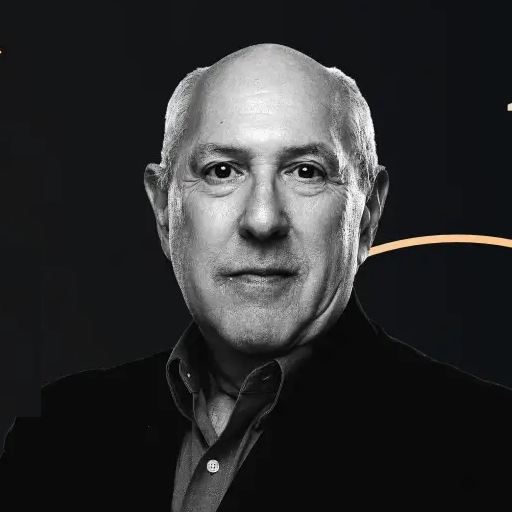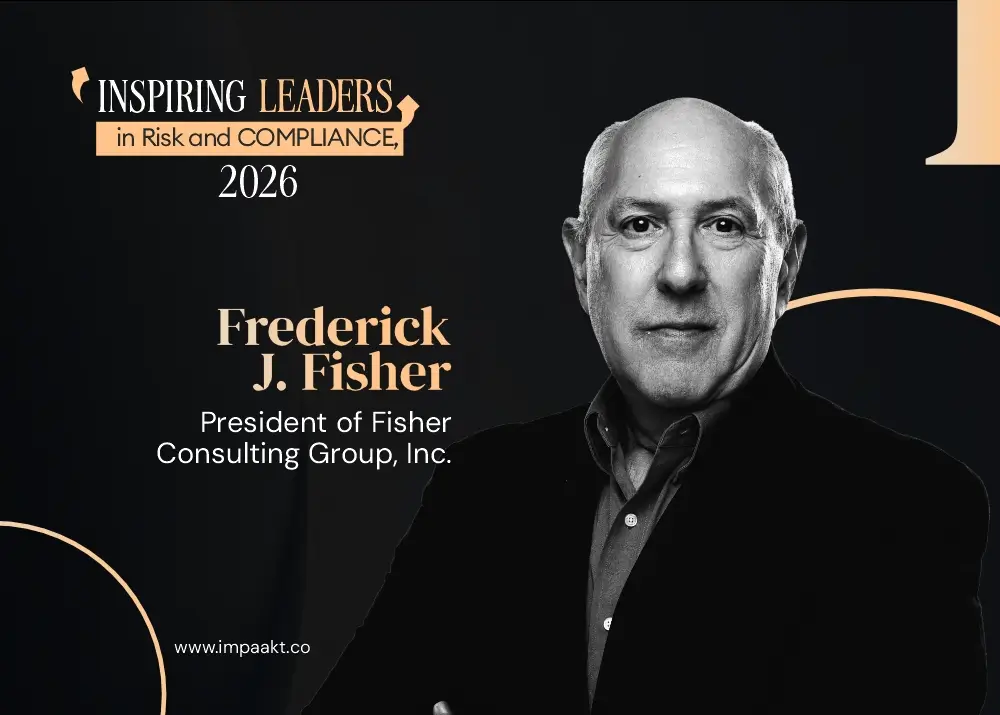
Most people in the insurance industry will tell you the system works just fine. Frederick J. Fisher will tell you they’re lying to themselves. After 50+ years of investigating claims, consulting on complex disputes, serving as an expert witness, and training the next generation of claims professionals, Fisher has earned the right to speak uncomfortable truths. And he does so without apology.
The insurance business, as Fisher sees it, has been hijacked. Absolute exclusions have replaced fair claim practices. Insurers now “evaluate” rather than “investigate” claims, forcing policyholders to prove their own losses. Private equity money and short-term hedge fund loans prop up capital surplus, creating a system where companies are financially incentivized to delay payments as long as possible. Meanwhile, 35 states have eliminated pre-license education requirements, ensuring that the people selling insurance often know less about it than the customers buying it. The result? A product that increasingly functions as a placebo—making people feel protected while offering little actual coverage.
Fisher didn’t set out to become the industry’s conscience. He started as a hungry law student investigating professional liability claims in 1975, fascinated by the puzzle of each case. But as he built Fisher Consulting Group, Inc., authored books, and developed some of the first PC-based claims tracking systems in the 1980s, he kept running into the same problem: the industry was moving in the wrong direction. So he made it his mission to call it out, warn others through his trademarked lectures on “The Gotchya’s That’ll Getchya™,” and educate policyholders on how to protect themselves in a system designed to fail them.
His philosophy is blunt: “I’d rather be right than rich.” By that measure, he’s been very successful. Intrigued by his willingness to challenge an industry he’s spent a lifetime serving, we reached out to learn what drives a man who refuses to be silent when silence would be so much easier.
Here are the excerpts from the interview:
You’ve been shaping the risk and insurance landscape for nearly five decades — from founding Fisher Consulting Group to educating the next generation of claims professionals. Looking back, what first drew you to this field, and what has kept you passionate about it all these years?
In February 1975, I was working as a law clerk for one of the senior associates of an insurance defense law firm. This was my second job as a law clerk, and one of the things I noticed about insurance defense work was how routine it was. I was constantly assembling and preparing interrogatories with the exact same questions in every case, and this did not seem very exciting or creative.
The senior partner decided he needed a young associate attorney who was licensed, instead of a law clerk, and I was laid off. Fortunately, a friend of mine was working for an independent claims adjusting firm that specialized in professional liability. She was able to arrange an interview with the owners, and I was hired on the spot — not only because I was a hungry young law student, but because I had worked for two and a half years as a law clerk inside an insurance defense firm and was familiar with the process from a legal perspective.
From day one, I found the claims I was investigating as a boots-on-the-ground investigator to be fascinating. Every claim I was asked to handle was different from the others, and I was learning a lot very quickly.
In addition, I was dealing with what was called a claims-made insurance policy, something I had never heard of before. It literally took me a few months to get a handle on the nature of the policy, together with honing my abilities to investigate a claim not only from a liability perspective and how to settle or resolve it, but also from a coverage standpoint. Between the two, I just loved it.
You’ve consulted on complex claim disputes, advised major insurers, and served as an expert witness in high-profile cases. What’s one case or experience that profoundly changed how you view risk and responsibility?
This is a very difficult question to answer, as every so often a new appellate decision is handed down that I find completely astounding. For instance, in the late 1970s, the Royal Globe case changed a lot with respect to claims handling because, for the first time, California decided that violations of the Fair Claims Practice Act could give rise to personal liability by anyone handling a claim. The key language was “failure to make a reasonable offer of settlement when liability has become reasonably clear.”
As an independent claims adjuster, I was constantly being threatened with such a lawsuit, even though we didn’t have the insurance company’s checkbook. Eventually, that was overturned.
Over the years, numerous decisions have been handed down that have astounded me and required some type of reaction, whether it was the way in which I handled claims or, once I opened my insurance brokerage, how I protected my policyholder clients. Nothing has changed in that regard, and most recently, two issues have emerged.
One is the significant use of absolute exclusions so that insurers can avoid paying claims they normally would pay. The other is the Pharmacia decision, whereby an excess carrier required all underlying insurers to admit liability before they tendered their money in settlement of a loss. Who has ever heard of anyone or any business admitting liability, let alone an insurance company?
These are precisely some of the decisions that have caused me to seriously question the direction the insurance industry is currently taking, and how it appears American insurers have abandoned the concept of putting the policyholder in the position they were in prior to the loss. Instead, they are focusing on maximizing profits by paying fewer claims. This is simply wrong.
Your signature phrase “The Gotchya’s That’ll Getchya™” has become quite recognizable in your lectures. What inspired that idea? Could you also walk us through a concrete example of a “gotchya” that blindsided an organization, and how the situation was ultimately resolved?
There are so many “The Gotchya’s That’ll Getchya™” these days, it is hard to single one out. The point is that attorneys are helping insurance companies limit their exposures so as not to pay claims they normally would pay. The courts are assisting in this regard because of the concept that if the policy language is “clear and unambiguous,” the language will be enforced.
This is true to the point where several maxims of insurance law that I grew up with have been tossed aside. These include the concept that insuring agreements are to be broadly interpreted and exclusions narrowly construed. Well, exclusions are no longer being narrowly construed due to absolute exclusions, with one federal court judge stating, “we are about to enforce a staggeringly broad exclusion.” What kind of insurance is that?
In one instance, an attorney I know wrote a guest editorial in a popular online blog called The D&O Diary. At that time, D&O insurance was becoming expensive. He suggested the use of 19 exclusions, as well as implementing absent language in all exclusions. Thus, the coverage that would normally be provided would be almost completely gutted, leaving very few matters that would be covered.
That was supposedly the solution to the problem of coverage becoming expensive. What kind of policy would that be once it was gutted? That would be nothing more than a placebo, leading a policyholder to believe they had coverage when, in fact, they had very little. While that didn’t fully take hold, some of it did.
It is not limited to D&O policies, but applies across the board. This is a systemic problem that goes beyond just insurance. Everywhere we look, due to mergers and acquisitions, businesses no longer need to compete with each other because they are all owned by the same parent company. Monopolization is taking hold not only in the insurance industry, but in the airline, entertainment, and hotel industries as well. What fuels it is greed, the drive for profit over quality products. It is no wonder America has lost its competitive spirit. Today’s businesses are focused on profit over quality.
This is not what Jack Welch stated in his famous remarks at that business club meeting in the 1980s, when he said the purpose of a corporation is to create shareholder value. People have forgotten the second sentence: shareholder value is created by providing the best service and the best quality product, better than anyone’s competition.
That concept seems to have fallen by the wayside, and the insurance industry is no different.
You’ve witnessed the industry evolve from analog systems to AI-driven analytics. What, in your view, has been the most transformative shift in how organizations perceive and manage risk today?
The focus on profit at any cost, together with insurance companies no longer investigating claims. They tend to evaluate claims instead, which is a passive method of resolving them. This requires a policyholder to present the data necessary to support paying a claim, which is contrary to the Fair Claims Practice Act that most states have adopted.
In addition, in the quest for profit, insurance companies themselves may be looking at a financial precipice. Underwriting is supported by capital surplus that must be unencumbered and is used to support underwriting and pay claims.
Even the National Association of Insurance Commissioners (NAIC) is concerned about the amount of private equity and hedge fund money coming into the insurance industry in the form of short-term loans. Insurance companies are using these loans as capital surplus to support underwriting and supposedly pay claims, even though such loans are short term. Is it any surprise, then, that insurance companies are digging in their heels and trying to stall the payment of claims as long as possible?
This is part of the problem we are seeing not only in the insurance industry, but in just about every industry.
AI will do whatever it is programmed to do.
You were an early innovator — developing loss control programs, claim auditing techniques, and one of the first PC-based claims tracking systems back in the 1980s. What drove that forward-thinking mindset long before “risk innovation” became a buzzword?
Simple. When I identify a problem, I look for its solution. On the same token, sometimes being an early innovator means you can look forward to being fed to the best lions.
For instance, in late 2001, we launched a fully interactive website for our customers so they could fill out an online application, which would automatically be sent to the same underwriter we would have sent it to the old-fashioned way, by fax or email, and receive a quote the same way. Our office was passive; we would get copies of everything transpiring on our website.
It certainly took off, but the submit-to-bind ratio was not particularly good. In essence, we had to stop doing it because our insurance company underwriters were being flooded with submissions but not seeing much in the way of results. We were way ahead of our time on that one.
Compliance is often seen as a checklist exercise. But you’ve long emphasized its human and ethical dimensions. How can leaders cultivate a culture of compliance rather than a culture of compliance enforcement?
People are not interested in doing the right thing anymore. They are interested in profit and are driven by greed. It’s that simple. Others are driven by power so they can achieve profit for themselves, hoarding it like any other megalomaniac. We see it every day, including at a national level driving some of our international political decisions.
In reality, the drive is to create an oligarchy, as has existed in other countries. We are no longer focused on what is good for society as a whole, and I am very pessimistic about how to stop it when so much power and wealth are in the hands of so few.
As Eric Sevareid once proclaimed on CBS News as their editorial expert, “we need a social revolution in this country to reestablish our values.” That remains true today. Our leaders have lost their moral compass as to what is good for the society we cherish so much.
As an educator and Certified Claims Professional trainer, what gaps do you see in how new professionals are being prepared for today’s complex regulatory environment?
It’s actually quite scary, and I’m very pessimistic, although there may be a method to the madness. Effective January 1, 2026, the California Department of Insurance is eliminating the requirement for 20 hours of pre-licensing education before one can even take the exam. This means someone will either have to obtain the education on their own or study a sample examination so they know what the right answers will be.
Whether this will make it harder to pass the exam remains to be seen, but given the fact that 34 states have already adopted this approach and dropped pre-education training, California becomes number 35. Most of these are the same states that also adhere to the “order-taker standard of care” for insurance brokers and agents, meaning they have no duty to advise their customers. They are only obligated to obtain the coverage requested and thus have no more obligation to their customer than a server at your favorite restaurant.
In other words, consumers are required to know more about insurance and their needs than the people who sell it day to day. How absurd is that? And how many people even know this is what has taken place?
Yet the NAIC remains silent on this and is allowing it to happen, along with the degradation of insurance coverage in general. They are turning a blind eye to the use of absolute exclusions and other policy language meant to limit coverage in order to increase profits for insurers and their stockholders.
Your latest book, “Claims Made Insurance — The Policy That Changed the Industry,” explores how one innovation reshaped the entire sector. Why was it important for you to write this book now, and what message do you hope readers take away from it?
Prior to the book being published, I was well aware of the significant frequency of claims being denied because policyholders were clueless about how and when to properly report a claim, as well as the importance of being honest on their applications about whether they were aware of any fact or circumstance that could give rise to a claim. This is actually a warranty question on the application. If they are aware of a potential matter that could give rise to a claim, it must be disclosed.
Policyholders are concerned that if they do that, they won’t be covered when the claim is later made or that their renewal premium will increase. This is wrong, because in 1972 and ever since, there has been a safety net provision in these policies that allows insureds to give timely notice to their insurer about what may become a claim in the future. Even after the policy expires, they would still be covered.
Unfortunately, policyholders mistakenly believe that if they do this, their rates will go up. This is not true. I know of a major corporation that reports up to 200 such potential incidents a year and has never seen an increase in premium because none of those instances ever gave rise to an actual claim requiring the insurance company to post a loss reserve.
This evidences a lack of education and a lack of assistance from insurance agents and brokers because, as stated above, they have no duty to advise or assist. That is why I wrote the book. Policyholders need to be better educated about how claims-made policies work. I wrote it not necessarily for the industry, but for the consumer as well. It was written at a level they can understand while still being able to grasp the technical aspects.
Lastly, what would you want the next generation of risk and compliance professionals to remember Fred Fisher for?
Simple. I’ve always strived to do the right thing. I’ve also lived by the concept, “I’d rather be right than rich.” Believe me, I’ve been right a lot.