“What is wrong with me?”
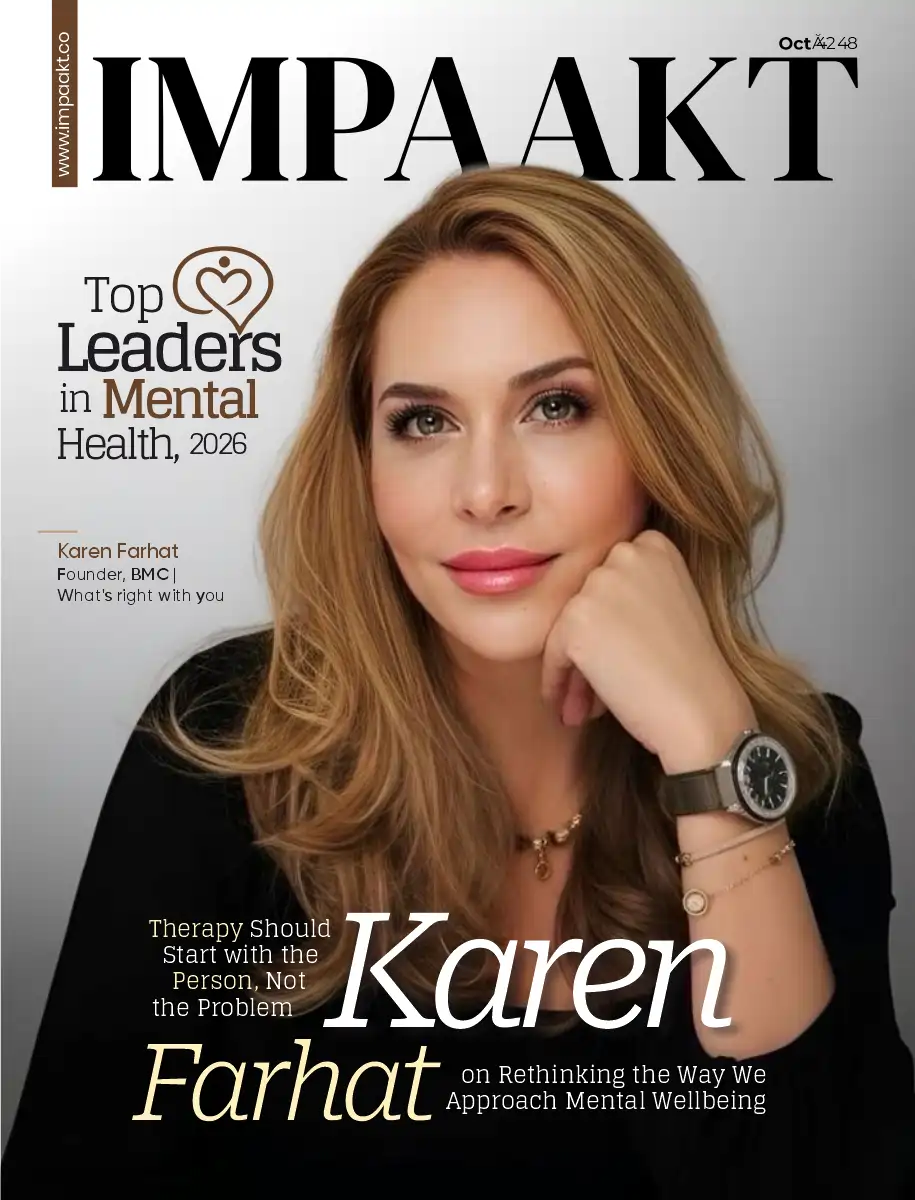
It is often the first question people ask when they are struggling. It is also the question Karen Farhat would like us to ask less often. For her, the more useful question begins with curiosity: What is happening within us? What is the experience trying to tell us? And what is already right that we can build upon?
That perspective also changes how therapy itself can be understood. Therapy is often associated with methods, frameworks and expertise. But before any of those enter the room, there are two people.
Karen has always been interested in that human space between them. The moment when someone decides to trust another person with a story they may never have said aloud before. The pause before an answer. The instinct to listen rather than rush to solve. The subtle shifts that cannot always be captured by a textbook.
As Founder of Body and Mind Consultancy, Karen sees therapy as a relationship rather than something one person simply does to another. With a PhD in Transpersonal Counselling, her work draws from psychology, mindfulness, meditation and spiritual perspectives, but its foundation remains deeply human: presence, trust, curiosity and respect for the individual experience.
That understanding was shaped long before BMC came into being. Through her early work with NGOs, Karen encountered people from vastly different backgrounds and circumstances, yet found that the emotions beneath their stories were deeply human. Pain may take different forms, but the need to be understood remains remarkably universal. Those experiences eventually shaped the philosophy behind BMC, which she founded in 2010 as a space where people could be approached in all their dimensions rather than through a single lens.
Today, as technology and AI begin finding their place in mental health support, Karen remains equally thoughtful about what technology can offer and what it cannot replace. Information, tools and accessibility have their place. But therapy also depends on something harder to replicate: the human capacity to sense, relate, wait, challenge, and simply be present with another person.
It is this belief in the human side of healing that continues to define Karen’s work. Inspired by her perspective and the philosophy behind BMC, we got into conversation with Karen to explore what it means to truly listen, understand ourselves beyond our labels, and create meaningful change.
Below are the highlights from the interview:
Karen, you describe yourself as someone who was naturally compassionate and a trusted listener from childhood. Looking back, when did you first realise that listening to people’s stories could become more than a personal quality and actually become your life’s purpose?
As a child, I was taught the importance of listening and listening before answering, rather than reacting instantly. For a child, that’s quite challenging and frustrating, and it took a lot of practice, but looking back, it was probably one of the first qualities I consciously developed.
Over time, I came to understand the difference between listening and hearing. When you are truly present with someone, you begin to see the real person behind the words. You notice not only what they say, but also what they don’t say.
That was where the shift happened for me. Listening stopped being simply a quality I had been taught and became a way of understanding people. The more people trusted me with their stories, the more aware I became of everything that could exist beneath the words. And once you begin to see that truly, you naturally want to understand more, and eventually, to know how you can help.
Before becoming a therapist, you worked with NGOs and spent years listening to people’s problems and helping them find solutions. How did those early experiences influence the way you eventually built BMC?
Working with NGOs exposed me to people from very different backgrounds and circumstances, but it also shed light on something very simple: pain is pain, and anxiety is anxiety. Human suffering goes beyond gender, culture or financial circumstances. The individual story may be different, but the emotions we experience are truly human.
I would say my primary interest was the person sitting in front of me. I didn’t simply want to understand what they were going through; I wanted to understand how they experienced it, help them understand themselves, and explore what might truly work for them rather than presume one solution could fit everyone.
That became fundamental to how I eventually built BMC. I never wanted to fit people into a particular method or framework. The person had to come first, and the approach had to follow. From there, I could draw on different therapeutic tools and perspectives based on what that individual actually needed.
Those early experiences helped me to see the whole person long before I had a name for that philosophy. Our capacity for suffering is universal, but the path through it is personal.
BMC was founded in 2010 at a time when combining clinical and spiritual approaches under one roof was far less common. What did you see that others were missing?
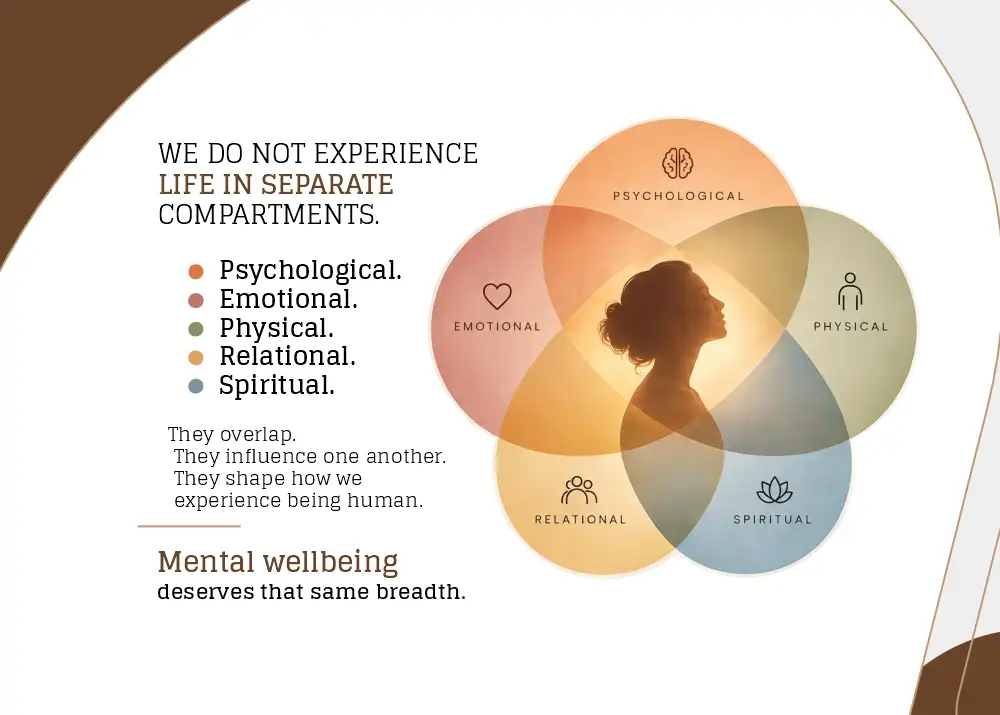
I wanted an approach broad enough to reflect the human experience, because we don’t experience life in separate compartments. We live in the world through many dimensions at once: psychological, emotional, physical, relational and, for some people, spiritual.
Part of that understanding came from my own experience. When I was younger, I went to a therapist to talk through some challenges I was facing. I remember leaving feeling like something was missing. The approach didn’t appeal to me; it felt either very clinical or somewhat not related to what I was actually experiencing. I was looking for something more.
That experience stayed with me. Years later, when I founded BMC, I wanted to create the kind of place I myself would have wanted to walk into: somewhere professionally grounded, but also human, inquisitive and receptive to the different dimensions of a person’s experience.
For me, it was never about deciding between the clinical and the spiritual. It was about recognising that neither, on its own, necessarily tells the whole story. Human beings are multidimensional, and I wanted BMC to have the breadth to meet them that way.
The name Body Mind Consultancy captures a central part of your philosophy: that our physical, emotional, mental, and spiritual experiences are deeply connected. What do you think we still misunderstand about that connection?
Perhaps what we have misunderstood for a long time is the idea of “dis-ease” itself: what happens when we are no longer at ease within ourselves. That does not mean that every physical illness has an emotional or psychological cause, and I think it is important to make that distinction. But it does invite us to look at wellbeing more broadly.
Today, the body-mind connection is finally receiving far greater attention. We understand much more about how prolonged stress can alter sleep, energy and the nervous system, and equally how our physical state can shape mood, thought and emotional strength. What happens in one part of us rarely remains neatly contained there.
For me, the missing piece has often been learning to pay attention before something has to shout. We are very good at responding once distress becomes a symptom, but less accustomed to asking what our body, emotions or inner world may have been communicating along the way.
The connection between body and mind is not mystical; it is part of being human.
Someone can understand intellectually that they need to change, yet still feel unable to do so. What do you believe happens between “knowing” and actually being able to transform?
There is an important difference between knowing and being. We can know what needs to change, understand where a pattern comes from and even recognise exactly what we are doing while we are doing it. But knowing alone does not transform us. To be different, we have to act differently at some point.
Awareness is the beginning. Therapy can give us understanding, language, validation and tools, and all of those have value. But if those tools stay inside the therapy room, very little changes outside it. Transformation asks for participation. It means taking what we have discovered about ourselves and beginning to apply it in the moments when our old patterns would normally take over.
That is often the more challenging part, because insight can feel immediate while change is something we practise. We try, we stumble, we become aware, and we try again.
I have always connected with the principle of being the changer rather than simply wanting change. Knowing can change how we understand ourselves; being changes how we live.
What are some of the things you have learned from your clients about healing that no textbook or qualification could have taught you?
I often say it takes two to tango. Therapy may have defined roles, but at its heart it is a common human experience. Just as clients learn something from us, we inevitably learn from them. Every person brings a different life, perspective and way of experiencing the world into the room, and that continues to teach me in ways no textbook might.
One of the most important lessons has been to never take someone’s trust for granted. When another human being sits in front of you and opens their heart, sometimes sharing things they have never said aloud before, something sincerely significant happens at that instant. It deserves to be received with care, respect and without judgement.
Carl Rogers spoke of unconditional positive regard, and over the years I have come to appreciate how powerful that principle really is. It is not simply a therapeutic concept; it is a way of meeting another human being.
My clients have taught me that therapy is not something we “do” to another person. It is a relationship we enter together, and both people leave it knowing something they did not know before.
Your work brings together psychology with mindfulness, meditation and teachings such as Dzogchen. For someone who may be unfamiliar with these ideas, how can spiritual exploration complement psychological wellbeing without replacing evidence-based mental health care?
Teachings such as Dzogchen have deepened my own personal experience and philosophy of the world, but I like to simplify these ideas rather than make spirituality feel abstract or inaccessible.
I sometimes think of it this way: we eat and drink to maintain the body, and we exercise to keep it healthy, knowing that physical wellbeing also affects how we feel mentally. In much the same way, mindfulness, meditation, and spiritual practice can nourish and exercise our inner world. They can teach us to become more present, to observe our thoughts rather than automatically follow them, and to develop a different relationship with ourselves and with what we experience.
Personally, I realised this complements psychology; it does not replace it. If someone is experiencing psychological distress or a mental health condition, appropriate evidence-based professional care is essential. Spirituality should never become an explanation for everything, or an excuse not to seek the help someone needs.
I see them as different forms of nourishment. We take care of the body we live in; psychology helps us understand the mind we live with; and spirituality can invite us to understand more deeply the person experiencing both.
As mental health conversations become more mainstream, there is also a growing amount of information, advice and self-help content online. What concerns you about the way mental wellbeing is sometimes simplified on social media?
In this day and age, particularly with social media, we cannot and perhaps should not try to stop the flow of information. Greater awareness around mental health has brought many positive changes. What concerns me more is the continuous labelling of our mental and emotional situations.
My concern is what happens when information becomes “identification”. The more a psychological term is repeated and applied to ordinary experiences, the more easily we can begin to see ourselves through that lens. A word meant to describe an experience can slowly become how we explain ourselves, and eventually even how we define ourselves.
And labels are powerful. Once we repeatedly tell ourselves, “I am anxious,” “I am traumatised” or “this is just who I am,” the label can gradually become part of our identity. Sometimes it may even become an explanation for why we cannot change.
There is an important difference between saying “I am experiencing anxiety” and “I am an anxious person”. One describes something we are going through; the other risks defining who we believe ourselves to be.
Information should help us understand ourselves, not reduce us to terminology.
If you could change one thing about how society approaches mental health today, what would you change first?
If I could change one thing, it would be the tendency to approach mental health by immediately asking, “What is wrong with me?” I would like us to become equally curious about what is right with us.
Struggling does not mean that everything within us is broken or needs to be fixed. Sometimes we need to understand what we are feeling, what it may be communicating, and recognise the strengths and inner resources we already have.
I would also like mental wellbeing to become part of how we learn to live, rather than something we address only when we reach a crisis.
Perhaps the question should not always be “What is wrong with me?” but “What is happening inside of me, and what is already right that I can build upon?”
What role do you see technology and AI playing in mental health support? Where can they genuinely help, and where do you believe the human connection will remain irreplaceable?
Technology and AI can be enormously useful in mental health. They can make information more accessible, offer practical tools and help people reflect on what they are experiencing, sometimes becoming a first step towards seeking professional support.
But therapy isn’t simply about finding the right answer; very often, there isn’t one. This is where something fundamentally human remains irreplaceable: the therapist’s heart and soul.
Therapy happens through presence, intuition, trust and the “relating process” between two people. A therapist can sense when to question, when to challenge, when to wait and sometimes when to listen.
I welcome AI as an important resource, but that’s how I see it. Technology may understand what we say; the human bond senses and feels who is saying it.
When you look at BMC today, does it resemble the dream you had in 2010, or has the journey taken it somewhere you could not have anticipated? What would you like BMC to make possible for people that is difficult to find in today’s mental health landscape?
The one constant in life is change, and BMC has evolved with it. New methods to learn and explore always emerge, and sometimes older approaches resurface with new understanding and recognition. Remaining curious and continuing to learn is essential in this work.
What makes me particularly happy is seeing more and more people welcoming the kind of multidimensional approach that BMC was created around. To me, that is progress. It means people have more choice in finding an approach that sincerely resonates with them.
I want BMC to keep evolving without losing what has always been at its heart: the person.
The dream was never to build a practice. It was to create a place where being human, in all its dimensions, has room.
Your BMC mantra says, “You are Beautiful and Perfect. You Can Do It.” If someone reading this interview is currently struggling with their own mental or emotional wellbeing and feels that they have lost their way, what would you want to say to them?
Always know that there is a way, even when you cannot see it yet.
There are moments in life when we lose our sense of direction, question ourselves or feel overwhelmed by what we are experiencing. But a difficult moment, however consuming it feels, does not define who you are or what is still possible.
The BMC mantra, “You are Beautiful and Perfect. You Can Do It,” is not about perfection in the conventional sense. It is about recognising your worth as you are, while believing in your capacity to grow, change and find your way forward.
You may not always see the way, but that doesn’t mean there isn’t one. Never give up on finding it.