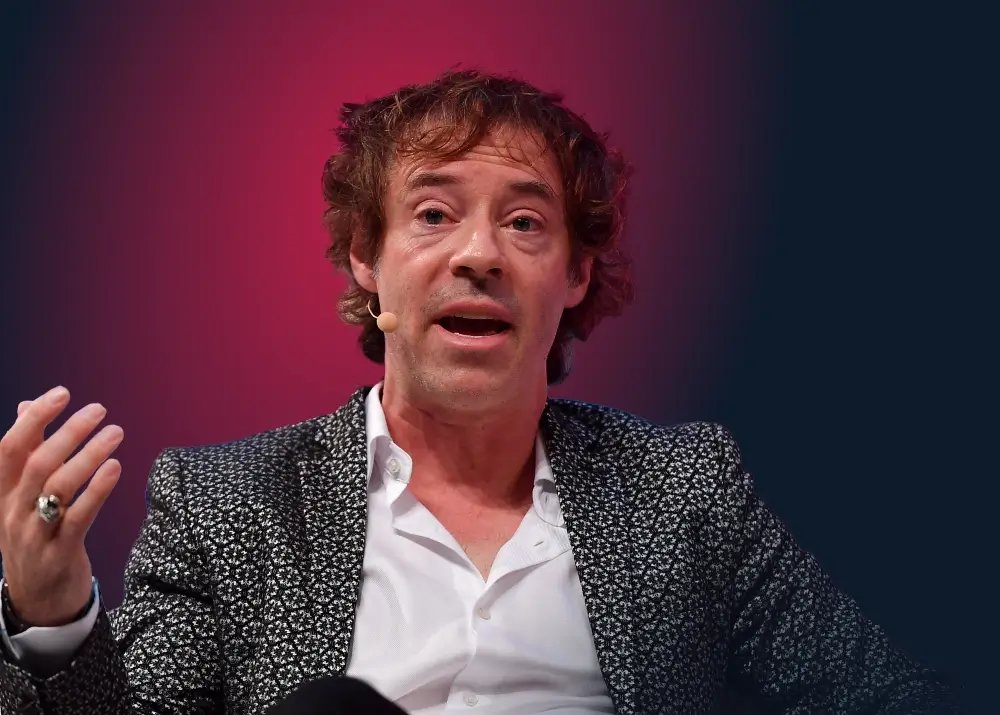
Michael Acton Smith was experiencing a sever burnout with headaches every morning and painkillers just to start the day. His company, Mind Candy, was unraveling. Moshi Monsters, the online world he’d built for kids that reached 80 million users, was crumbling as the industry shifted from desktop to mobile.
This was 2014. Smith had built and sold companies before. He’d chased adrenaline, growth, and the next big idea his entire career. Now, sitting on a balcony in the Austrian Alps, burned out and exhausted, he tried something his friend Alex Tew had been pestering him about for years.
He meditated for ten minutes.
From Monsters to Mindfulness
Smith’s path to that balcony started conventionally enough. After graduating from Birmingham University with a geography degree in 1996, he joined Goldman Sachs in HR. He hated it. Within two years, he and a friend were flipping through a book called “Doing Business on the Internet” in a bookstore, plotting their escape.
The result was Firebox.com, an online gadget retailer they launched in 1998 from a rent-free attic with a £1,000 loan from Smith’s mother. Their first hit? A shot glass chess set. By 2004, Firebox ranked as the 13th fastest-growing private business in the UK.
But Smith wanted more. He raised $10 million and launched Mind Candy in 2004, creating Perplex City, an alternate reality game with a £100,000 treasure hidden somewhere in the world. Players actually found it years later, buried in a forest north of London. The project was creatively thrilling and financially disastrous.
Then came Moshi Monsters in 2007. Smith’s last $1 million investment. Within years, it became a phenomenon—80 million registered users, $250 million in revenue, toys, books, magazines, a movie. At its peak, Mind Candy was valued at £200 million. Smith received an OBE in 2014 for services to the creative industries.
And then the platform shift happened. Kids migrated to mobile and tablet games. Moshi Monsters didn’t adapt fast enough. The business began to die.
The Skeptic Becomes a Believer
Smith had dismissed meditation as “woo-woo” for years. Religious nonsense. What could ten minutes of sitting quietly possibly accomplish that six more emails couldn’t?
But on that balcony in Austria, something shifted. The fog cleared. He read research papers, studied the neuroscience. Meditation wasn’t mysticism. It was brain rewiring. It was a skill, like exercise, that produced measurable results.
He called Alex Tew, who’d been building a simple meditation website. Tew had created “Do Nothing for Two Minutes” in 2011—a website where users stared at a screen with ocean waves for two minutes without touching their mouse. Over 100,000 people signed up in two weeks.
Smith finally understood. “Right dude, you finally get it,” Tew told him.
They decided to build Calm.
Building the Nike of the Mind
In 2012, when Smith and Tew started pitching Calm, investors laughed them out of rooms. “This is so niche.” “You can get meditations for free on YouTube.” “No one is going to pay for this.”
The domain Calm.com was available, but it cost £1 million. They couldn’t afford it. A year later, the owner agreed to negotiate. Final price: £100,000 plus equity. Smith used money he’d saved for a house deposit. His parents thought he’d lost his mind.
The early years were brutal. Between 2012 and 2015, Calm operated with six or seven employees. Smith laid off staff five times. At one point, they were down to “a few thousand dollars.” They had raised just $1.5 million by 2017—compared to Headspace’s $70 million.
But they had something their competitors didn’t: a product people couldn’t stop using. They grew to eight million downloads without spending a dollar on marketing. Word of mouth carried them. Their “Daily Calm” feature—a unique ten-minute meditation every day from Tamara Levitt—hooked users. Then came “Sleep Stories,” bedtime tales for adults narrated by celebrities.
Matthew McConaughey. Harry Styles. LeBron James. Cillian Murphy. Idris Elba.
The Billion-Dollar Bet
In 2017, Apple named Calm its App of the Year. Revenue hit $22 million that year, then exploded. By 2019, Calm closed an $88 million Series B at a $1 billion valuation—the world’s first mental health unicorn. By 2024, revenue reached $596 million with four million paid subscribers and over 150 million downloads.
Smith had been right all along. Mental fitness was going to be as big as physical fitness. Meditation wasn’t niche—it was the future. And people would absolutely pay for it.
Calm became more than an app. It partnered with corporations, healthcare providers, telecoms. It launched Calm Health, connecting users to clinical care. It expanded into content partnerships with Hilton, partnerships with schools, integrations with employers offering mental wellness benefits.
Smith’s vision of building “a brand that could outlast us and be here for centuries” started to look achievable.
What Comes After $2 Billion
Today, Smith serves as co-executive chairman while David Ko runs day-to-day operations as CEO. But Smith’s influence remains everywhere—from the company’s core philosophy to its creative direction.
He proved that wellness could be both scientifically credible and culturally relevant. That mental health deserved the same investment as physical health. That a meditation app could compete with Netflix and Spotify for subscription dollars.
More importantly, he showed that building a wellness company didn’t require sacrificing your own wellness. Calm implemented company-wide mental health weeks where everyone unplugged. Smith called it “one of the smartest decisions we’ve made in the history of the company.”
The entrepreneur who once woke up every morning needing painkillers now runs a company worth $2 billion that’s teaching the world how to manage stress, sleep better, and find peace in chaos.
From online monsters to guided meditation. From burnout to balance. From skeptic to believer. Smith didn’t just build a business—he built proof that the thing the world dismissed as “woo-woo” was actually what it needed most.
He sold calm. And the world bought it.