The steel industry accounts for nearly 10 percent of global carbon emissions. For decades, this hard reality sat uncomfortably alongside humanity’s climate ambitions. Traditional blast furnaces, powered by coal, have defined steelmaking for over a century—efficient, yes, but environmentally devastating. The challenge seemed insurmountable: how do you decarbonize an industry so fundamental to modern civilization, yet so reliant on fossil fuels?
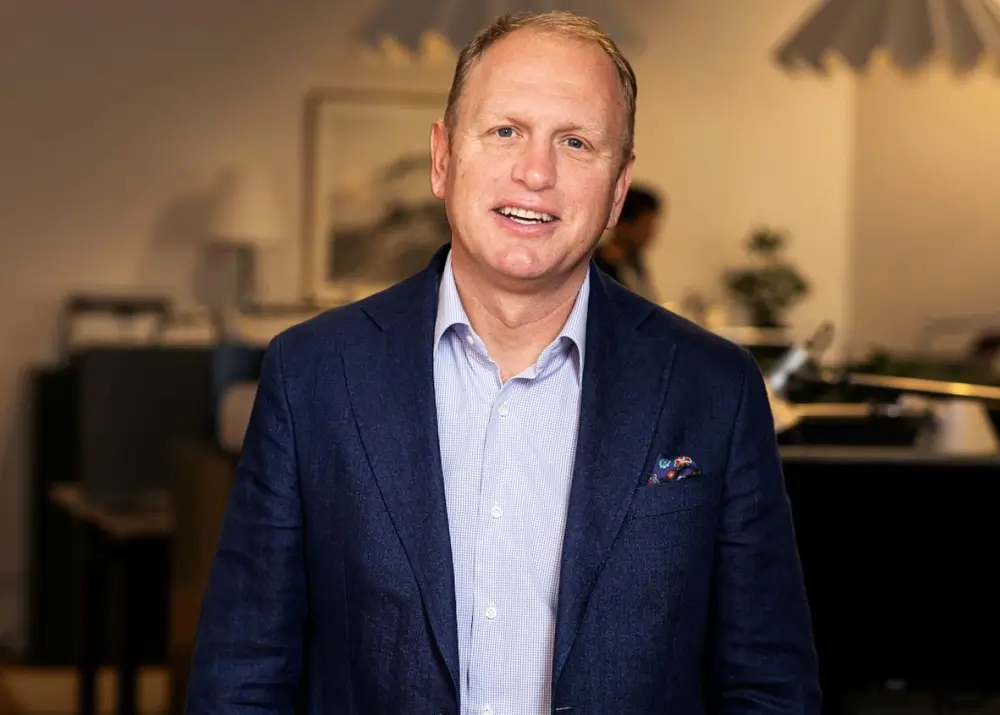
Enter Henrik Henriksson, a leader who doesn’t just see problems—he architects solutions at industrial scale.
From Trucks to Transformation
Henriksson’s path to revolutionizing steel production wasn’t conventional. Born in 1970, he joined Scania as a management trainee in 1997 after earning his degree in business administration. Over 24 years, he climbed through the ranks of the Swedish commercial vehicle manufacturer, including a stint as Export Director in South Africa. By 2016, he’d reached the summit: President and CEO of Scania.
What happened during his tenure tells you everything about his leadership philosophy. Henriksson transformed Scania into the first major heavy commercial vehicle manufacturer whose climate goals—zero emissions by 2050—received official approval from the Science Based Target Initiative. He didn’t just talk sustainability; he rewired an entire organization around it. In 2020, he co-authored “Sustainability Leadership,” crystallizing his conviction that profitability and environmental responsibility aren’t opposing forces—they’re complementary.
But Henriksson wasn’t satisfied making trucks greener. He wanted to tackle something bigger.
Building the Impossible
In 2021, Henriksson made a decision that raised eyebrows across industrial circles. He left his CEO position at Scania to lead H2 Green Steel, a startup founded just one year earlier with an audacious mission: build the world’s first large-scale green steel plant.
The concept was elegant yet complex. Replace coal with green hydrogen—produced using renewable electricity—to create steel with up to 95 percent fewer emissions. Simple in theory. Monumentally difficult in execution. No one had done it at industrial scale. The technology was unproven. The financing would be astronomical. The timeline was aggressive.
Henriksson didn’t flinch.
Construction began in Boden, northern Sweden, in 2022. The location was strategic—access to abundant hydropower, proximity to iron ore, and deep-sea harbor infrastructure. The plant would integrate the entire value chain: producing green hydrogen, converting it to green iron, and processing it into finished steel. By 2030, the facility targets annual output of 5 million tonnes—a fraction of the world’s 2 billion tonnes produced annually, but a critical proof of concept.
The Financing Masterclass
Perhaps nothing demonstrates Henriksson’s strategic acumen more than how he financed this moonshot. Between 2021 and early 2024, H2 Green Steel raised approximately 6.5 billion euros—one of the largest industrial fundraising efforts in European history.
The equity rounds alone totaled 2.1 billion euros, including a record-breaking 1.5 billion euro private placement in September 2023—the largest in Europe that year. Investors read like a who’s who of global capital: Altor, GIC, Temasek, the Microsoft Climate Innovation Fund, and industrial players like Mercedes-Benz and Scania. They weren’t betting on a dream; they were backing a meticulously de-risked business plan.
Henriksson secured 4.2 billion euros in debt financing from over 20 lenders, including the European Investment Bank. He negotiated a 250 million euro grant from the EU Innovation Fund. Most impressively, he locked in binding multi-year contracts with customers—including Mercedes-Benz, Porsche, BMW, and Volvo—for half the plant’s initial capacity before construction was complete.
Speed, Scale, and Survival
When asked about lessons for other green companies, Henriksson’s answer reveals his operating principles: speed, scaling, financing, and ambition. He advocates moving fast before achieving perfect synergies. He stresses building organizations that constantly adapt. He emphasizes rigorous de-risking to enable platform-based scaling.
His approach during the 2008 crisis at Scania taught him another crucial lesson—prepare for the worst, hope for the best.
Beyond Steel
Henriksson’s influence extends beyond his CEO role. He serves on the boards of Electrolux, Saab, and Creades. He was chairman of ACEA’s Commercial Vehicle Board in 2020 and advised the Swedish government on the 2030 Agenda for sustainable development. TIME magazine recognized him in its 2023 TIME100 Climate list.
In 2024, H2 Green Steel rebranded to Stegra, reflecting its broader ambition to decarbonize multiple hard-to-abate industries beyond steel. The company received an additional 100 million euros from Sweden’s Industrial Leap Fund, with more potentially coming.
The Road Ahead
The Boden plant is expected to begin operations in 2026. If successful, it becomes the template—proof that heavy industry can decarbonize profitably. Henriksson envisions it as a blueprint for others, demonstrating that green hydrogen enables transformation across cement, chemicals, and other carbon-intensive sectors.
When European policymakers debate carbon pricing and industrial policy, Henriksson is unequivocal: “The world definitely needs a global price on carbon. The sooner policymakers put a global price on carbon, the sooner polluters will have to pay for emissions.”
Henrik Henriksson isn’t just building a steel plant. He’s architecting the industrial future—one where heavy manufacturing powers economic growth without destroying the planet. That’s not just leadership. That’s legacy.