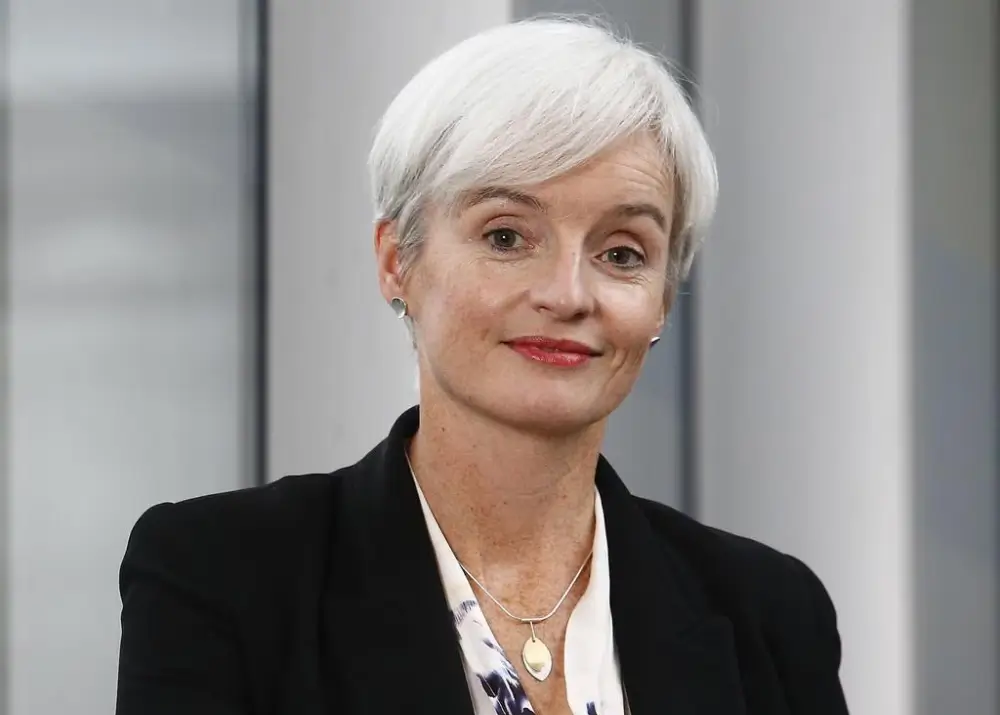
Emma Johnston was named Vice-Chancellor of the University of Melbourne in September 2024, taking up the role in February 2025. She’s the first woman to hold the position in the institution’s 171-year history, but that’s not what makes her story worth telling.
What matters is this: Johnston grew up in Melbourne, earned her degrees from Melbourne, and after building a distinguished career in marine ecology and university leadership elsewhere, she came back. She knows the city, the university, and the expectations that come with leading Australia’s top-ranked institution.
Building a Career Underwater
Johnston completed her PhD in marine ecology in 2002, focusing on a question with urgent relevance: how do human activities impact marine ecosystems, and how can we build ecological resilience? Her research took her from Antarctica to the Great Barrier Reef to temperate Australian estuaries, studying introduced species, contaminants, and the complex ways human presence reshapes underwater life.
She didn’t just study these questions in laboratories. She led field research teams in some of the most challenging environments on Earth, combining ecology, microbiology, and ecotoxicology to generate insights with real-world applications. By early 2025, she had published work with an h-index of 62—a measure of both productivity and impact that places her among the world’s leading marine scientists.
But here’s what makes Johnston different: she never stayed in the lab. She built a reputation as one of Australia’s most effective science communicators, translating complex ecological research into insights that policymakers, industry leaders, and the public could understand and act on. She served as co-chief author of Australia’s State of Environment Report 2021—a comprehensive assessment of the nation’s ecological health. She was president of Science & Technology Australia from 2018 to 2019, advocating forcefully for research funding and the role of science in policy decisions.
Rising Through Leadership
Johnston joined the University of New South Wales in 2001 as an associate lecturer. Over two decades, she rose to head the Applied Marine and Estuarine Ecology Lab, became director of the Sydney Harbour Research Program at the Sydney Institute of Marine Science, and eventually was appointed Pro Vice-Chancellor (Research) and then Dean of Science.
As Dean, she didn’t just manage a faculty. She transformed it, championing initiatives that supported early and mid-career researchers, pushed for greater diversity, and strengthened UNSW’s research capability. She understood something fundamental: universities thrive when they create environments where talent from all backgrounds can flourish.
In July 2022, Johnston moved to the University of Sydney as Deputy Vice-Chancellor (Research). Her tenure was brief but impactful—she boosted research support, launched initiatives targeting complex challenges around climate, health, and sustainability, and served as chair of the Group of Eight Deputy Vice-Chancellors Research Group. When the University of Melbourne began its global search for a new vice-chancellor, her name rose to the top.
Taking On Australia’s Top University
The University of Melbourne consistently ranks as Australia’s highest-performing institution and among the best universities globally. It’s a research powerhouse with deep connections to government, industry, and community. Taking the helm in February 2025 placed Johnston at the center of some of higher education’s most pressing challenges: international student caps that threaten research funding, recommendations from Australia’s universities accord being rolled out, ongoing debates about student experience and casual employment practices.
These aren’t abstract policy questions. They’re real challenges affecting real people—students, faculty, researchers, support staff—and Johnston knows it. In announcing her appointment, Chancellor Jane Hansen noted Johnston’s “passion for the transformative power of research and education, and her genuine desire to ensure that students and staff reach their potential.”
Johnston herself described the university as “a foundation stone for the city, the state and the nation, creating resilient graduates with the know-how and flexibility to support the needs of government, business and community.” It’s a bold vision, grounded in the belief that universities exist not just to create knowledge but to serve society.
Recognition and Influence
Johnston’s contributions haven’t gone unnoticed. She was made an Officer of the Order of Australia in 2018 for distinguished service to higher education, marine ecology, and ecotoxicology. She’s an elected fellow of the Australian Academy of Science, the Australian Academy of Technology and Engineering, and the Royal Society of New South Wales. She won the Clarke Medal, the Nancy Millis Medal for Women in Science, and was named NSW Scientist of the Year in 2012. In 2018, she was listed among The Australian Financial Review’s 100 Women of Influence.
But perhaps the most telling recognition came when the University of Melbourne awarded her an Honorary Doctor of Science in 2023—two years before she became its vice-chancellor. The institution saw her value long before she officially led it.
What She Brings
Johnston serves on the CSIRO Board, the Great Barrier Reef Marine Park Authority, and as a governor of the Ian Potter Foundation. She’s a trusted advisor to government, industry, and community organizations. She understands the political context universities operate within. She’s a fierce advocate for science, for equity, for the student experience.
She’s also, by her own description, someone who loves hanging out with family and friends, walking her dogs, taking photographs, and getting close to nature. Preferably all at once.
At 51, Johnston leads an institution shaping Australia’s future. She’s doing it with the knowledge that comes from world-class research, the credibility that comes from decades of service, and the perspective that comes from having grown up near the very waters she spent her career trying to protect.
Her appointment sends a clear message: the future of higher education belongs to leaders who understand complexity, embrace interdisciplinarity, communicate effectively, and care deeply about the people their institutions serve.
Emma Johnston has spent her career at the intersection of science, leadership, and advocacy. Now she’s using that experience to lead one of the world’s great universities through a moment of transformation.
The kid from Williamstown who loved the sea has returned home. And this time, she’s steering the ship.
Emma Johnston,
Vice-Chancellor, University of Melbourne