Micro and small businesses often search for a single breakthrough strategy that will accelerate growth. Some focus on marketing tactics, others on operational efficiency, while many invest in new technologies or leadership training. While each of these initiatives can contribute to progress, sustainable growth rarely results from a single intervention.
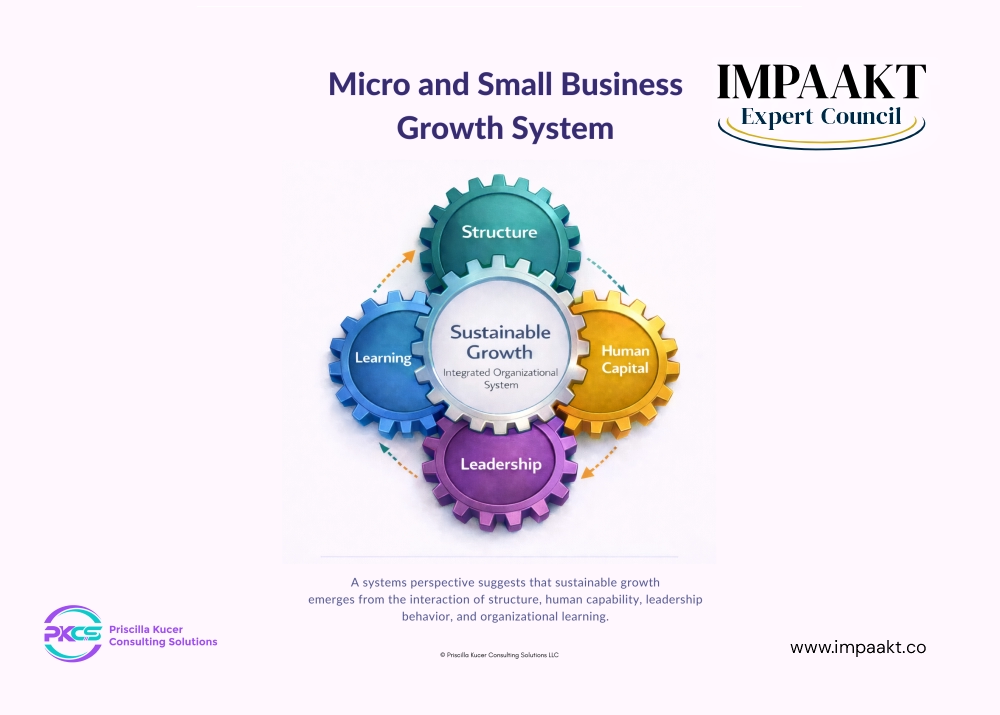
Industrial–Organizational Psychology, systems theory, and strategic management suggests that organizational performance emerges from the interaction of multiple elements rather than isolated actions. Structure, individual capability, leadership behavior, and organizational learning operate as an interconnected system that shapes whether a business stagnates, stabilizes, or scales.
In my previous IMPAAKT opinion article, When Purpose Isn’t Enough: Why Strategy Stalls Without Structure, I discussed why organizations must translate purpose into measurable goals and operational processes in order to achieve results. That article focused on the importance of structure. The next question for leaders is equally important:
Once structure is in place, what enables organizations to sustain growth over time?
A systems perspective offers an answer.
Why a Systems Perspective Matters for Micro and Small Businesses
Systems theory emphasizes that organizations function as interdependent networks rather than isolated departments or initiatives. Decisions in one area—such as leadership behavior or workforce development—can significantly influence outcomes in another area.
Recent research reinforces this perspective. Studies of small and medium-sized enterprises (SMEs) show that organizational performance improves when firms build complementary capabilities across leadership, strategy, and learning rather than relying on a single growth driver (Saeedikiya et al.). Businesses that align internal capabilities with strategy are more resilient and better positioned to respond to uncertainty.
This insight is particularly relevant for micro and small enterprises, which frequently operate with limited resources and smaller teams. Fragmented initiatives—such as introducing new technology without training or adopting new strategy without structural support—often produce disappointing results.
Studies of entrepreneurial ecosystems show that business performance improves when organizations develop coordinated internal capabilities rather than relying solely on external market opportunities (Manna et al.). For small enterprises with limited resources, the implication is critical: growth strategies must be holistic rather than fragmented.
Sustainable performance typically emerges when multiple organizational elements evolve together.
 Organizational Design: Creating the Structural Backbone
Organizational design provides the structural foundation that supports coordinated action. Clear roles, accountability mechanisms, and decision pathways enable teams to execute strategy consistently.
Dynamic capability research highlights the importance of organizational structures that allow firms to sense opportunities, seize them, and reconfigure resources when necessary (Teece). These capabilities are particularly important in volatile markets where rapid adjustment is required. Evidence from SME studies further supports this point. Hernández-Linares, Kellermanns, and López-Fernández found that dynamic capabilities are positively associated with SME performance, particularly in environments characterized by uncertainty and change.
In small businesses, structure often evolves gradually as founders transition from hands-on operators to strategic leaders. When that transition occurs without clear systems in place, bottlenecks can emerge—limiting the organization’s ability to scale. Structure, therefore, is not merely administrative—it is strategic. It enables organizations to translate goals into coordinated behavior.
However, structure alone is not sufficient.
Personal Capability: The Human Dimension of Strategy
While structure provides stability, human capability drives execution.
Organizations execute strategy through people. People possess individual capabilities. Individual capability—skills, knowledge, confidence, and resilience—plays a central role in determining whether an organization’s strategic initiatives succeed.
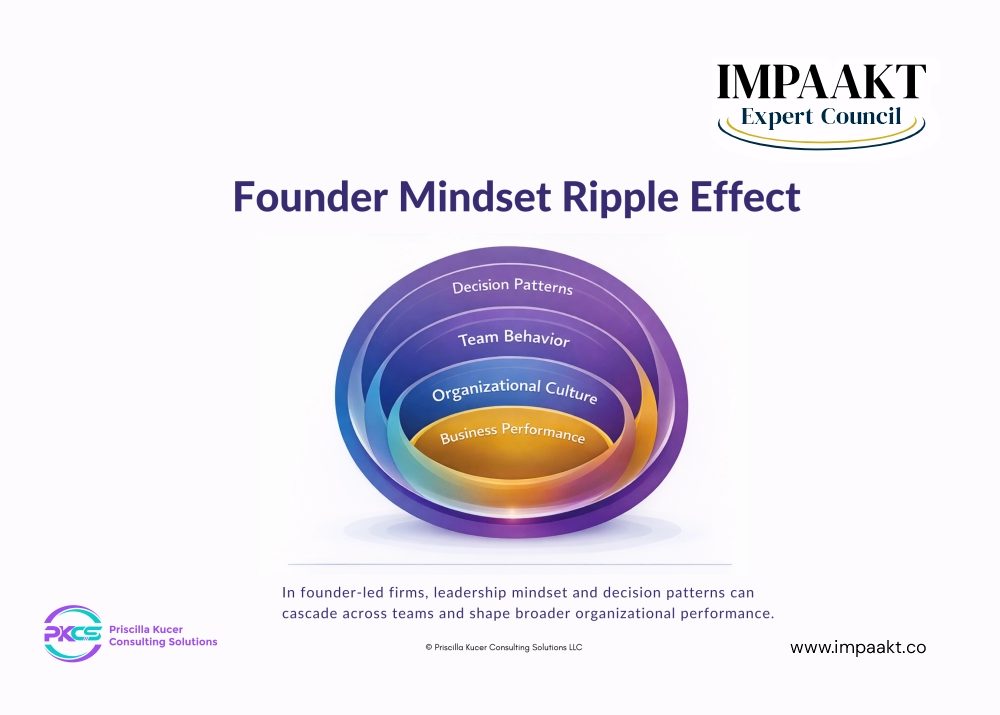
In founder-led businesses especially, leadership mindset and decision-making patterns often shape organizational culture and performance outcomes. Founders influence strategic priorities, communication norms, and risk tolerance more directly than leaders in larger organizations. Shen et al. found that entrepreneurial self-efficacy suggests that leaders’ beliefs about their capabilities affect how they pursue opportunities, respond to uncertainty, and allocate resources. As these behaviors cascade through teams, strengthening the personal capabilities of leaders—such as self-awareness, resilience, and decision discipline—can produce ripple effects across the entire organizational system. Additionally, Shen et al. found that entrepreneurial learning positively influences firm performance, with self-efficacy acting as a key mediating factor.
 These findings suggest that leaders should view personal development as a strategic investment rather than a secondary activity. When employees and leaders build psychological capital—such as confidence, resilience, and adaptability—they strengthen the organization’s capacity to navigate uncertainty and pursue opportunities.
Leadership Behavior: Aligning People and Strategy
Leadership serves as the catalyst that aligns structure and capability with strategic goals. Research on inclusive leadership shows that leadership behavior significantly influences team engagement, creativity, and performance. A recent meta-analysis examining more than 39,000 employees across multiple studies found that inclusive leadership is positively associated with task performance, innovative behavior, and employee voice (Li et al.).
These findings highlight the importance of leadership practices that foster collaboration and encourage participation while maintaining accountability.
For micro and small business leaders, practical leadership behaviors that support performance include:
- Communicating strategic priorities clearly
- Encouraging open dialogue and feedback
- Modeling adaptability during change
- Reinforcing accountability for results
In this context, leadership acts as the bridge connecting structure and capability.
Structured Learning: The Engine of Adaptation
The fourth element in a systems approach to growth is structured learning. Organizations that intentionally capture insights from both successes and failures develop stronger adaptive capabilities over time.
Research examining SMEs undergoing digital transformation found that organizational learning significantly contributes to resilience by enabling firms to adjust strategies and processes in response to change (Awad & Martín-Rojas).
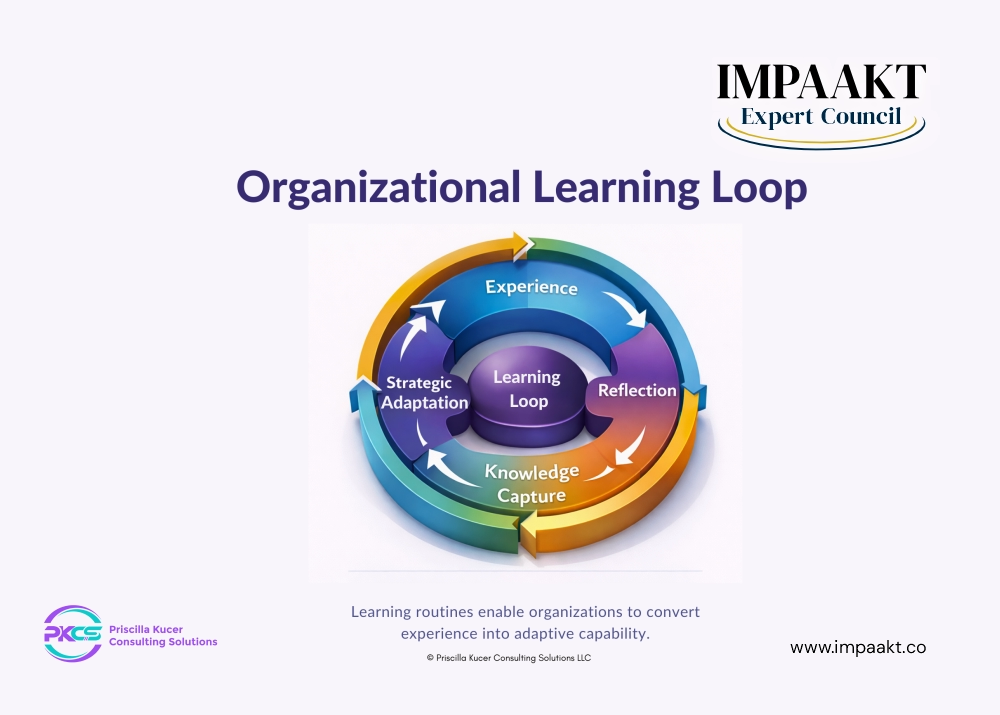
For micro and small businesses, structured learning does not require complex systems. Learning routines—such as quarterly strategy reflections, post-project reviews, strategic reflection sessions, and knowledge-sharing practices—enable organizations of any size to refine their capabilities continuously and strengthen organizational adaptability.
The goal is not perfection but continuous improvement.
Integrating the Four Elements
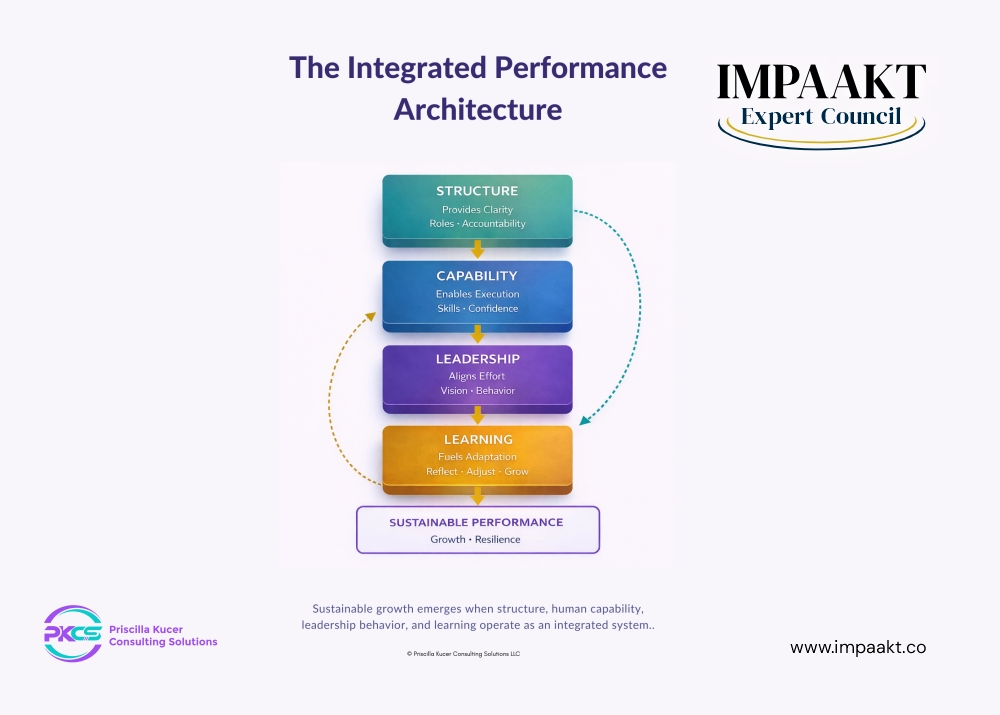
When viewed through a systems lens, these four domains—structure, skills, leadership, and learning—form an interconnected performance architecture.
- Structure provides clarity.
- Capability enables execution.
- Leadership aligns effort.
- Learning fuels adaptation.
When one of these elements is missing, organizational performance becomes fragile.
For example, a highly skilled workforce operating without clear roles or goals may experience confusion and inefficiency. Conversely, strong structure without supportive leadership may produce compliance but limit innovation.
Sustainable performance emerges when these elements function together as an integrated system.
 Adaptability as a Strategic Capability
Adaptability remains one of the most important capabilities for micro and small enterprises operating in volatile markets. Organizations that intentionally develop adaptable systems—combining clear structure with capable people, effective leadership, and continuous learning—are better positioned to respond to emerging challenges and opportunities.
In the PKCS blog article, Organizational Development: A Big Deal for Micro and Small Businesses, I explored this idea further discussing how organizational development supports micro and small business success. Organizations that are able to adjust strategy, processes, and capabilities in response to changing conditions outperform those that resist change.
The lesson is clear: adaptability does not emerge by chance. It results from deliberate alignment across organizational systems.
A Systems Approach to Sustainable Growth
For leaders navigating complex global markets, it can be tempting to search for a single growth lever—new technology, marketing strategy, or leadership initiative. Yet research across organizational psychology and strategic management consistently shows that sustainable performance rarely depends on isolated interventions.
Instead, growth emerges when organizations build integrated systems that align structure, human capability, leadership behavior, and learning processes.
- Purpose provides direction.
- Structure enables execution.
- People drive performance.
- Learning sustains adaptation.
When these elements operate together as an interconnected system, organizations move beyond reactive problem-solving toward sustainable growth and resilience.
Research Citation
- Awad, Jeehan and Rodrigo Martín-Rojas. “Digital Transformation Influence on Organisational Resilience Through Organisational Learning and Innovation.” Journal of Innovation and Entrepreneurship, vol.13, no. 69, 2024. https://doi.org/10.1186/s13731-024-00405-4.
- Hernández-Linares, Rafael, Franz W. Kellermanns, and María C. López-Fernández. “Dynamic Capabilities and SME Performance: The Moderating Effect of Market Orientation.” Journal of Small Business Management, vol. 59, no. 1, 2021, pp. 162-195. https://doi.org/ 10.1111/jsbm.12474
- Li, X., Chu-Ding Ling, and Jinlong Zhu. “Implications of Inclusive Leadership for Individual Employee Outcomes: A Meta-Analytic Investigation of the Mediating Mechanisms and Boundary Conditions.” Asia Pacific Journal of Management, vol. 42, 2025, pp. 2257–2294. https://doi.org/10.1007/s10490-024-09987-9
- Manna, Atanu, Subhajit Pahari, Munmun Patra Pahari, Debasish Biswas, and Zericho R. Marak. “The Economics of Entrepreneurial Ecosystems: The Role of Internal Capabilities and External Conditions.” Cogent Business &; Management, vol. 13, no. 1. 2026, pp.1 – 18. https://doi:10.1080/23311975.2026.2613579.
- Saeedikiya, M., Sandeep Salunke, and Marek Kowalkiewicz. “Toward a Dynamic Capability Perspective of Digital Transformation in SMEs: A Study of the Mobility Sector.” Journal of Cleaner Production, vol. 439, 2024, pp. 1-17. https://doi.org/10.1016/j.jclepro.2024.140718
- Shen, Yan, Qi Wang, Danni Hua and Zhetao Zhang. “Entrepreneurial Learning, Self-Efficacy, and Firm Performance: Exploring Moderating Effect of Entrepreneurial Orientation.” Frontiers in Psychology, vol. 12, 2021, pp. 1-11. https://doi: 10.3389/fpsyg.2021.731628 .
- Teece, David J. Dynamic Capabilities and Strategic Management: Organizing for Innovation and Growth. Oxford University Press Inc. 2009.