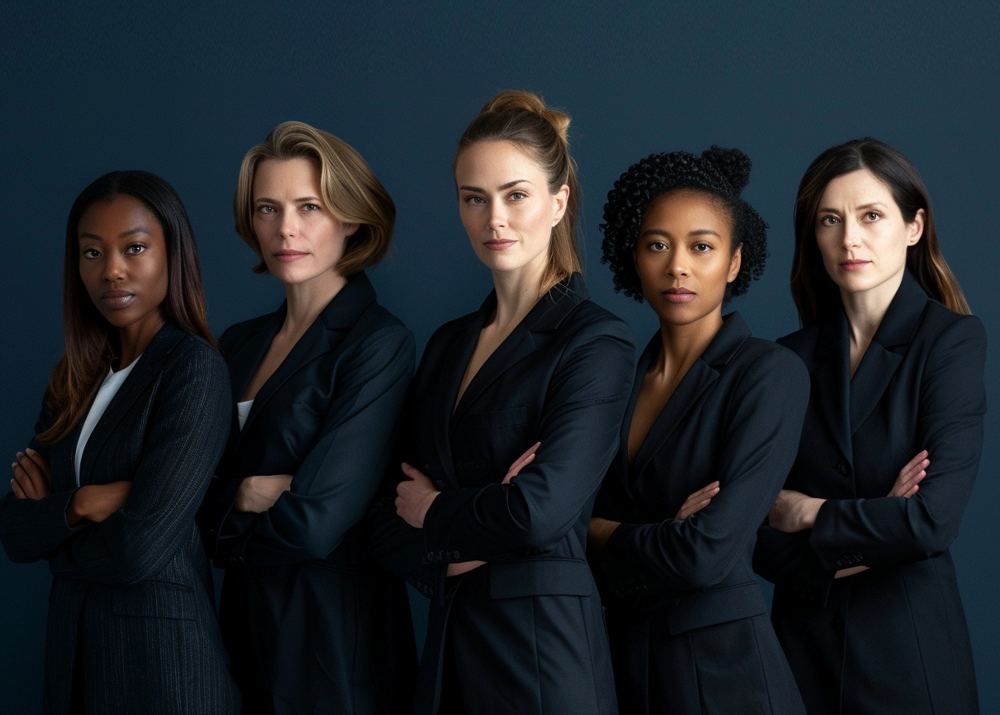
What does it mean to lead when no one has gone before you? Explore how first-generation leaders turn uncertainty into courage and create new leadership blueprints.
There’s a particular kind of silence that follows the word “first.” First woman to run the trading floor. First woman to chair the board. First woman to sit at the head of that particular table, in that particular boardroom, in an industry that has spent a hundred years assuming the chair would always go to someone else. The announcement gets made, the applause happens, the profile pieces get written — and then everyone goes home, and she’s left alone with the actual job. Nobody warns you about that part. The silence after the headline is where the real work starts.
Most leadership advice is inherited. You watch someone do the job before you, you take what works, you discard what doesn’t, you adjust it to your own temperament, and eventually you’ve built something that’s yours but still recognizably part of a lineage. It’s borrowed confidence, really — the quiet reassurance that comes from knowing someone has stood exactly where you’re standing and survived it. Take that away, and leadership stops being a craft passed down. It becomes something closer to invention.
The Weight of Writing the First Draft
Being first means there’s no worn path to follow, which sounds liberating until you’re actually living it. Every decision carries a strange double weight — not just “is this right for the business,” but “is this right, full stop, because if it goes wrong, it won’t just be my failure, it’ll be read as proof that someone like me shouldn’t have been given the chair in the first place.” That’s an unfair burden, and it’s also an entirely real one. Firsts don’t get to fail quietly. Their mistakes get filed under a category, not just a name.
And yet the same absence of precedent that makes the job harder is also what makes it possible to do differently. When there’s no established way of doing things, there’s also no rulebook insisting you copy it. A leader without a blueprint has to ask, at some point, whether the traits she was told mattered — the posture, the tone, the way of running a room — were ever actually about competence, or just about resemblance to whoever came before. That question, uncomfortable as it is, tends to be where something genuinely original gets built.
The Isolation Nobody Puts in the Job Description
What rarely gets said out loud is how lonely this position can be. Mentorship works best when it’s specific — when someone can say, “here’s exactly how I handled this,” because they’ve lived a version of your exact problem. A first doesn’t have that option. She might have excellent mentors, generous ones, people who genuinely want her to succeed. But none of them have navigated being the only woman in that particular room, carrying that particular scrutiny, making decisions that will be read not just as business calls but as evidence for or against an entire hypothesis about whether women belong there at all.
That isolation does something to decision-making. It can make a leader more cautious than she’d otherwise be, aware that every visible misstep will be magnified. It can also, paradoxically, make her bolder — because if there’s no template to protect, there’s also no template to defend. Some of the most consequential leadership calls come from people who simply didn’t know they were supposed to be intimidated by the size of the decision in front of them.
Turning the Absence Into the Advantage
The instinct, understandably, is to treat the lack of a blueprint as a deficiency — something to compensate for, apologize for, or quietly work around while pretending it isn’t there. But there’s another way to hold it. An unwritten path means the definitions haven’t hardened yet. What counts as strong leadership, what counts as a smart risk, what a boardroom is even supposed to sound like — all of that is still being decided, in real time, by the people currently occupying those rooms. Being first doesn’t just mean enduring the absence of a map. It means getting to draw one, badly at first, and then better, and then well enough that someone else can follow it.
That’s the part worth sitting with. Every “first” eventually becomes someone else’s “second.” The loneliness doesn’t last forever, even if it doesn’t feel that way from inside it. What she builds — the judgment calls, the recoveries from mistakes nobody had warned her about, the version of leadership she assembled without a manual — becomes, whether she intends it to or not, the very blueprint the next person will finally get to borrow.
Maybe that’s the real measure of the job. Not whether she got everything right on the first attempt, because nobody does that, blueprint or no blueprint. But whether she left the room a little less lonely for whoever walks into it next.