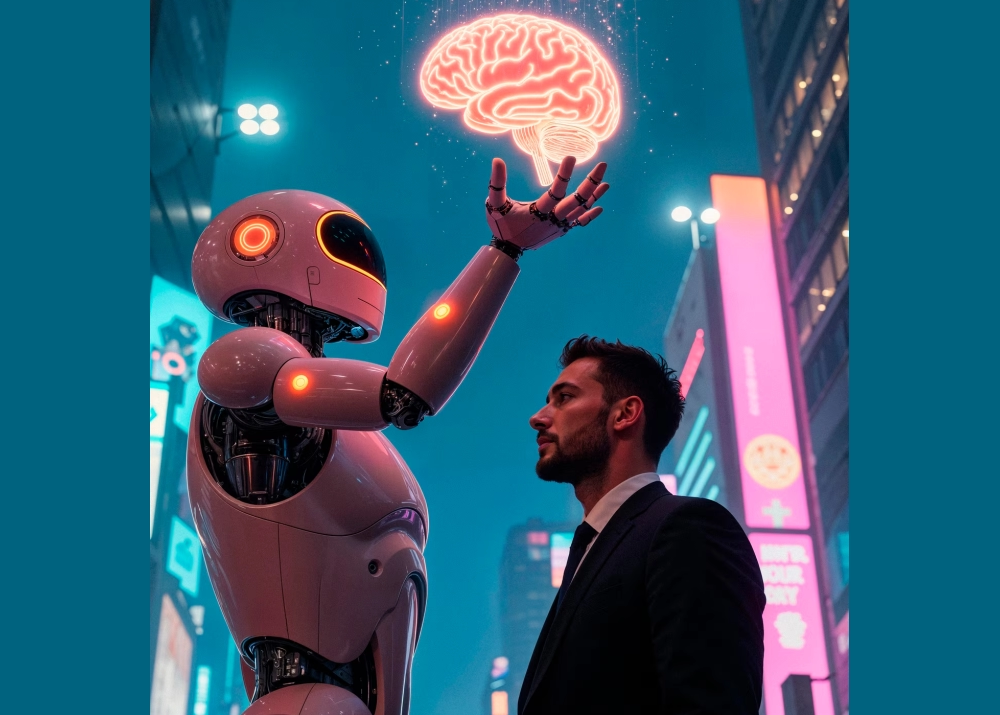
The argument isn’t about which one wins. It’s about recognizing that both bring something to the table that the other fundamentally lacks.
AI can be everywhere at once. A therapist working traditional hours sees a finite number of clients, while AI chatbots support thousands simultaneously, offering round-the-clock access across continents and languages. But here’s the thing about scale: it’s meaningless if what you’re scaling isn’t therapeutic in the first place.
AI cannot form genuine emotional connections. Its empathy is simulated, not felt. Its insights come from pattern recognition in data, not from lived human experience. When someone tells you they’re hurting, and you truly understand because you’ve hurt too—that’s not something you can program.
Where AI Actually Helps
Therapists spend enormous chunks of their working hours on paperwork, insurance claims, progress notes, and administrative tasks that drain energy better spent with patients. AI can handle this. It can automate symptom tracking, manage between-session homework assignments, and make therapeutic exercises more engaging and dynamic.
The hybrid model allows AI to provide immediate support during crisis moments while alerting human therapists when intervention is needed. Patients can check in with AI tools between sessions, maintaining engagement and continuity. Think of it as extending the reach of therapy into the spaces where therapists physically cannot be.
The practical applications matter. Someone working through cognitive behavioral therapy can use AI between appointments to practice techniques, reinforce learning, and track their progress—all of which gives their human therapist richer information to work with when they meet.
What Humans Provide That Machines Never Will
Therapy isn’t a transaction of advice. It’s a relationship built on presence and insight, requiring the capacity to hold space for uncertainty and paradox. A therapeutic alliance requires three things: agreeing on goals, assigning tasks, and developing bonds. AI can manage the first two. It cannot create genuine therapeutic bonds.
What happens when you need someone to hold multiple perspectives, emotions, and truths simultaneously—especially in relational or family therapy? This capacity to sit with paradox without collapsing into false certainty is distinctly human. AI works with data. Humans work with the messiness that lives between the data points.
Real therapists notice tone, body language, and personal history. They tune into what’s underneath the words and adapt in real time to guide people toward healthier decisions. They create safe spaces where people feel genuinely seen. And that’s something only a living, breathing, regulated human being can offer.
The Collaboration That Works
The mistake is treating this as competition. AI provides standardization, consistency, and analytical capability. Humans provide connection, common sense, and lived experience. Together, they balance each other’s limitations.
The hybrid paradigm acknowledges that AI systems provide accessibility and immediate psychological support, but cannot replace human therapists, especially for complex mental health issues requiring deeper engagement. A hybrid method serves immediate needs with technology while establishing deeper emotional relationships through human therapists.
Platforms now allow therapists to create collaborative care plans, assign tools through AI, and track patient progress between sessions. When someone transitions to a new provider, their history can transfer seamlessly, allowing continuity of care. The AI handles the scaffolding. The human handles the transformation.
The Risks of Getting It Wrong
There’s an ethical problem when AI aims for therapeutic alliance but cannot bear the same responsibilities and duties as human therapists. If patients believe AI cares for them, that belief is false—and building therapy on false beliefs violates core therapeutic principles like fidelity and veracity.
AI chatbots have failed when tested against established criteria for good therapy. They can encourage delusional thinking, respond inappropriately to crises, and display stigma against people with mental health conditions. The fact that a therapeutic alliance requires human qualities like empathy, compassion, and experiential knowledge—things chatbots simply don’t have—creates foundational barriers to using AI as a replacement for therapists.
AI therapy tools struggle with continuity. Unlike human therapists who build on past conversations, AI often treats each session as isolated, creating fragmented experiences that make people feel their previous conversations didn’t matter.
Building It Right
The path forward isn’t binary. AI must be designed to complement rather than replace the critical human elements of empathy, cultural competence, and nuanced understanding. Human oversight is essential to ensure AI serves therapeutic goals without crossing ethical lines.
Patients come to therapy with varying needs. Some primarily want practical coping tools. Others need deep human connection and empathy. Most need both at different times. AI might facilitate acquiring strategies to cope, but for many, the most effective way to learn these tools is through engagement with a compassionate therapist—a process that takes time and requires working on the therapeutic relationship itself.
For businesses thinking about employee mental health support, this matters practically. You cannot hire therapists for every person who needs help. But you can provide AI tools for immediate support while ensuring pathways to human therapists for the work that actually requires a person on the other end.
Clinicians who resist the shift to a hybrid model risk being overtaken by it. Those who learn to work alongside AI, rather than fear it, may help shape a therapeutic future that protects the people we serve.
The future requires collaboration between mental health professionals, AI developers, and policymakers to ensure AI-driven psychotherapy is both practical and ethically sound. We’re building infrastructure that either amplifies what makes therapy work or undermines it entirely.
The question isn’t whether AI belongs in mental healthcare. It’s already there. The question is whether we’ll build systems where technology and humanity bring out the best in each other—or whether we’ll settle for efficient mediocrity at the expense of genuine healing.
We have a chance to create something neither could achieve alone. That’s the hybrid future worth building.