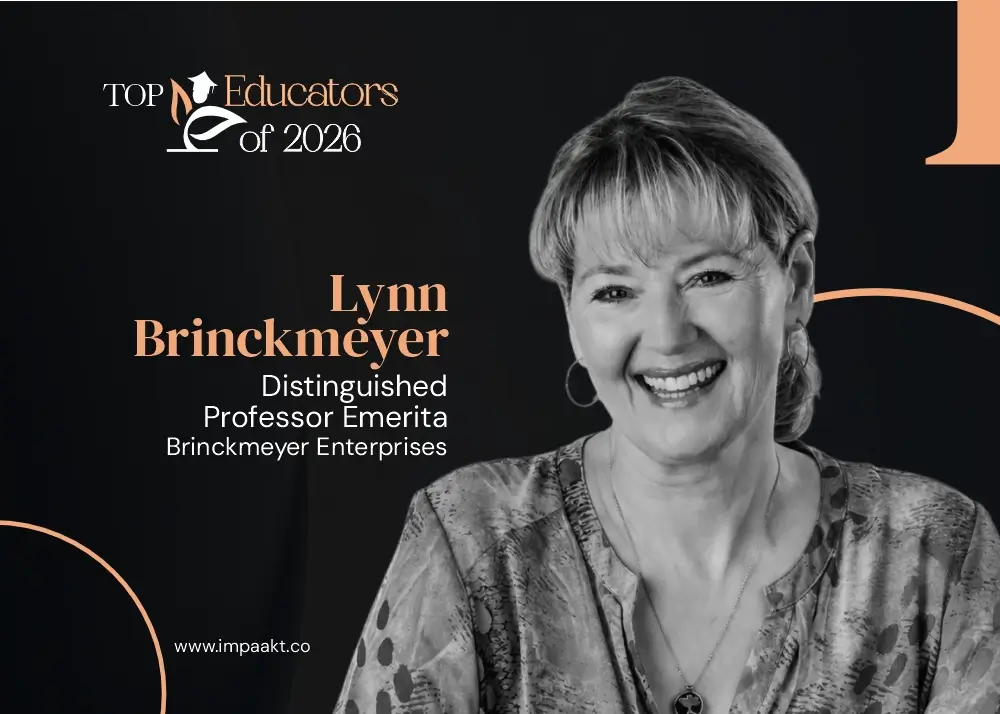
Music has always done something data and metrics struggle to explain. It can steady a nervous child, unite strangers without conversation, and leave an entire room emotional without a single spoken sentence. Yet, despite its quiet power, music education is still often treated as secondary rather than essential. The educators who truly understand its impact do not just teach notes and performances. They shape confidence, empathy, discipline, leadership, and human connection through every rehearsal, every lesson, and every shared moment of expression.
That understanding sits at the heart of Lynn Brinckmeyer’s life’s work.
Over the decades, Lynn has worn many titles: professor, conductor, speaker, mentor, advocate, author, and leader. But beneath every role is one consistent mission: helping people discover their voice, their confidence, and their purpose through music and education. Whether guiding young singers, leading national conversations around arts education, or mentoring professionals searching for clarity in their lives, she has always approached leadership with the same belief: it is never about standing at the center of the stage. It is about helping others shine brighter on it.
As Distinguished Professor Emerita at Texas University and former President of the National Association for Music Education, Lynn’s influence has travelled far beyond classrooms and concert halls. Her work has touched students, educators, communities, and aspiring leaders across generations, reminding people that music is not simply an art form. It is a deeply human experience that builds trust, emotional awareness, courage, and belonging.
What makes Lynn’s journey especially compelling is the way she speaks about leadership itself. Not as authority. Not as perfection. But as listening deeply, staying curious, and caring enough to help others grow. That philosophy continues to shape every workshop she leads, every choir she conducts, and every conversation she has today.
Moved by the depth of her work and the humanity behind her approach, we sat down with Lynn Brinckmeyer to explore the lessons, leadership insights, and lifelong passion that continue to inspire educators and learners around the world.
Here are the excerpts from the interview:
Lynn, do you remember the moment music stopped being just sound and became something deeply personal and transformational for you?
When I was four years old, I started singing hymns and holiday songs with my older cousin as she played the piano. I was smitten – music gave me joy.
You’ve spent over 30 years shaping students, educators, and communities. What has kept your passion for teaching alive across generations?
Watching the students mature and blossom as beautiful human beings year after year has been incredibly gratifying. Seeing them expand their musicianship and passion for sharing music with others has kept that desire in me to keep teaching.
You’ve worked with choirs, youth voices, educators, and audiences around the world. What do you think music allows people to express that words alone often cannot?
Sometimes words fall short to truly express the emotions, both positive and negative, that swirl around in our hearts and minds. Collective musical events allow people to communicate without talking – creating a shared experience with others can build community and trust, where conversation might not reach that same level of awareness within a group of people. Music is a physical, visceral energy and it often reaches the heart, where language might get stuck in the mind.
Much of your work has focused on treble voices and youth choirs. What have young singers taught you about confidence, vulnerability, and leadership?
The more I worked with children, adolescents and university students the more I realized that the only path to be an effective leader was to care more about helping them, than whether or not I was conducting a song or leading a class perfectly. It was and is about them – not me. Through that process I became a better person and leader.
As President of the National Association for Music Education, you led one of the largest music education organizations in the U.S. What was the biggest lesson you learned about leadership during that time?
I learned to really listen, and to be curious about the feedback I was receiving from others. The more I learned the more I cared about people all across the U.S. Even if I had a different perspective, I could admire the passion and dedication of the other leaders in the different states, because we all were unified to ensure that future students have the same opportunity for music learning and music making as we have enjoyed.
You’ve long championed music advocacy. Why do you believe arts education is still underestimated — despite its profound impact on human development?
I discovered from numerous conversations with various decision makers both local, state and national that it is a challenge to understand the rigor and academic processes necessary to read and perform music if you have never been involved in music yourself. Listening to live music, recordings, videos, music on social media, etc., can often be perceived that only a talented few can learn to play and/or sing music. When I understood more about other’s perspectives about why music was not important to them, it helped me to see advocacy as informing and educating others about the benefits for music learning for all students.
Beyond teaching music, you now mentor professionals and educators as a certified career coach. How do you help people reconnect with purpose when they feel stuck or burned out?
Sometimes people feel stuck because they don’t know “how” to do anything to change their life. My mission is to empower people so they can create and SUSTAIN change, so they love the lives they are living. I am privileged to be certified with Brave Thinking Institute, and we have a proven, repeatable, sustainable system to guide and support people on that journey.
Performance Culture vs Growth Culture
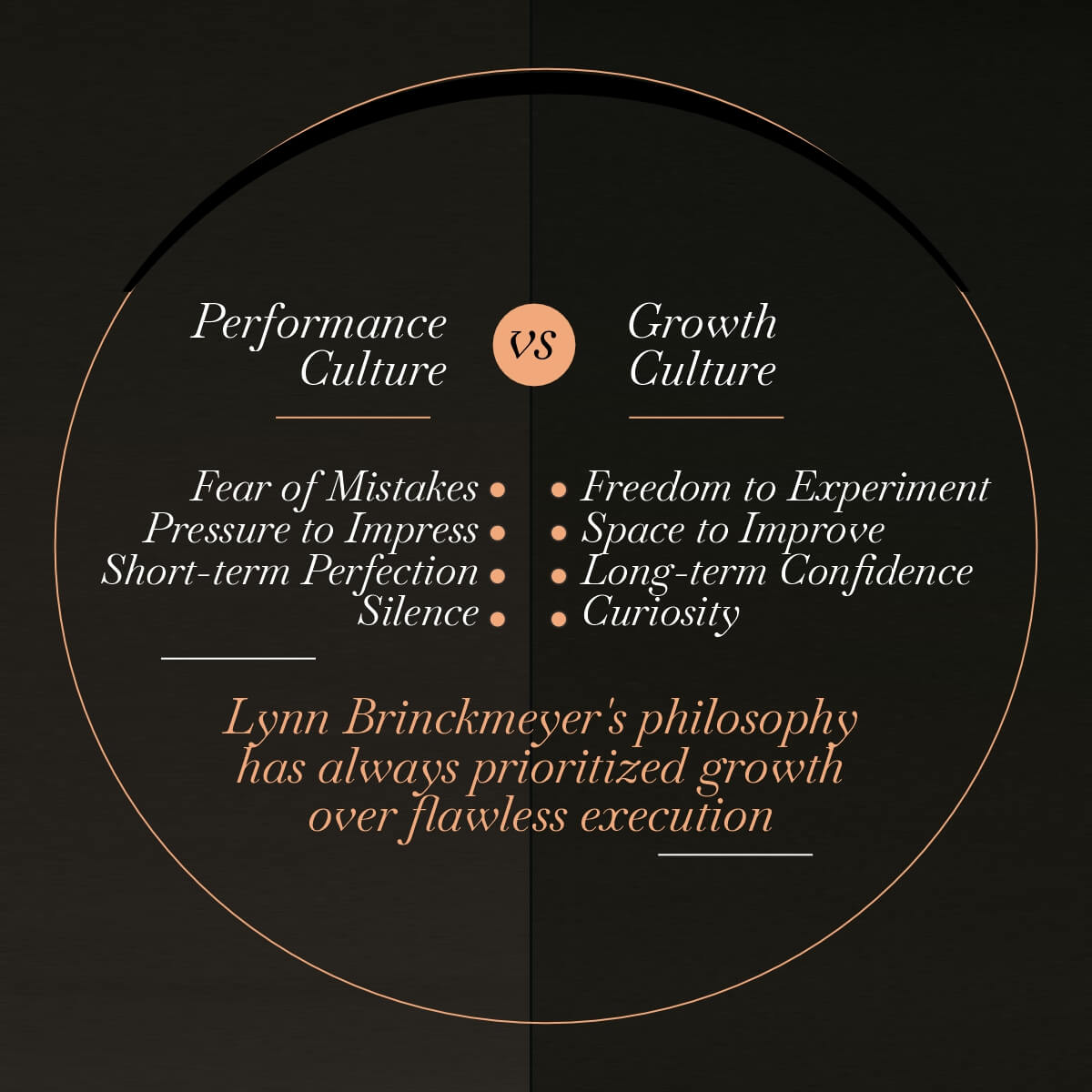
Lynn Brinckmeyer’s philosophy has always prioritized growth over flawless execution
Modern education often prioritizes measurable outcomes and performance metrics. How do we protect creativity, curiosity, and emotional expression within that environment?
I believe that there is a place for both. Measurable metrics are informative. It is possible to lead and teach by embracing both assessment and allowing students the freedom to experiment without the pressure of making a mistake or getting a bad grade. For example: the first time a 4th grade class picks up a recorder and attempts to play it together can produce a variety of unmusical sounds that may feel a bit chaotic to an observer. There is learning happening. The students experiment with how much air to blow in the mouthpiece, which holes to cover at the same time. They are developing problem solving skills.
After thousands of workshops, performances, and classrooms, are there particular moments with students or teachers that still stay in your heart?
It brings tears to my eyes when I remember so many ‘normal’ classes and rehearsals where a student or ensemble would have an ‘ah-hah’ moment or insight. Or, when you hear the students singing the songs you’ve been working on out in the hallway. Also, sometimes I would make eye contact with a singer in an ensemble or a peer teacher attending one of my clinics who was blinking back tears because they were so moved.
You’ve been professor, conductor, speaker, author, mentor, and advocate. Which role has felt the most personally meaningful to you — and why?
It depends on who is in front of me. When I am conducting an all-state or honor choir I can’t think of anything else I would rather do. Then, when I am presenting a workshop for teachers or a keynote speech at an event, I am so grateful for that privilege. Also, my computer has 3 partially written books sitting in folders because I keep thinking about things that could support students and teachers. So, I love everyone one of those roles because they allow me the opportunity to connect with and help so many different amazing humans.
When people reflect on your life’s work years from now, what do you hope they’ll say Lynn Brinckmeyer gave to the world through music and education?
I hope they say that I shined my light, shared the joy of music and helped make this a better world.