For years, performance was treated like a checklist. It meant train harder, eat better, and push longer. Somewhere along the way, the human behind the output was forgotten. Today, the conversation is finally shifting from intensity to sustainability, from quick gains to lasting capacity. The most progressive voices in this space are no longer obsessed with peak moments, but with what it takes to show up fully, consistently, and without burning out.
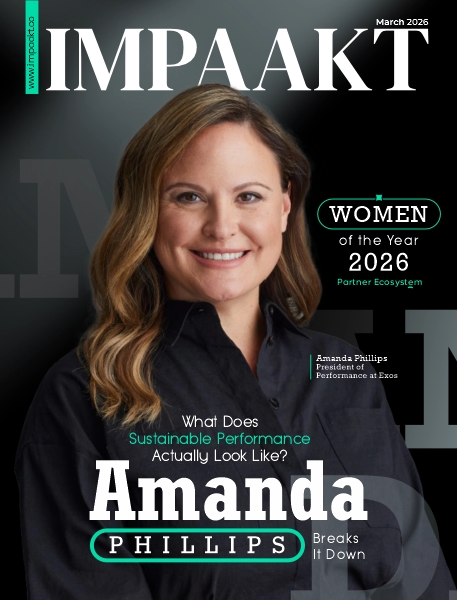
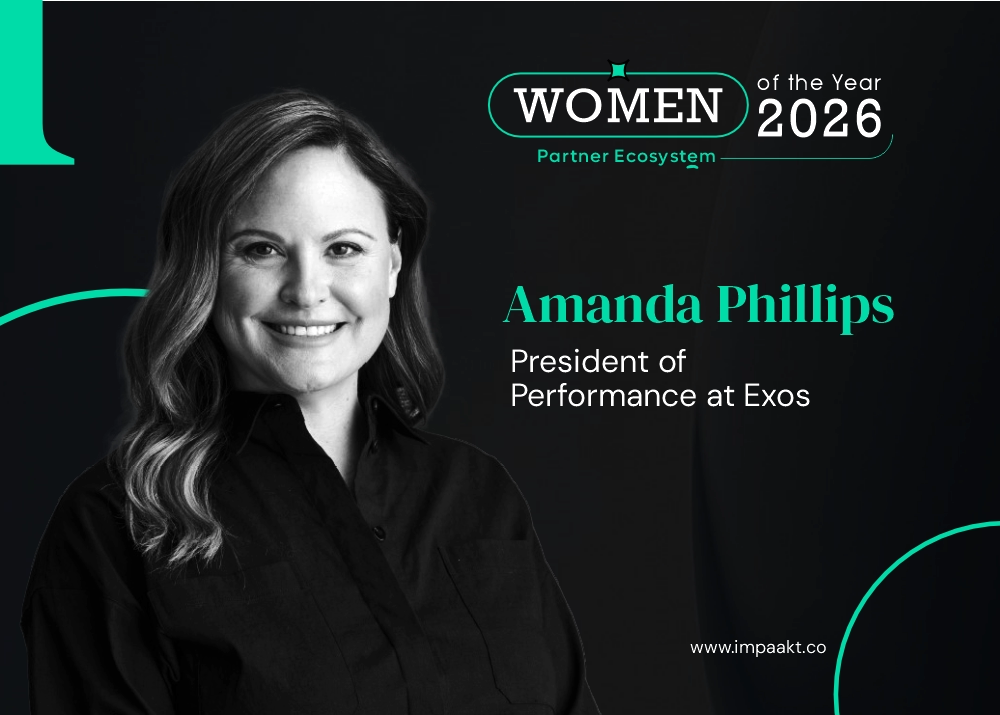
That shift mirrors the career of Amanda Phillips. As President of Performance at Exos, she has spent over two decades helping redefine what human performance truly means, first for elite athletes, then for military units, global organizations, and everyday leaders navigating demanding lives. With a foundation in nutrition and exercise physiology, she evolved into an architect of integrated performance systems, where mindset, nutrition, movement, and recovery work together rather than compete for attention.
Inspired by the way she blends science with humanity and performance with longevity, we sat down with Amanda to explore the thinking, experiences, and convictions that continue to shape her work and the industry at large.
Here are the excerpts from the interview:
You joined Exos in 2003, long before “human performance” was a recognized industry. What convinced you, early on, that this work mattered enough to build a career around it?
I have been an athlete my entire life. Growing up as a gymnast, my world revolved around the pursuit of excellence, but it wasn’t until a human nutrition class at the University of Arizona that I found the “why” behind the “how”. I was captivated by the science of physiology, yet I struggled to see how to apply it until I met a TA who specialized in sports nutrition. She was the first person I met who bridged the gap between the lab and the field.
That influence led me to Florida State for graduate work in nutrition and exercise physiology, where my vision crystallized: I wanted to help athletes optimize their performance through fueling. When I walked into Exos (then Athletes’ Performance) as an intern, I knew I had found my home. Our founder, Mark Verstegen, had created a refuge for the elite athlete where mindset, nutrition, movement, and recovery were integrated for the first time. In those early days, our small team of ten didn’t realize we were founding an industry; we were simply obsessed with helping athletes secure a roster spot or extend their careers by one more season. Witnessing that transformation—the blend of logical science and “magical” results—inspired me to bring that same performance system to everyone on a journey toward their best self.
You’re trained deeply in nutrition and exercise physiology, yet today you’re known for integrated performance systems. When did you realize that optimizing one variable wasn’t enough?
My “aha” moment came early when I realized that physiology doesn’t operate in a vacuum. We would see athletes with “perfect” nutrition plans fail because they neglected recovery—essentially fueling a high-performance car that had no oil. Conversely, some trained with maximum intensity but couldn’t build lean mass because they lacked the protein and nutrients to support the work.
I realized that by optimizing only one variable, we were often just “strengthening imbalances”. To truly move the needle, we had to design a system where every pillar supported the others. That realization shifted my role from a specialist to an “architect of human performance”. We moved away from standalone data points and began viewing mindset, nutrition, movement, and recovery as integrated inputs that dictate the trajectory of human performance potential.
How do you define human performance today, especially for people outside elite sport?
While the competitive athlete in me still plays to win, I now define human performance
as the capacity to show up as the best version of yourself for the things that matter most. Whether you are leading a boardroom, being present for your children, or sustaining a 30-year career, the requirements are the same: you must be fueled, focused, strong, and resilient.
The only thing that changes outside of elite sport is the “field” you play on. Too many professionals operate by “grinding until they’re empty”—a practice we would never allow in a pro athlete. Real performance is about the intentional design of your day so that your output doesn’t come at the expense of your outcome as a human being. If you lack the energy to enjoy life after 5:00 PM, you aren’t performing; you’re just surviving.
How do you help leaders and teams understand nutrition as part of a bigger performance conversation, not a standalone solution?
My career began by demonstrating the power of nutrition science in high-stakes environments like the military and professional sports. Once that foundation was set, I transitioned to showcasing the power of the entire Exos system through research, external partnerships, and internal data functions. Today, I lead a multidisciplinary team of researchers, data experts, and experienced designers. We don’t just deliver a keynote on neuroscience or research a wearable; we solve human performance challenges by ensuring every practitioner is working toward the same goal: sustaining the individual’s capacity to perform at the highest level. We want to make the game safer and enable the athletes who play it to play at the top of their game for as long as possible – in both sport and work.
What are the most common mistakes organizations make when trying to bring multiple disciplines together?
The biggest mistake is a lack of a strategic framework. Many organizations hire top-tier experts but keep them in silos. Without a unified “experience map” and strategy that places the human at the center, you end up with “random acts of wellness” rather than a purpose-driven strategy. When a strategy is well-architected, the fueling station, the training floor, and the recovery areas all work in concert to regulate the nervous system and build mental and physical capacity. Without that connection, even the most expensive tools and experts will fail to reach their full potential.
You’ve built authority in spaces historically dominated by men. What did earning credibility look like early in your career?
In high-stakes environments like the NFL or Special Operations, credibility isn’t granted by a title; it is earned through the work. You don’t get a “pass”—you have to be twice as prepared and twice as precise. I learned that authority is built in “micro-moments”—the consistency of showing up, delivering undeniable value, staying relentlessly grounded in science while being curious enough to imagine what could be possible.
I made a point of leaning into the opportunities that scared me most, operating under the mindset that discomfort is the precursor to a breakthrough. I rarely focused on being the only woman in the room; I simply focused on being the expert the room required. This shaped my leadership style into one that doesn’t need to be the loudest voice but instead focuses on creating an environment where the best ideas surface.
Having grown alongside Exos for two decades, what transformation are you most proud of?
Having grown alongside Exos for two decades, the transformation I’m most proud of helping lead is our evolution into new populations and impact arenas. We began working with elite athletes, then expanded to teams and leagues across sports. We moved from supporting select units in the military to helping address system-wide readiness challenges. In the corporate space, we evolved from a handful of pilots to now partnering with more than 120 global organizations, including over 20% of the Fortune 100.
Each expansion meant helping more people build the capacity to do what matters most to them. We went from supporting a few hundred athletes to now engaging more than 200,000 individuals each month. And internally, we grew from a team of 10 passionate practitioners into a global community of nearly 3,000 experts advancing the science and application of human performance at scale.
I’m also incredibly proud of the work we’ve done to bring the principle of “work + rest = success” into the workplace. We translated what sport has long understood about load management into a framework designed for leaders and organizations. It centers on three dimensions: the individual, the environment, and the work itself. When those elements are aligned, performance becomes sustainable.
Our collaboration with organizational psychologist Adam Grant has helped amplify and sharpen that message. Together, we’ve explored how energy, psychological safety, and thoughtful recovery fuel better thinking, stronger teams, and more resilient cultures. By combining the science of human performance with insights from behavioral and organizational research, we’ve helped shift the conversation from productivity at all costs to performance that is built to last.
Helping organizations understand how to manage load across these dimensions is essential to preventing burnout and unlocking potential at scale. That shift, from performance as intensity to performance as capacity, is one of the most meaningful transformations I’ve had the privilege to help lead.
What must the next generation of practitioners unlearn to advance the field
Practitioners must unlearn the habit of siloed thinking. The power of the future lies in a systems-based, team approach. While it is vital to master your craft, your true value is amplified when your skills are integrated with those of complementary experts.
We also have to “re-learn” our approach to grind culture. Training and fueling our bodies and brains aren’t “extra” or “nice-to-have”; they are the essential enablers of sustainable high performance. My hope is that in 20 years, we will look back and see this as the era when performance and wellbeing became as integrated into the workday as a standard meeting.
What excites you most about the future of human performance?
Technology has finally caught up to the vision many of us have had for years. We know every person is an “n of 1,” and today we finally have the data and AI capabilities to create truly personalized performance paths for individuals at scale. Our recent acquisition of Biocore is a great example. By integrating their world-class computer vision and AI—technology that has supported NFL safety for two decades—with our performance expertise, we can now begin to quantify the coach’s eye.
While some people worry that technology will replace the human element, I believe the opposite is true. It will amplify the coach, enabling deeper insights, stronger relationships, and more meaningful behavior change. Ultimately, the goal isn’t flashy tech, it’s helping people perform better and sustain that performance over the long term.
What do you hope your legacy will be?
I hope people say that I brought energy and enthusiasm to this field and helped shift the global narrative from “peak performance at any cost” to “optimized performance for the long haul”. I want to be remembered for proving that recovery isn’t laziness—it’s a technical requirement for success—and for ensuring nutrition remains at the heart of the performance equation. Above all, I hope my team remembers me as an empathetic leader who pushed the boundaries of science while always keeping the human being at the center.