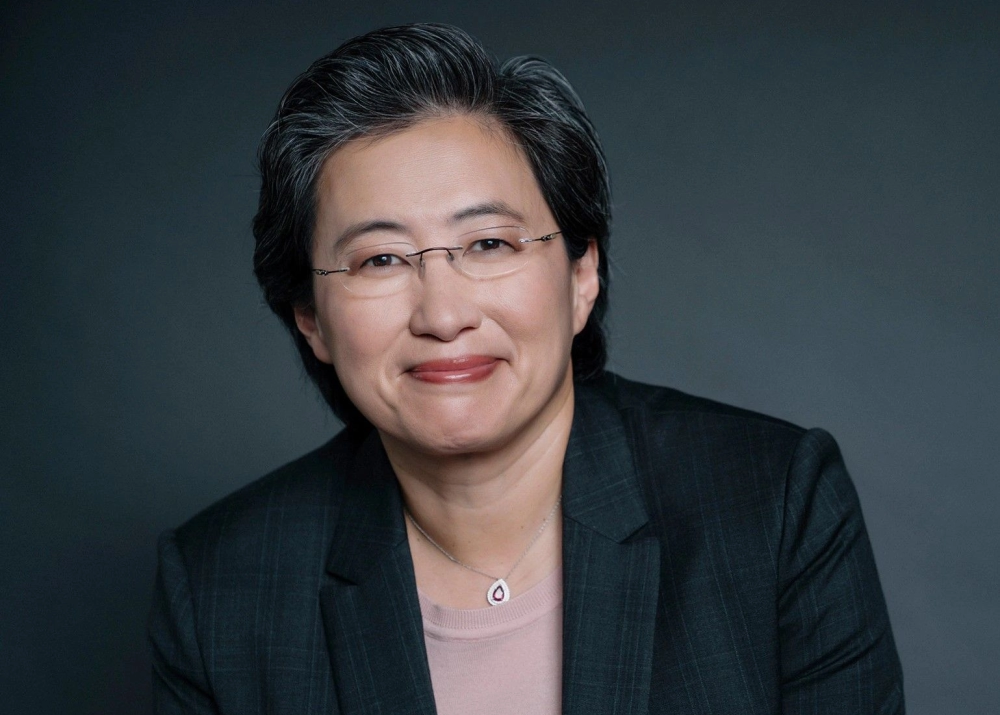
When Advanced Micro Devices was circling the drain in 2014, Wall Street had written its obituary. The company’s stock traded below three dollars. Debt collectors were practically at the door. Industry analysts suggested a fire sale might be the most dignified exit. Then a Taiwanese-American electrical engineer with three MIT degrees walked into the CEO’s office and did something nobody expected: she decided to fight back.
Lisa Su didn’t arrive at AMD with a turnaround playbook borrowed from some business school case study. She came with chip design diagrams, a deep understanding of silicon physics, and an engineer’s stubborn refusal to accept that good technology should lose to inferior competitors. Her first move wasn’t about reorganizing the org chart or cutting costs. It was about admitting hard truths. AMD had been trying to be Intel. It had been chasing markets where it would always be second best. Lisa killed that strategy on day one.
When Everyone Else Zigs
Born in Tainan, Taiwan, Lis immigrated to the United States at age three. Growing up in Queens, New York, she dismantled electronics and put them back together, driven by a fundamental need to understand how things worked. That curiosity led her to MIT for three degrees in electrical engineering, culminating in doctoral research on silicon-on-insulator technology.
Her career followed the arc of brilliant engineers. Texas Instruments, then thirteen years at IBM developing copper circuitry that made chips run 20 percent faster. At Freescale Semiconductor, she served as Chief Technology Officer before joining AMD in 2012 as senior vice president. Six months after becoming Chief Operating Officer in 2014, the board chairman called. “It’s time, Lisa.” She inherited a company hemorrhaging money with no clear path forward. Lisa started making decisions immediately.
The Zen Approach
Lisa’s approach was simple but radical: stop competing head-to-head with Intel and go all-in on high-performance computing. She greenlit development of the Zen microarchitecture, a complete redesign requiring billions the company didn’t have.
Industry observers were skeptical. Intel had dominated for decades. But Lisa had done the math. She understood the physics. More importantly, she had convinced Microsoft and Sony to put AMD chips in Xbox One and PlayStation 4, diversifying revenue while Zen was under development. When PC sales were collapsing and mobile was ascendant, that gaming revenue kept the lights on.
When Ryzen processors launched in 2017, they didn’t just match Intel’s performance—they beat Intel on several metrics while costing less. Data centers noticed. Gamers noticed. Tech reviewers called it the most significant development in chip performance in years. EPYC server processors followed, targeting the massive cloud computing market where energy efficiency mattered as much as raw speed.
Lisa pushed AMD’s market capitalization from three billion to over 200 billion dollars. In 2024, AMD’s market cap exceeded Intel’s for the first time—a milestone that seemed impossible a decade earlier. She became the first woman named Time’s CEO of the Year, receiving the honor twice, in 2014 and 2024. First woman to receive the IEEE Robert Noyce Medal in 2021. Named to the National Academy of Engineering. Forbes ranked her tenth most powerful woman in the world in 2025. Time included her among the “Architects of AI” in their 2025 Person of the Year coverage.
Lisa proved that deep technical expertise matters in the C-suite. When asked about her leadership approach, she talks about problem-solving and execution, not vision statements. She still reads technical papers. She still understands the engineering challenges her teams face. That credibility gives her authority no MBA program could teach.
The Long Game
At a Stanford Graduate School of Business event, Lisareflected on her career with characteristic directness: “Careers are very much by chance. The nice thing about my early career is I was lucky enough to have bosses who asked me all the time, ‘What do you want to be when you grow up?’ And I was like, ‘I don’t know.'”
That uncertainty didn’t stop her from making bold decisions when they mattered. AMD is now essential infrastructure for AI development, competing directly with Nvidia in the fastest-growing segment of the tech industry. The company’s chips power everything from gaming consoles to supercomputers processing climate models. Lisa’s strategic partnerships have positioned AMD not as an also-ran, but as a genuine alternative to industry giants.
She took a company Wall Street had dismissed as roadkill and turned it into one of the most important semiconductor firms on the planet. More remarkable: she did it by being herself—an engineer who believed that building better technology would eventually win, even when everyone else had stopped believing.
That’s not just a corporate turnaround. That’s what leadership looks like when someone actually knows what they’re doing.