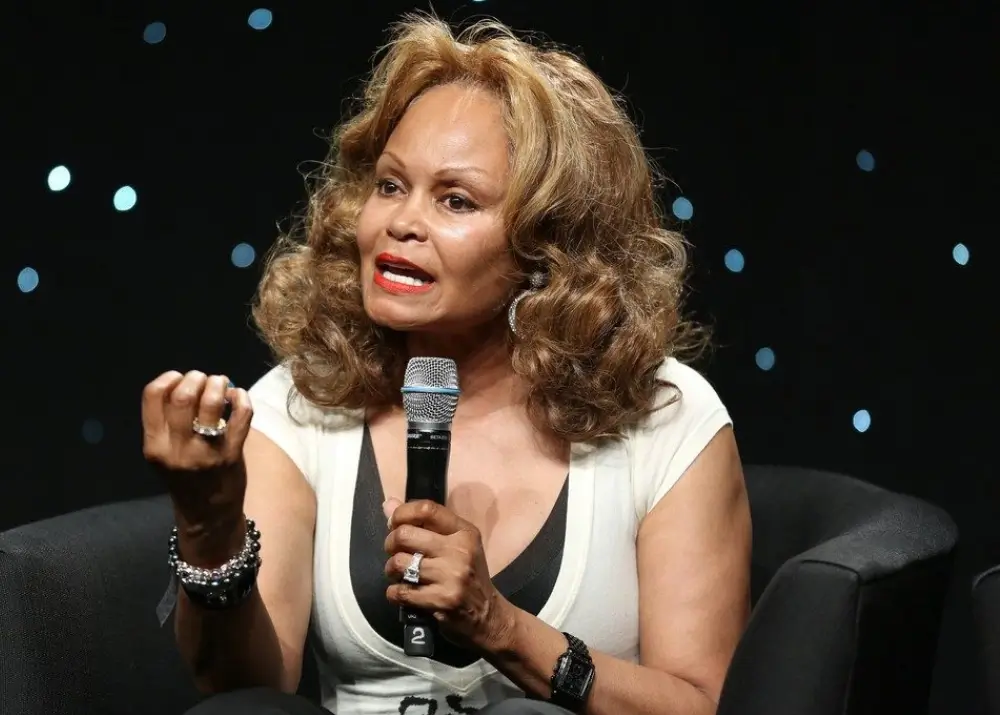
The math was absurdly simple. Janice Bryant Howroyd had some amount in savings. Her mother loaned her $900. Total capital added up to $1,500. Not enough to rent a decent apartment in Beverly Hills, let alone launch a business that would compete against established employment agencies backed by venture capital and decades of market dominance.
In 1978, with that impossibly modest sum, Howroyd rented a small office space with a Beverly Hills address and installed one telephone line. She launched The ACT 1 Group, betting everything on a radical idea: that temporary employment services could be built on relationships, reputation, and a guarantee so bold it bordered on reckless.
Thirty-six years later, she became the first African American woman in United States history to build and own a billion-dollar company.
Tarboro’s Unlikely Entrepreneur: Forged in Adversity
Understanding Howroyd’s empire requires understanding where she came from. Born September 1, 1952, in Tarboro, North Carolina, she was the fourth of eleven children. Her parents weren’t wealthy, but they were strategic. When local schools began desegregating, they enrolled young Janice in the town’s previously all-white high school.
The experience was brutal. In one class, a teacher openly declared that people of African descent were only suited for slave labor and that affirmative action was destroying America. Howroyd begged her father to let her switch schools.
His response changed everything. He told her the decision was hers to make.
She went back.
That choice taught her something no business school could: You don’t win by avoiding difficult environments. You win by refusing to let those environments define your limits.
Her academic performance earned her a full scholarship to North Carolina A&T State University, where she graduated with a degree in English. Later, she would earn a master’s degree from the University of Maryland and a doctorate in humanities from North Carolina A&T.
From Billboard to Beverly Hills: Spotting the Gap
In 1976, Howroyd moved to Los Angeles and took a job as a temporary secretary at Billboard magazine, working for her brother-in-law, Tom Noonan. The position exposed her to entertainment industry executives, celebrities, and the complex machinery of corporate talent management.
She noticed something others missed: The temporary employment industry was transactional and impersonal. Agencies treated workers as commodities and clients as revenue sources. There was no relationship architecture. No trust infrastructure. No guarantee of quality.
Howroyd saw an opportunity hidden in that dysfunction.
The WOMB Method: Building Trust as Competitive Advantage
With her $1,500 in capital, Howroyd launched The ACT 1 Group in 1978 from that tiny Beverly Hills office. Her first client was Billboard, leveraging the relationship she had built as a temporary worker. But her real innovation wasn’t just good service. It was a business model built on an audacious promise.
She guaranteed that she would deliver qualified candidates or return all fees paid. If you weren’t satisfied, you didn’t pay. Period.
The approach violated conventional wisdom. Employment agencies protected themselves with contracts, non-refundable fees, and fine print. Howroyd did the opposite: She made the client’s success her financial risk.
She called her growth strategy the “WOMB method”: Word Of Mouth, Brother. In an industry built on advertising and aggressive sales, she bet on something simpler and more powerful—reputation. Every successful placement became marketing. Every satisfied client became a referral engine.
Within a few years, ACT*1 had generated $10 million in revenue.
Scaling Through Diversification: Building the ActOne Ecosystem
Howroyd understood that sustainable growth required more than staffing placements. She needed to control more of the value chain and address pain points that clients didn’t yet know they had.
In 1996, she launched Document Scanning Systems, helping companies digitize and manage records in an era when paper files still dominated corporate infrastructure. In 1998, she founded A-Check America, providing background checks and drug screening services that employers increasingly demanded but struggled to coordinate efficiently.
These weren’t random diversifications. They were strategic expansions into adjacent services that made The ActOne Group stickier, harder to replace, and more valuable to enterprise clients.
By the 2000s, The ActOne Group had evolved into a multi-division enterprise spanning staffing (AppleOne), technology and management solutions (AgileOne), and screening services (A-Check). Each division served distinct client needs while reinforcing the others.
In 1995, recognizing that technology would reshape her industry, Howroyd made ActOne one of the first staffing agencies on the World Wide Web with the launch of appleone.com. While competitors debated whether the internet was a fad, she was already building digital infrastructure.
The People-First Paradox: Making Humanity Profitable
Howroyd’s philosophy centered on what she called “keeping the humanity in Human Resources.” In practice, that meant treating job seekers as clients, not inventory.
Most staffing agencies optimized for employer needs. Fill the position. Move to the next one. Howroyd inverted the model: ActOne positioned itself as an agent for job seekers, helping them find not just any job but the right fit.
It was counterintuitive. Employers paid the bills. Why prioritize candidates?
The answer was strategic brilliance. By building trust with job seekers, ActOne created a talent pipeline that competitors couldn’t replicate. The best candidates wanted to work with ActOne because they knew they’d be treated with dignity and placed thoughtfully. That gave ActOne access to higher-quality talent, which made employers willing to pay premium fees.
Humanity wasn’t a cost center. It was a moat.
Breaking the Billion-Dollar Barrier: Making History
In 2014, Black Enterprise recognized Howroyd as the first African American woman to own and operate a billion-dollar company. The milestone wasn’t just personal achievement. It was market validation of a business model built on trust, relationships, and service excellence over four decades.
Today, The ActOne Group operates in nineteen countries, serves 17,000 clients, and employs approximately 2,600 people. The company generates over a billion dollars in annual revenue, providing workforce solutions across industries from entertainment to technology to healthcare.
Howroyd’s family is deeply embedded in the business. Her son Brett serves as president of AppleOne. Her daughter Katharyn leads the company’s branding efforts. Her husband Bernard, CEO of AppleOne Employment Services, has been her partner in business and life since they married in 1983.
Leadership Beyond Business: Influence in the Corridors of Power
Howroyd’s impact extends far beyond workforce management. She serves as an ambassador for the Department of Energy’s Minorities in Energy Initiative and sits on the board of the United States Department of Labor’s Workforce Initiative Board, shaping national policy on employment and workforce development.
In May 2016, President Barack Obama appointed her to the President’s Board of Advisors on Historically Black Colleges and Universities. In 2017, she joined the Diversity Committee of the Federal Communications Commission. She serves on boards at Harvard Women’s Leadership Board, the California Science Center, and her alma mater, North Carolina A&T State University.
These aren’t ceremonial positions. They’re platforms where Howroyd influences policy, shapes industry standards, and mentors the next generation of entrepreneurs.
The Howroyd Blueprint: What Leaders Can Learn
Howroyd’s career demolishes comfortable assumptions about capital requirements, market entry barriers, and competitive advantage. She didn’t have venture funding, an MBA from a top-tier school, or insider connections. She had $1,520, a guarantee, and unshakable belief in the power of relationships.
Her success wasn’t luck. It was strategy executed with discipline over decades. She diversified intelligently. She adopted technology early. She treated people—both clients and candidates—with a respect that competitors viewed as inefficient.
Most importantly, she refused to let circumstances dictate outcomes. From segregated classrooms to a small Beverly Hills office, she operated from a fundamental principle: Figure out what’s missing, then build it.
That approach didn’t just make her wealthy. It made her a pioneer.
For executives navigating disruption, economic uncertainty, and talent wars, Howroyd’s story offers a stark reminder: Capital buys speed, but culture builds endurance. Technology scales operations, but trust creates loyalty. And sometimes, the most transformative businesses don’t emerge from Sand Hill Road pitch decks.
They emerge from a $1,500 bet on yourself.