Corporate law today is no longer confined to contracts, compliance checklists, or quiet approvals in the background. It sits at the center of how businesses respond to regulation, ESG pressure, geopolitical risk, and public accountability. General Counsels are now expected to be commercial thinkers, ethical anchors, and strategic advisors all at once, often while navigating industries where scrutiny is relentless and mistakes travel fast.
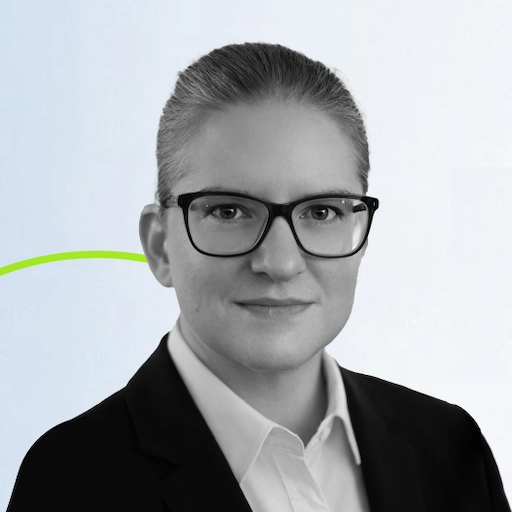
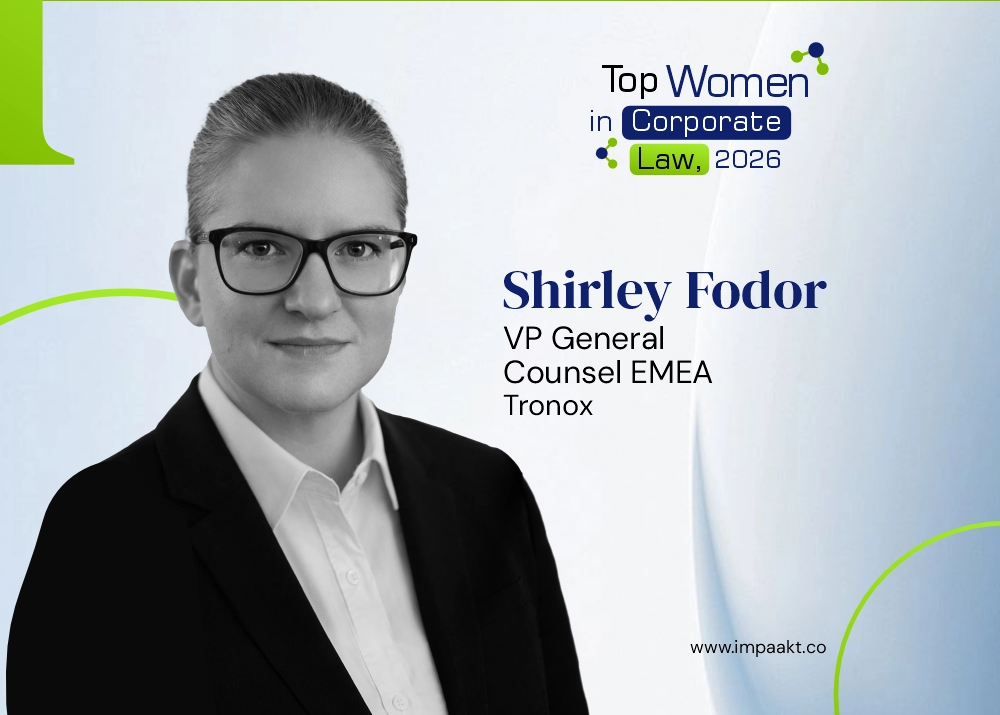
Shirley Fodor operates comfortably in this high-stakes reality. As VP General Counsel for EMEA at Tronox Holdings plc, she brings a rare mix of legal precision and commercial clarity to one of the world’s most complex and regulated sectors. Known for her straight-talking approach and deep involvement in policy, governance, and leadership decisions, she has spent decades proving that strong legal leadership is not about saying no, but about knowing how to move forward responsibly.
Inspired by the way she redefines the role of corporate counsel, we sat down with Shirley to understand the thinking, choices, and convictions that have shaped her journey.
Here are the excerpts from the interview:
Shirley, you began your career in law firms, becoming a partner at a top South African firm Werksmans Attorneys and eventually rose to become VP General Counsel EMEA for Tronox — an incredible journey. What have been the defining moments that shaped your evolution from practicing attorney to a strategic corporate leader?
There have been a host of defining moments, but more than that, there have been defining people.
I knew from the start of my career that I was both commercially minded and solutions driven. I landed my first role in corporate law through luck and a bit of cheek. That risk paid off in ways that I still am discovering.
Without Rupert Smith, Catharine Keene and Chris Stevens at Tabacks Inc (a boutique commercial mining firm in South Africa) the trajectory of my career would have been completely different. They saw potential and kept throwing the juiciest, most difficult work at me. It is thanks to their mentoring (and many late nights) that I went from first year associate to full partner in two years and became one of the few respected female mining lawyers in South Africa. I am grateful and humbled beyond words to have been able to learn my craft from some great legal minds.
I then moved on to Werksmans Attorneys Inc, one of the largest firms in South Africa. This is where I came into contact with Tronox for the first time. I led the Tronox acquisition of Exxaro Resources Limited’s mineral sands business. The largest merger in South Africa by deal value of 2012 (Dealmakers). I then went on to assist with the development of their greenfields Fairbreeze mine, which led to the General Counsel EMEA role being created for me.
With qualifications in both South Africa and the UK, and expertise in public international law, trade and advocacy you’ve worked across multiple jurisdictions and legal cultures. How has that global exposure shaped your approach to problem-solving and risk management in corporate law?
The ability to problem solve hinges on understanding. When working on a cross-border basis or with regulators all over the world, the key is to look at the issue from all sides and understand what the pain points are.
Lawyers do not often get to see the fruit of their labour. We are hermetically sealed from the reality of commerce by our need for objective independence. I take a different approach. I spend time with each of my clients so that I can learn their business and what matters to them. This enables me to draft and work on a more “fit-for-purpose” basis rather than the default “identify all risks and mitigate” approach.
This means that I built strong relationships across multiple industries and sectors and can often find synergies that would otherwise be overlooked. I take a “let’s see how we can make this work” view of my function rather than a binary one.
Corporate law can often seem transactional or rigid from the outside. How do you infuse empathy, ethics, and human understanding into high-stakes legal and business decisions?
Someone once said to me that there is “nothing personal” in commercial law “it is just business”. This is not true – for the people involved it is deeply personal and can have a lasting positive or negative impact. I approach everything I do from a position of authenticity and integrity. One of the reasons I have had a successful legal practice and managed to build a niche within Tronox, is because I take the time to understand what others do, how they do it, and what they are worried about. Once they realise that the only thing I am interested in, is getting them the best possible outcome under the circumstances -it becomes a cordial and collaborative experience.
The role of General Counsel has evolved from being the company’s legal gatekeeper to a business strategist and cultural advisor. What does modern legal leadership mean to you today?
Many people believe that having a law degree makes you a lawyer. General Counsels are not and should not be gatekeepers. Our role is to serve others: by facilitating and enabling the various business functions to achieve their objectives, the law department achieves their own. Like in many areas of life, legal leadership is a team sport that has the added dimension of risk mitigation and management.
Your journey isn’t limited to law. You’ve studied culinary arts and personal development coaching, which is such an unexpected but beautiful mix. You are also busy completing an MBA. What drew you to explore those worlds, and how have they influenced your leadership and perspective as a lawyer?
I have always enjoyed cooking. It is how I unwind. It was my sister’s suggestion that I do a cooking course to develop my skillset. I have been privileged to work in some Michelin starred kitchens. For me, cooking is about joy. Playing with textures and flavours. I also love preserving traditional ways of doing things – so in 2014 when I took a sabbatical, I spent several months cooking with nonnas in Italy and France. It is arguably the best experience I have ever had. It was and remains an added bonus that I bake my own breads and make my own pastas. With the amount of time I spend thinking – cooking is a great way to get back into my body.
I came to coaching in a similar way – during the Covid pandemic. Throughout my career I have worked with early career professionals. What I like about coaching is that it helps others to identify and solve their own problems. I facilitate the process by asking the right questions. I like helping others reach their full potential. It is such a privilege and so rewarding being part of someone else’s professional (and often-times personal) story.
I remember as a young child watching my father do his MBA and how it seemed like such a Big Scary Thing. I firmly believe in doing the things that scare you. So I signed up in 2025 – and have surprised myself. I will be graduating in September 2026.
I will likely look to do a Phd next.
In corporate law, especially at a multinational like Tronox, challenges can be both global and deeply human. What’s one complex situation you’ve navigated that taught you something enduring about resilience and clarity under pressure?
During 2025 I had the very sad task of shutting down the Dutch manufacturing facility. I am based at the Dutch facility. I was blown away by the way in which the impacted employees conducted themselves. Unlike other redundancy programs that I have been involved with over the years – that rapidly devolved into strikes and damage to property, my Dutch colleagues approached the situation with dignity – I had a constant stream of coworkers in my office telling me their troubles and sharing their joy in finding a new job. Some even came to check on me because they know I am “only the messenger”. The level of humanity and care has been inspiring and humbling – and I am proud to call them my colleagues.
You’ve seen the legal profession evolve over two decades. How has the space for women in law, particularly corporate law, changed, and what still needs to shift for true equity in leadership?
The practice of law still has a long way to go to reach a point of equity. I have often been the token female and expected to act as such. Either a rubber stamp or a silent partner, where the primary requirement is silence.
As recently as October 2025 I attended a regional summit – I was the only woman at my table at the gala dinner. There were a handful of people who were not middle-aged white men. I could regale you with horror stories from my early days in mining law.
There are a couple of things that need to shift – firstly, by encouraging diversity at senior levels in any type of organisation there is everything to gain. The notion that something is being lost by inviting diversity into the boardroom is utter nonsense. You cannot expect to thrive if you keep doing the same thing in the same way. Diversity brings new and fresh ideas to the table. Innovation by its very nature requires a new way of thinking. Secondly, the way women deal with each other at the higher levels needs to change- we are all too aware that we have to continually prove ourselves and our worth. This can unfortunately lead to competitive behaviours that are unhealthy and unkind. We should be supporting each other and helping each other grow. Lastly – we need to own the space we take up and stop apologising for it. We have worked harder than most men to get to the top and have had to deal with labels like “battle-axe”, “ice queen” and “vicious” – we have had to grow tough skins that make it okay to be treated like grudge purchases and high paid tea-ladies. Worse – we have put up with sexual harassment on a systemic basis. Own your space. Be the change you want to see in the world. Maintain the authenticity you live with outside of the office – within it. There is no reason why courage and kindness can’t occur simultaneously.
As technology, regulation, and ESG reshape the corporate world, what excites you most about the future of law? And how do you see your role evolving within that transformation?
The corporate world is long overdue a reality check. For far too long the pursuit of profits has been at the expense of various stakeholders. Companies must be responsible citizens and if they fail in that task -they must suffer the consequences. I am excited that it has finally been recognised that there is a broader ecosystem and we are all part of it. I see so many opportunities for improving the way in which regulations are adopted and implemented. I am gratified to see the level of collaboration with regulators in developing regulations.
AI will make the law become more accessible to the lay person. Some development is necessary to address the nuances inherent in the factual matrix and how the legal framework will be applied to it. I have no doubt that it will get there sooner than we think.
I am increasingly involved in policy development – which I thoroughly enjoy. I recall an old professor of mine speaking about the “mischief” any law seeks to address. As the technological world becomes more sophisticated so to does the mischief. I regularly provide input into the various regulatory proposals at national and EU level. Most recently, I worked with the UK Treasury on the proposed amendments to the Landfill Tax – providing an alternative taxing mechanism that would meet the revenue requirements of the government while achieving buy in from the industries who would be impacted by it.
After two decades of navigating boardrooms and building influence in global law, what legacy do you hope to leave behind? Both for the legal profession, and for the women who will follow in your footsteps?
One of sustainable change – where diversity is sought out and not grudgingly implemented. It has been a challenging journey for me, and countless other women who had the temerity not to be divorce lawyers or small debt collectors. I am aware that a lot of the work I have done will not bear fruit in my professional lifetime. But if one day, 20 years from now, a young graduate walks into her first job and is not told to go make coffee for everyone – it will have been worth it.
If you could give one piece of advice to young women aspiring to step into the world of law or corporate leadership, what would it be — something you wish you had known earlier in your career?
Decide what matters to you. Law is often not an exercise in justice – but in patience and dogged persistence. Be humble in your wins and more so in your losses. Mistakes will happen. It is what you do after the mistake happens that counts the most. Do the things that scare you – it could change your life. More than anything, be brave, be kind.