Corporate law wasn’t designed with women in mind. For decades, it operated like an exclusive club with unwritten rules and invisible barriers. The path to partnership was narrow, and the path to leadership was nearly nonexistent for anyone who wasn’t part of the old guard.
Then someone decided not to wait for permission.
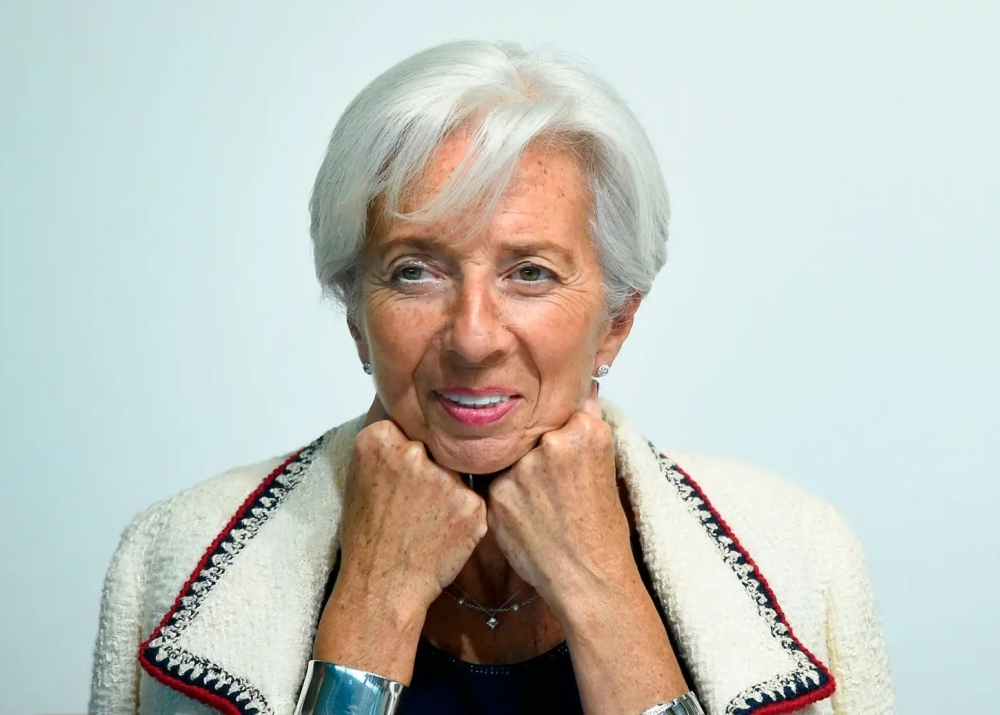
In 1981, Christine Lagarde walked into a prestigious Paris law firm. They offered her a subordinate position, the kind reserved for women at the time. She walked right back out and joined Baker & McKenzie’s Paris office instead. That decision would ripple through corporate law for decades to come.
Building Power Without a Blueprint
Lagarde didn’t have the traditional credentials that opened doors in French legal circles. She failed the entrance exam to École Nationale d’Administration twice, the elite institution that shaped most of France’s political and business leaders. But she had something else: an undergraduate degree from Paris Nanterre University, a master’s from Sciences Po Aix, and a work ethic that didn’t rely on institutional validation.
At Baker & McKenzie, she specialized in labor law, antitrust, and mergers and acquisitions. These weren’t glamorous practice areas, but they were strategic. She handled the complex cases that kept multinational corporations operating across borders. Within six years, the firm made her partner. Most lawyers spend a decade chasing that title.
Her rise didn’t slow down. In 1995, she became the first woman on Baker & McKenzie’s executive committee. By 1999, she was elected chairman of the global executive committee, leading a firm with more than 3,000 lawyers across 35 countries. No woman had held that position before. She was reelected in 2002.
What changed under her leadership? The firm stopped waiting for client problems to land on their desks. Lagarde championed a “client first” approach where lawyers anticipated needs instead of just reacting to crises. Profits climbed. Clients stayed. The model worked because it challenged lawyers to think like business partners, not just legal advisors.
Crossing Into Government Without a Safety Net
Most lawyers at that level stay in private practice. The money is better. The pressure is manageable. But in 2005, France’s trade minister position opened up, and Lagarde took it. She left a comfortable partnership to enter politics without the usual French credentials. She hadn’t climbed the civil service ladder. She didn’t have connections inside the political establishment.
She focused on opening markets for French products and building the technology sector. By 2007, she became France’s Minister of Economy, Finance, and Industry, making her the first woman to hold that role in a G7 country. During the 2008 financial crisis, she chaired the ECOFIN Council, coordinating economic policy across European Union finance ministers.
Her critics said she was too direct. Her supporters said she got things done. She pushed back against Greece during the debt crisis when it wasn’t politically convenient. She questioned France’s 35-hour workweek when business leaders quietly agreed but politicians wouldn’t say it out loud. She operated in a world where being liked mattered less than being effective.
Leading When the Global Economy Was Breaking
In 2011, the International Monetary Fund needed a new managing director. The organization had never been led by a woman in its entire history. Lagarde was elected on July 5, becoming its 11th managing director and the first woman in the role. She was reelected in 2016 for a second five-year term.
The IMF under her leadership became more assertive. She didn’t soften issues or avoid hard conversations. When Trump’s administration pushed for a $57 billion loan to Argentina in 2019 to support a struggling incumbent president before elections, she approved it despite internal concerns about the country’s economic fragility. The decision later sparked controversy when Argentina couldn’t meet its debt obligations.
In 2019, she was nominated to lead the European Central Bank. She took office on November 1, becoming the first woman to serve as ECB president. She now oversees monetary policy and financial stability for the entire eurozone. Forbes has ranked her among the world’s most powerful women every year since 2019.
What She Changed by Showing Up
Lagarde didn’t just break glass ceilings. She redefined what power looks like in corporate law and global finance. She moved from private practice to government to international finance, taking roles that had never been held by women. She did it without the traditional credentials, without following the expected path, and without waiting for institutions to change on their own.
She proved that corporate law expertise translates to economic policy. That being an outsider can be an advantage. That leadership doesn’t require fitting into old models.
Every woman who now sits on a global law firm’s executive committee, every woman leading a central bank or finance ministry, every woman negotiating international trade policy does so in part because Lagarde went first. She didn’t ask if she belonged. She acted like she already did.