Mental health conversations don’t begin with solutions. They begin with listening. With stories that slow people down, open them up, and make space for honesty. Today, some of the most meaningful work in mental wellness is not happening in clinics or boardrooms, but through lived experience, creative expression, and leaders willing to speak from the heart. It is being shaped by people who understand that healing is less about fixing and more about connecting.
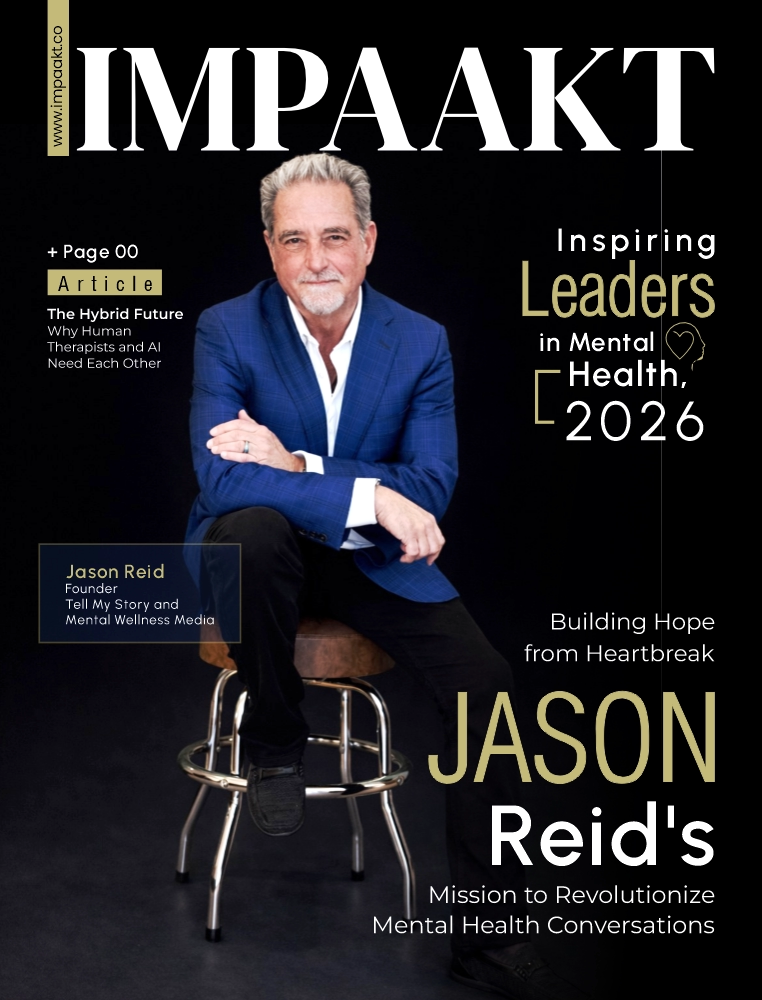
Jason Reid stands firmly in that space. A lifelong entrepreneur who began his career as a painter earning seven dollars an hour and went on to build national businesses employing thousands, Reid has always defined leadership through people, not titles. His email signature says it plainly: “Builder of People.” Across construction, technology, media, and mentorship, that philosophy has guided every venture he has touched. But his most personal and purposeful work emerged from profound loss. After losing his son Ryan to suicide, Reid made a decision that would change the course of his life. He chose to turn grief into action, pain into purpose, and storytelling into a tool for awareness, empathy, and healing.
Through Tell My Story, Mental Wellness Media, films, music, workplace programs, and conversations that meet people where they are, Reid has helped families, leaders, and organizations rethink how they approach mental health. His work does not preach. It invites. It reminds us that emotional pain deserves the same care as physical pain and that real change begins when people feel seen, heard, and understood.
Moved by the honesty of his journey and the impact of his work, we sat down with Jason Reid to explore the stories, convictions, and lessons that continue to shape his mission in mental health.
Below are the excerpts from the interview:
To open this interview and give everyone an idea of who I’m talking to today: Can you tell me about yourself? Who is Jason Reid; the person, the businessman, the serial entrepreneur and problem solver?
I’m Jason Reid.
My core business is National Services Group (NSG), a construction company with four national brands employing around 3,000 people. I’ve been in this business for 39 years. I actually started as a painter making $7 an hour, eventually bought into the company, and grew it with my partners into what it is today — a national organization that does everything from residential house painting to commercial construction.
What excites me most about NSG isn’t the size of the company, but the people. Many of our team members have been with us for 15, 20, and even 30 years. My partners and I have worked together for more than three decades, which is rare — most partnerships don’t last that long. The strength of our business is our people and our culture. That’s why the title on my email signature isn’t CEO or Chairman — it’s “Builder of People.” That’s truly what I do every day: help others grow and be better.
Outside of that, I own a tennis court construction company in Florida with my business partner Matt. When we started five years ago, it was just him and a few employees. Now it’s a thriving business with 50 people and a leading name in the Southeast United States. I’m not in that business because I love tennis — I don’t even play — but because of the people who I get to build with. Other current business ventures include construction robotics and biodegradable packaging.
Beyond business, I coach CEOs one-on-one. Over the past decade, I’ve mentored about 10 leaders, helping them grow their companies and navigate challenges. It’s deeply rewarding work. I’ve built great strong relationships with each one of them. And, you know, they’ll text me throughout the week and tell me what’s going on and give me exciting news and updates. And when they have challenges or problems, I get on the phone to help them through those things.
So that’s the business side of me. And throughout all of these different industries and businesses, the common theme is people. I love the people who I work with.
On the creative side, my production company, Oak Hollow Studios, produces documentary films and other media. One of our projects I love is ‘Ghost Town USA’, a documentary series where we explore ghost stories across small American towns — it’s not a scary show, but a storytelling project about people and places. We also launched The L.A. Hustle, a collective where we’ve produced albums in partnership with BMG. I recently produced a stage play, Walking My Brother Home, written by Brenda Lee Eager, which we are now turning into a film with a full soundtrack.
Philanthropy is also a big part of who I am. After losing my son Ryan in 2018, I founded the nonprofit Tell My Story to help parents understand their children’s mental health through film and storytelling. We’ve created several documentaries — ‘Tell My Story’ (which is up on Amazon Prime), ‘What I Wish My Parents Knew’, and ‘SHIFT: Do What Moves You’, which are designed for live screenings and facilitated conversations.
We also have Uplift at Work, an organization that brings mental health training into workplaces, with a program where we’re helping train company managers and executives on how to deal with the massive mental health crisis we have in this world. Through our training we equip managers to support employees who may be struggling.
People often ask how I manage to do all of this, and the truth is — I don’t. I have amazing people that work with me; leaders and their teams who make it all possible. My role now is talking to the leaders of these organizations and all these different companies, supporting them in their roles, and helping them get better at what they do every day. That’s what I like to do.
I’ve written several books and screenplays over the years, and I’m now working on a new movie. For me, creativity isn’t about commercial success — it’s about expression and the joy of making something.
Creativity has always been a part of my life, but the most important part has always been my family. I’ve been married to my wife, Kim, since 1993, and we have four children. Our youngest, Ryan, died by suicide in 2018, a loss that reshaped my life, my family, and ultimately the work I do today.
When a family loses a child to suicide, things can go in many different directions. Many families don’t recover — studies show that many couples divorce, and others drift apart entirely. There’s a lot of pain, and people often turn to isolation or coping through alcohol or drugs.
We made a conscious decision not to let that happen. Instead, we grew even closer. We talk all the time, spend a lot of time together, and genuinely enjoy each other’s company. I’m incredibly proud of that.
Today, our three oldest — Derek, Ashlyn, and Kyle — all work in our family’s businesses. Being able to work alongside them as their dad is one of the greatest joys of my life.
Jason, you’ve built and led multiple successful companies across industries, but your work today focuses on something far more personal: mental health. What inspired you to pivot from building businesses to building awareness?
I wouldn’t really call it a full pivot — I still do both. But when Ryan passed away in 2018, everything changed. I didn’t want his life, or his story, to end in silence. In the weeks after he died, I found myself wandering into his room, and one day I found two notes. One listed his usernames and passwords — and the other simply said, “tell my story.” Those three words became both the name and the purpose of what I do now.
Our first step was creating the Tell My Story documentary, interviewing parents, kids, psychologists, and doctors about youth mental health. From there, I did two TEDx Talks and a Goalcast talk, trying to help parents see something I wish I’d understood sooner — that our kids’ mental health deserves the same urgency we give their physical health.
When I first stepped into this space, I’ll admit I was a little arrogant. I came from the business world and thought, “awareness isn’t enough — I’m going to fix this.” My original goal was to end teen suicide by 2030. But the deeper I went, the more I realized how complex this crisis really is. There isn’t a single solution. What I could do was focus on where I could actually make a difference: helping families talk, listen, and connect.
That philosophy has guided everything since — from films and workshops to tools that spark conversations. We created a Tell My Story card deck for families, and two Songs for the Drive Home albums with BMG to open up dialogue in the car, where kids often feel more comfortable talking. Our latest film, SHIFT: Do What Moves You, focuses on purpose — the idea that kids who have something they genuinely care about are often more grounded mentally.
I’ve seen that in my own life. I’ve played guitar for forty years, and I’m not great at it. I’ve done Ironman races around the world, usually finishing toward the back of the pack. But it’s never been about winning — it’s about having something that brings joy, challenge, and meaning.
What I’ve learned — both as a parent and as an entrepreneur — is that mental health isn’t something you fix. It’s something you nurture through attention, presence, and compassion. And the more we give families the tools to truly talk, the more we can help them heal.
You often talk about parents “owning their children’s mental health like they own their physical health.” What does that look like in real life — and what’s one simple thing parents can start doing differently today?
One of the constants we’ve discovered through Tell My Story is that when it comes to mental health, talking helps. The act of expressing feelings—getting things off your chest—releases pressure, just like opening the valve on a pressure cooker. If kids can talk about what’s on their mind, it eases that mental build‑up before it turns into something heavier.
That starts with parents being intentional about communication. We need to treat our children’s mental health the same way we treat their physical health — paying attention, checking in, noticing when something’s off. If your child said they had a fever, you’d immediately take action. But when they say, “I feel sad,” or “I’m struggling,” too often we freeze, minimize, or tell them to “shake it off.” However, an honest conversation where kids and teens feel genuinely heard and listened to can make a big difference.
Sometimes the best conversations don’t happen face‑to‑face. For example, we created an album called Songs for the Drive Home, which parents can play in the car. The songs open the door to conversations because kids are often more comfortable talking when you’re side‑by‑side, not staring them in the eyes. It’s in those quiet drives that breakthroughs happen — when a lyric hits home, and a child says, “Yeah, I’ve felt like that too.”
We also learned that kids who have something they’re passionate about — art, music, sports, anything that excites them — are often mentally healthier. It’s not about being great at it; it’s about doing something that brings joy and gives them a reason to get up each day.
Parents should start small: listen, talk, and help your kids find what they love. You don’t need the perfect words or solutions — you just need to be present and make space for honest conversations. That alone can make an incredible difference.
As a society, we’re becoming more open about mental health, but stigma still lingers. In your experience, what are the biggest misconceptions parents or leaders still have about teen mental health?
One of the biggest misconceptions I see from parents, teachers, and even business leaders is that some people still don’t believe mental health is real enough to deserve our full attention. They think depression or anxiety is something you can just snap out of. But there’s a world of difference between feeling sad and being clinically depressed. I’ve been sad plenty of times, but depression is something entirely different — it changes how a person experiences the world.
I like to explain it this way: I live in Southern California where most days are sunny and bright. If I look out the window, I see clear blue skies. But if someone who’s depressed were sitting next to me, they’d only see clouds. I could tell them a hundred times, “Look up, there’s nothing but sunshine,” but to them, those clouds are completely real. Their view of reality is not mine — and trying to convince them otherwise only makes them shut down.
That’s where so many people get it wrong. When someone’s struggling, we tend to jump in with logic or try to fix it. We tell them to cheer up, to focus on what’s good, to just think differently. But logic doesn’t heal depression — empathy does. When you try to reason someone out of their pain, they stop sharing it with you. They don’t want to be told they’re wrong; they just want to be heard.
So instead of talking to them, start by listening. Ask gentle questions: “What do your clouds look like right now? Are they always there, or do they come and go?” Let them describe how they feel and resist every urge to correct or problem-solve. You can’t talk the clouds away with logic — but you can help them start to clear by simply sitting beside someone in the storm.
Sometimes, the most powerful thing you can do is nothing more than that — listen without judgment and let them know they’re not alone. That presence, that willingness to just sit with them, can make all the difference.
You’ve said your failures were your greatest teachers. How did those moments of loss or struggle shape the empathy and resilience you bring into your mental health work today?
If you look at my life… life was never meant to be easy. I just told you about all the businesses I’ve built and the thousands of people I employ. What you didn’t ask about is how I got here. I’ve failed at close to 30 companies — maybe more — that I started believing they’d be successful, and they weren’t. I’ve had to close them down. I’ve lost millions of dollars trying new ideas that didn’t work out. But that’s the journey of an entrepreneur.
People love the success story, but they rarely want to hear about the failures that came before it. They look at what I have now and assume it was easy. The truth is, I haven’t learned anything from success; everything I’ve learned has come from failure. Every single one taught me something new — how to adapt, how to rebuild, how to keep going when everything falls apart.
That process of failing, learning, rebuilding, and trying again is what built my resilience. Too many people today, especially young people, fail once and stop trying. But every actor, athlete, or business leader you admire has a long line of failures behind their success. It’s just what’s required to grow.
The difference between me and most people is how I start my day. I wake up expecting problems. With all the companies I own, no one calls me with good news. My phone rings all day with issues that need solving. That’s my job. I don’t live in a world full of good news — I live in a world of constant challenges, and I’ve made peace with that.
I don’t expect my day to be easy or perfect. I expect it to be tough, and I face it head‑on. Too many people wake up feeling entitled to a “good day.” The reality is, none of us are owed one. We’re only entitled to life itself — what we make of it is up to us.
Every day has setbacks, frustrations, and hard moments. But life’s not about avoiding them; it’s about how you handle them. I choose to see those problems as part of the privilege of being alive, of creating, of trying to make a difference. That’s what keeps me grateful — and that’s what keeps me going.
Through Mental Wellness Media and Oak Hollow Studios, you use film and storytelling to spark conversations around mental health. Why do you believe storytelling is such a powerful tool for healing and awareness?
It’s because human beings are storytellers by nature — that’s how we’re designed. Long before there were schools, we learned through stories. We used to sit around the campfire, and our elders would tell stories to teach lessons and share wisdom. It’s in our DNA. We’re genetically programmed to listen to stories more than we are to lectures.
That’s just what I believe. Storytelling is the best way to reach someone — no one wants to be told what to do. The best books, the best business leaders, even the best self‑help teachers, they don’t lecture; they share their experiences. They tell stories about what they went through, and that’s how people connect.
When you tell someone a story about your experience instead of instructing them, they’re much more likely to take in the message and remember it. People learn through stories. It’s how we’ve always learned.
In business environments where performance is everything, mental wellness often takes a backseat. What can leaders do to create workplaces where people feel supported — not just employed?
Businesses, CEOs, and managers need to understand this: we lose more productivity to mental health issues than we do to RSV, the flu, or even COVID. People take time off because they’re struggling mentally — either with their own issues or those their families are facing — and that costs far more than any sick‑day virus ever could. It starts with awareness. This is real. People are having a hard time, and leaders need to acknowledge that.
The same techniques we use to support kids — listening, empathy, and understanding — are the same tools we need to use with adults. The world is different now. When my dad went to work in the 1960s, the pressures were completely different. Wars were far away, you got the news maybe once a week, and you just did your job. There wasn’t constant stress or social media in your face every minute of the day. Today, everyone — adults included — is living under constant pressure, judgment, and noise. So when an employee hits a breaking point, it’s often the straw that breaks the camel’s back.
I’m not saying people shouldn’t be held accountable. They should. Everyone at my companies knows what’s expected of them — they have to show up, get the job done, and perform. But if someone’s struggling, we treat it the same way we would if they were physically sick. If you had the flu, you’d see a doctor. If you’re struggling mentally, you see a therapist. You take care of yourself. That’s how this should work.
Most employees are doing their best while navigating real pressure. When leaders take their mental health seriously, people perform better and organizations become stronger.
At our companies, we invest in mental health. We have psychologists available full‑time for anyone who wants to talk. My executive team is trained to have real conversations about mental health, and every employee knows they can call me personally because they know my story. And that’s made a difference. When I visit job sites or offices, every time, someone pulls me aside to share their story or thank me for speaking openly about mental health.
Too many CEOs and executives still bury their heads in the sand. They think business is just about making money. But the truth is, it’s about people — and if you create a culture where people feel seen, supported, and cared for, they’ll stay and thrive.
What do you believe the next generation of mental health advocacy needs — and how can technology, media, and leadership play a role in getting us there?
The reality is, there simply aren’t enough therapists, doctors, psychiatrists, psychologists, or treatment centers to handle the overwhelming number of people struggling with mental health issues today. The spectrum is massive — from those who are just a little anxious or feeling down, to people dealing with severe depression and anxiety disorders. We don’t have enough trained professionals now, and we’re not going to have enough anytime soon.
So what we need is something bigger — a network of “first responders” for mental health. I don’t mean emergency professionals, but everyday people who care enough to learn how to help. We need individuals across communities who are properly trained in how to have supportive, empathetic conversations; people who can listen without judgment and be there in those early moments when someone needs to feel heard.
Because that’s what matters most: people need to feel heard. When someone feels like they have a person who will listen, it dramatically changes outcomes. It doesn’t fix everything, but it helps prevent things from getting worse. So we need to give people the tools and training to have these conversations.
There are some great programs out there, but we need more — and we need to make them mainstream. The truth is, we’ll never be able to hire enough therapists fast enough to meet the need. The system can’t carry the weight of this alone.
That’s where some of our own initiatives come in. Uplift at Work is one example — it’s about helping companies train managers and team leaders to have open, effective conversations about mental health in the workplace. Tell My Story is another. Everything we do centers on helping people talk about mental health — teaching parents how to have real conversations with their kids, how to listen rather than rush to fix, and how to be the kind of support person others can lean on.
We can’t wait for government funding to solve this. There aren’t enough people going into the field, and the problem is only getting bigger, especially with the rise of AI, job displacement, financial stress, and everything else happening in the world. We need regular people to raise their hands and say, “Train me. Show me how to help.”
It’s a lot like the old volunteer fire departments in small towns. There wasn’t enough money for full‑time firefighters, so citizens came together, trained, and became volunteers who could respond when fires broke out. They were the first line of defense — the ones who ran toward a problem rather than away from it. That’s what we need now for mental health: a volunteer movement of caring, trained people ready to step in, listen, and support others before things spiral.
If we can mobilize that kind of community — supported by strong leadership, amplified through media, and scaled with the help of technology — we can start making a real dent in this crisis. It’s going to take all of us.
If you could leave one message with every parent, leader, or young person struggling in silence, what would you want them to remember — about hope, healing, and being human?
My message would be this — I know you feel like there’s no hope. I know you feel like no one will ever understand what you’re going through. I know that some days it feels completely hopeless, like there’s no way out. And I want you to know that those feelings are real. They’re valid.
What I’m gonna ask you to do, though, is just hang on.
Even when it feels like everything’s falling apart, don’t give up. Keep pushing through this moment. Reach out to someone — anyone — you trust. Talk to them. Share what you’re feeling. Because the more you talk about it with someone who will really listen, the more clarity you’ll start to have, and the better you’ll begin to feel.
No matter how dark it gets, the connection matters. Talking matters. You don’t have to face this alone — and you shouldn’t. The hardest step is the first one: opening up. But once you do, you’ll realize that people do care and that healing begins the moment you let someone in. So please, don’t suffer in silence.
End of interview
Additional notes and resources:
‘What I Wish My Parents Knew’ and ‘SHIFT: Do What Moves You’ are not available for streaming, but they can be shown for free at screening events for people that would like to host them, and in schools, organizations, businesses, churches, etc. To learn more, go to https://www.tellmystory.org or email brigitte@tellmystory.org.
Tell My Story Card Game: https://www.tellmystory.org/cardgame