Money, for most people, is deeply personal. It shapes where they live, how they plan their future, and what they believe is possible. Yet behind every loan approved, every policy followed, and every system trusted, there’s an invisible force quietly holding it all together: compliance. Not the kind that slows things down, but the kind that makes trust scalable. Especially in an industry as sensitive and scrutinized as mortgage servicing, where one decision can ripple across thousands of lives, compliance isn’t just a function, it’s a responsibility to protect dreams at scale.
That responsibility takes on even more when conversations around money shift from numbers to knowledge, from access to accountability. It’s a reminder that financial systems don’t just need to work fast, they need to work right.
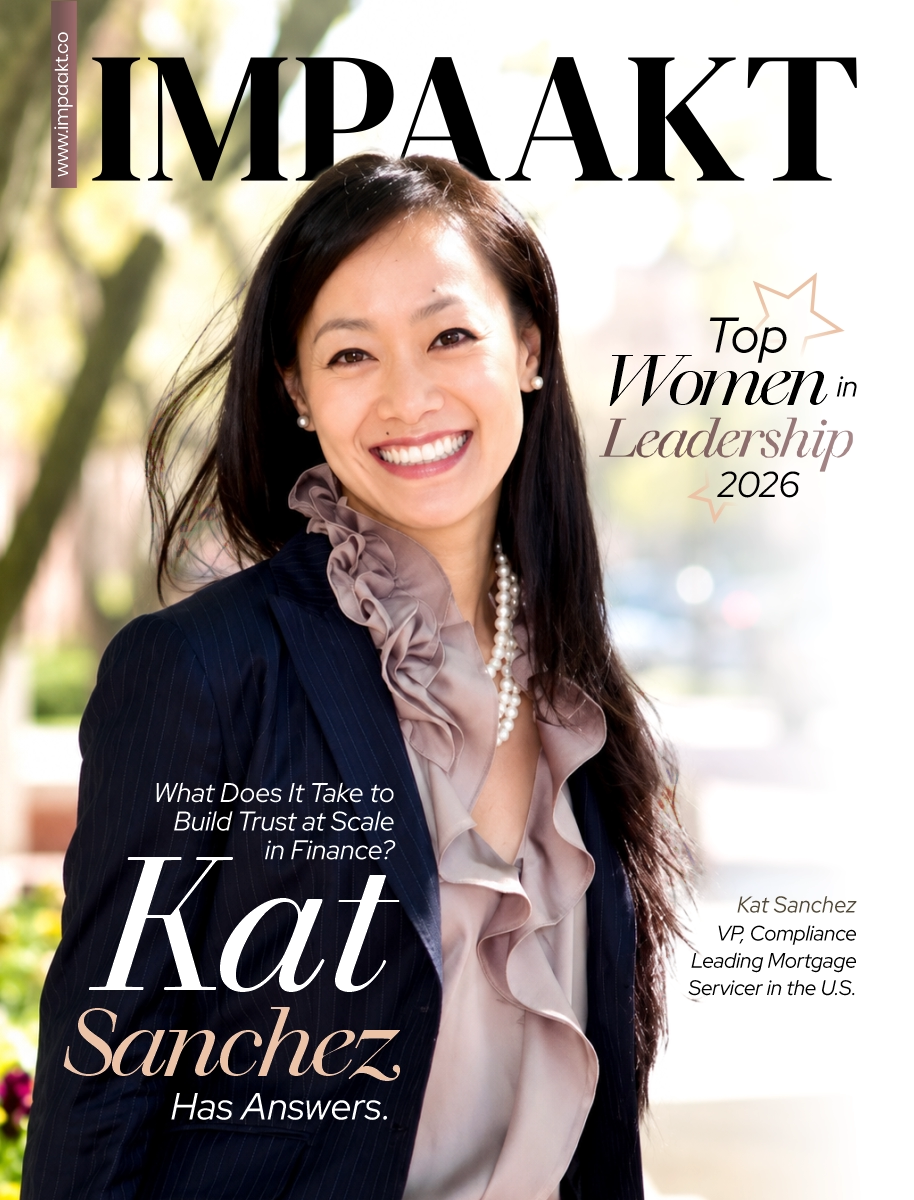
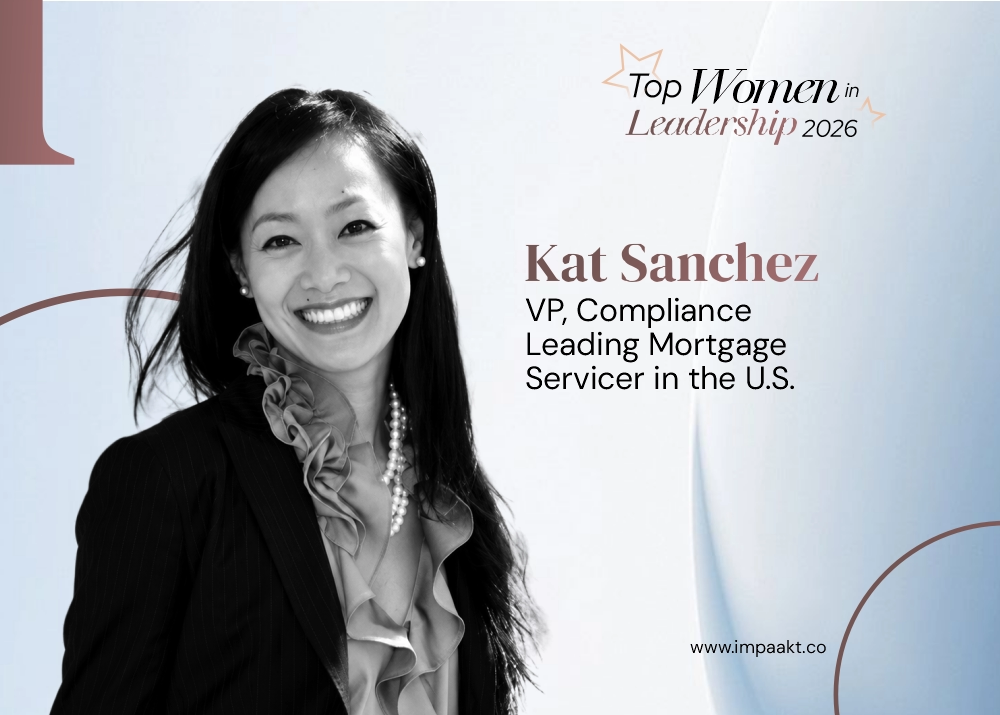
This is where Kat Sanchez stands apart.
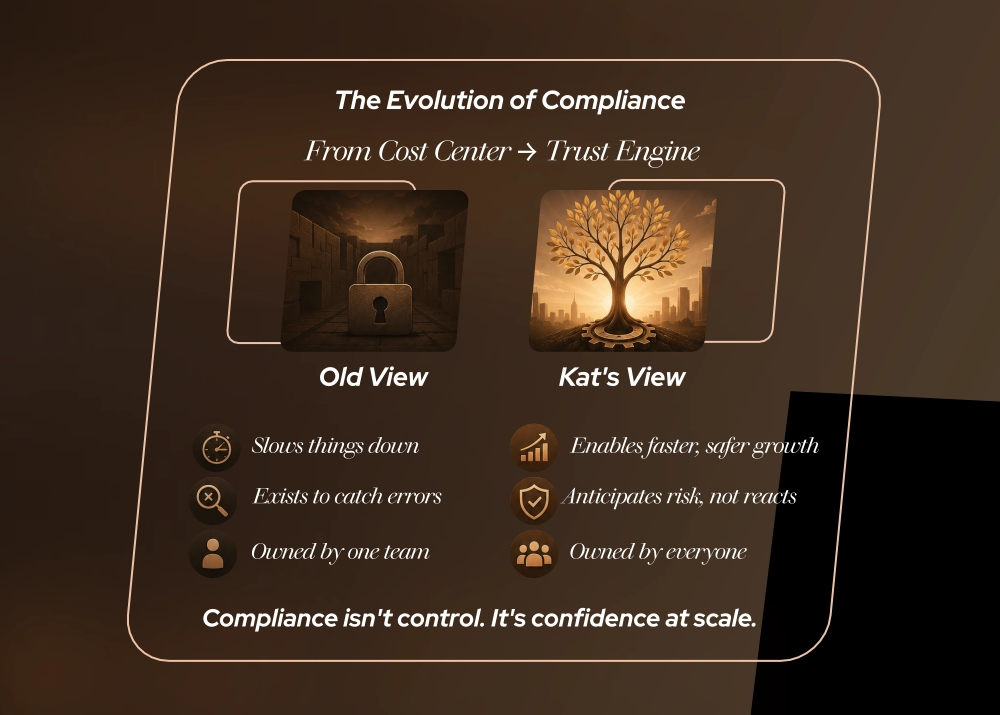
With over two decades of experience in financial services, Kat has built her career not by following a predefined path, but by stepping into complexity and choosing to understand it deeply. Today, as Vice President of Compliance at one of the largest mortgage servicers in the U.S., she approaches her role less like a gatekeeper and more like a strategist of trust. For her, compliance is not a checklist buried in operations, it’s the very architecture that allows businesses to move faster, safer, and more responsibly.
Her leadership is shaped by a simple but powerful belief: you can protect consumers and drive business forward at the same time. It’s this ability to balance precision with purpose that has helped her redefine how teams view compliance, not as a constraint, but as a catalyst.
Inspired by the way she turns regulation into reassurance, we sat down with Kat Sanchez to explore the mindset, moments, and philosophies that have shaped her journey.
Here are the excerpts from the interview:
Kat, many leaders in compliance arrive there through unexpected paths. What first drew you into the world of regulatory compliance and financial services, specifically the mortgage industry?
My journey into the world of financial risk didn’t begin in a lecture hall. In fact, traditional academic programs often overlook the specialized skills needed to manage the nuances of mortgage-backed financial services. My true education began on the ground at a white-label mortgage company, where I became fascinated by the intricate systems of regulatory compliance. I felt a natural alignment with the way these teams anticipated threats and protected the business. By the time the Financial Crisis arrived, my professional purpose had crystalized: I moved into the consulting space, fueled by an enthusiasm for consumer protection and the technical expertise to navigate an industry in upheaval.
The mortgage industry operates under intense regulatory scrutiny. How do you approach leadership when the margin for error is so small?
Having spent over two decades navigating the ebbs and flows of financial services—specifically within the mortgage industry—I have come to a striking realization: it is surprising how much the landscape can shift even when the underlying rules remain constant. True expertise isn’t just about knowing the handbook; it’s about the interplay between external forces, like shifting administrations and market volatility, and internal drivers, such as a company’s core objectives. Synthesizing these two worlds allows for something far more valuable than rigid compliance: a sound and reasonable risk tolerance that anticipates change rather than just reacting to it.
Many organizations treat compliance as a constraint rather than a strategic advantage. How do you help teams see compliance as a driver of trust and operational excellence?
If you view compliance as a brake pedal, you’re missing its true potential. I often tell teams that compliance is more like the aerodynamics of a high-performance vehicle—it provides the stability and lift required to maintain high speeds safely. By shifting the culture from ‘policing’ to ‘partnership,’ we transform regulatory requirements into a strategic advantage that fuels safe, sound, and rapid market entry.
Compliance cannot live in one department alone. How do you encourage a culture where every employee feels responsible for regulatory integrity?
Compliance cannot live in a vacuum; it is a collective responsibility. I view my role not as an auditor, but as an ambassador for our customers’ aspirations. Every financial transaction we process is a building block for someone’s ‘American Dream.’ By emphasizing the human impact of our work, I help our teams recognize that regulatory integrity isn’t just a checklist—it’s a commitment to the people we serve. When we see ourselves as partners in our customers’ lives, compliance becomes a natural extension of our shared integrity.
Compliance leaders often have to make difficult calls that impact operations, timelines, and revenue. How do you balance business objectives with regulatory responsibility?
Balancing immediate revenue goals with regulatory obligations requires a deep commitment to the ‘bigger picture.’ I operate on the principle that two things can be true at once: an organization can be highly profitable while simultaneously serving as a bastion of consumer protection. When we make difficult calls that impact timelines or operations, we are essentially investing in the organization’s most valuable asset—its reputation. Regulatory responsibility is the foundation upon which sustainable growth and brand loyalty are built.
Looking back at your career, what moment or challenge most shaped the leader you are today?
If I’m being candid, the most defining moments of my career involved navigating the friction of high-ego, controlling management environments. While those experiences were challenging, they were also masterclasses in what not to do. They honed my resilience and solidified my commitment to a different path. Those challenges became the foundation for my own leadership philosophy: to empower every individual to reach their maximum potential.
When I transitioned into leadership, I made a conscious choice to lead with trust rather than control. Today, my greatest professional pride isn’t just in the goals we hit, but in seeing the analysts and consultants I once worked with in the trenches now thriving as emerging industry leaders themselves.
Financial services and mortgage lending have historically been male-dominated sectors. What has your experience been as a woman rising into senior leadership in this field?
While we have begun to see glass ceilings shatter with the appointment of ‘first’ female CEOs at major institutions, the financial services landscape remains a work in progress. My career, dedicated to consumer protection and equal access to credit, is deeply intertwined with my experience as an Asian American woman in this field. It has provided me with a unique vantage point on the gaps that still exist. I am driven by the conviction that we can do better—by creating an industry where a candidate’s inherent potential and professional merit far outweigh systemic bias.
What advice would you give professionals who aspire to leadership roles in compliance, governance, or risk management?
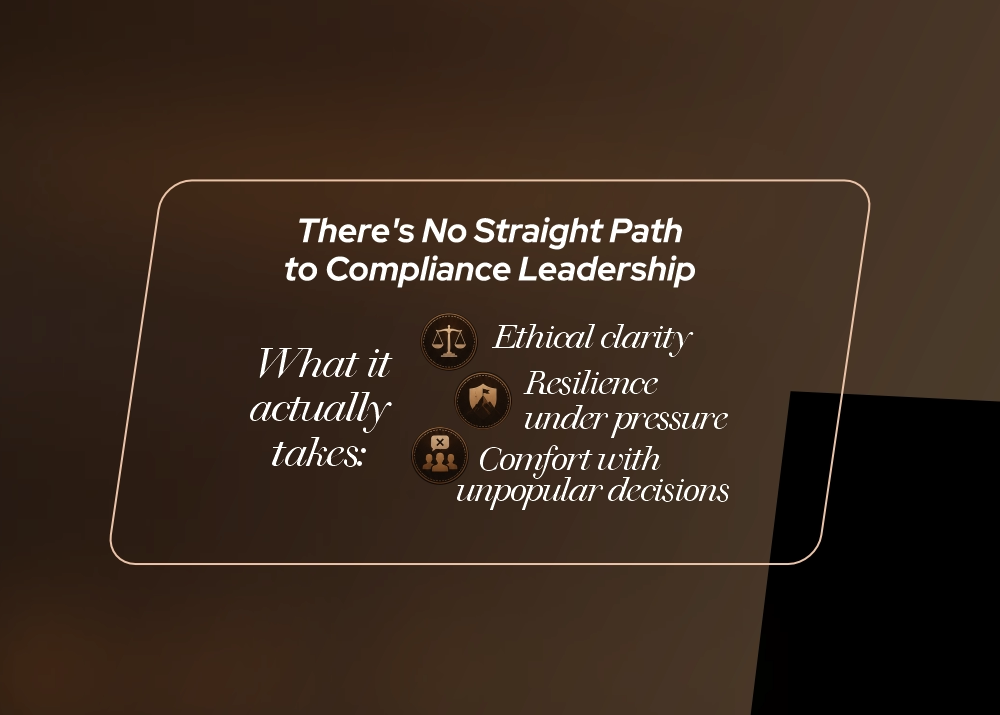
Leadership in compliance, governance, and risk management is rarely the path of least resistance. It requires a firm ethical foundation and a commitment to doing the right thing—even when that choice is unpopular or challenges short-term profitability. My advice to aspiring leaders is to define your ‘North Star’ early. Understand that your advisory has tangible, downstream impacts on real lives. By grounding yourself in a strong moral compass and prioritizing long-term integrity over immediate convenience, you transform a challenging role into a deeply rewarding career.
How do you personally define success—not just for your career, but for the impact you hope to create through your work?
For me, success isn’t a fixed destination or a specific metric—it is the dynamic alignment of purpose, growth, and impact. While the world often measures success through external markers like titles or accolades, I believe a more sustainable and fulfilling definition is built on three pillars:
Integrity in Action: Success is the ability to look back at your decisions and know they were guided by your “North Star.” It’s about doing the right thing when no one is watching and ensuring that your professional “advisory”—the influence you have on others—leaves a positive, ethical footprint.
The Growth of Others: True leadership defines success by the “velocity and lift” it provides to those around it. There is no greater validation than seeing the people you have mentored or worked beside “in the trenches” rise to become leaders in their own right. Success is a collective achievement, not a solo mission.
Daring Greatly: Success is also found in the effort itself. As the “Man in the Arena” philosophy suggests, it is about the courage to step into the fray for a worthy cause. Whether the outcome is a triumph or a difficult lesson, the act of “daring greatly” and remaining resilient in the face of challenges is a success in its own right.
Winston Churchill is credited with saying, “Success is not final; failure is not fatal: it is the courage to continue that counts.” Ultimately, I define success as the peace of mind that comes from knowing you did your best to become the best version of yourself, while helping others do the same.
When people reflect on your leadership years from now, what do you hope they’ll say Kat Sanchez stood for?
In considering the legacy I hope to leave, I often return to Theodore Roosevelt’s ‘Man in the Arena.’ It is a powerful reminder that true leadership is found in the midst of the ‘good fight’—marred by the effort and sweat of striving valiantly for a worthy cause. I hope that when people reflect on my career, they see someone who wasn’t afraid to step into the arena to advocate for integrity and consumer protection.
Ultimately, I want my leadership to be defined by those moments of ‘daring greatly,’ where the commitment to a just cause was always worth the risk of the effort