People rarely tell the truth where they feel unsafe.
That simple human instinct has enormous consequences in mental health. A person may have access to a therapist, a support system, a workplace programme or a healthcare service, yet still remain silent if they expect to be judged, misunderstood or asked to fit into someone else’s idea of what healing should look like.
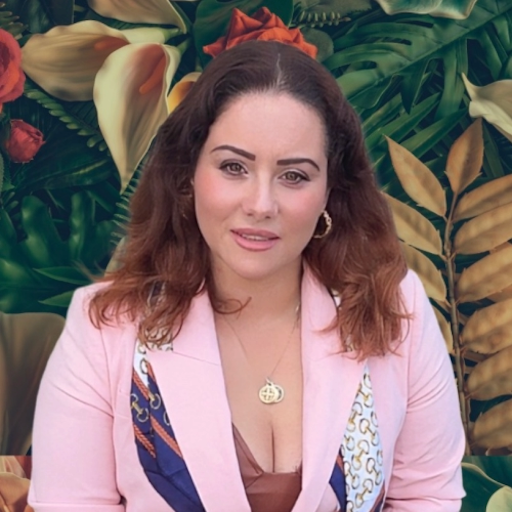
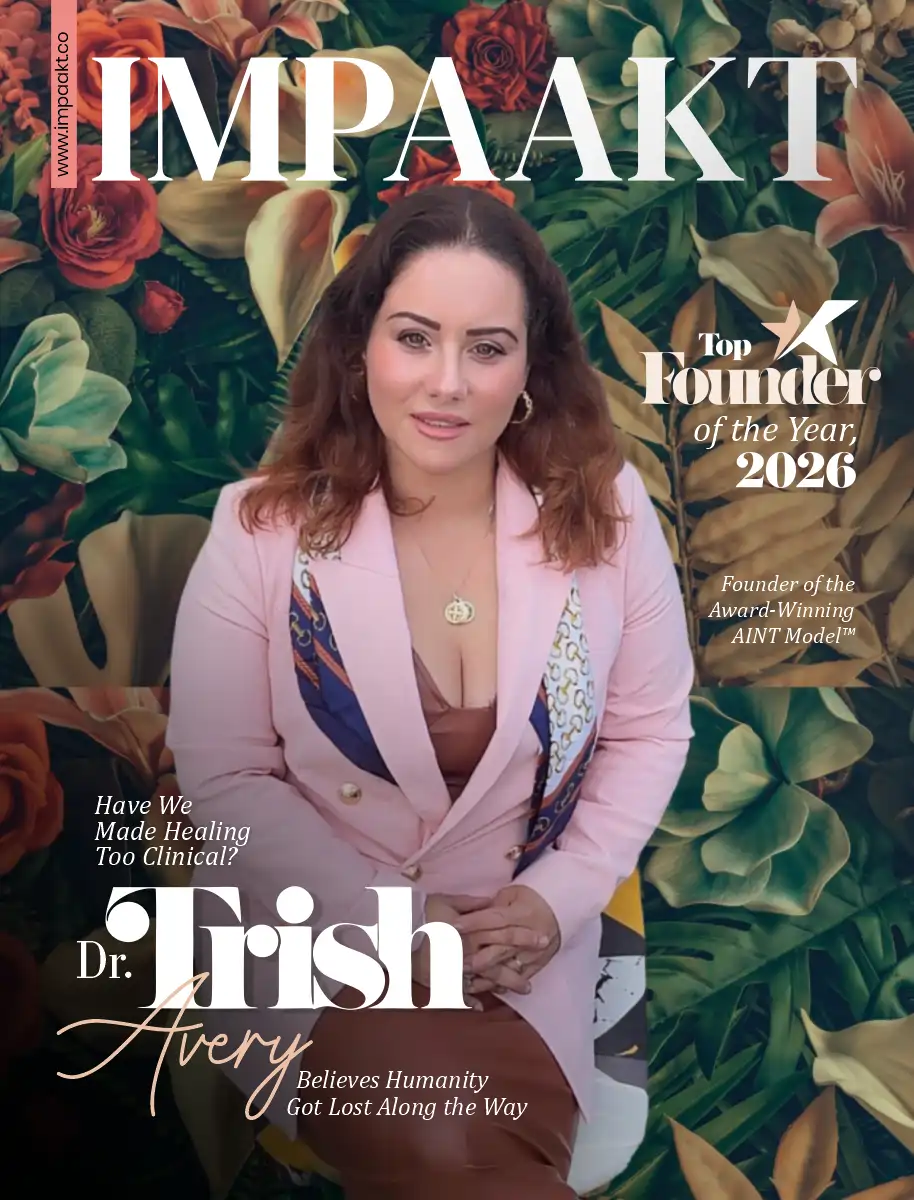
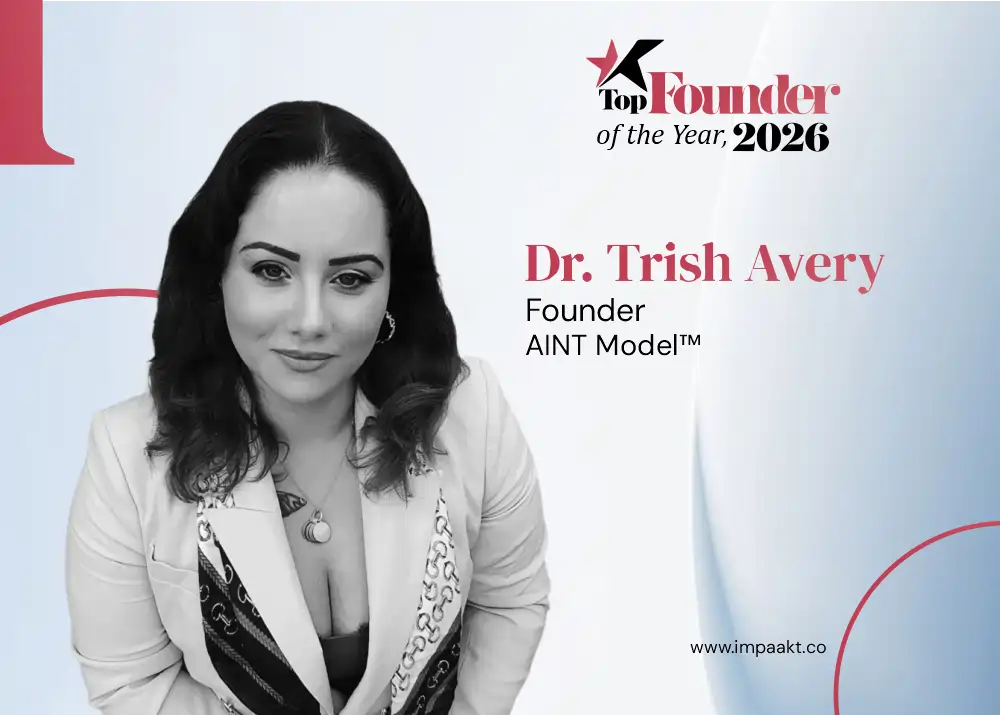
Dr. Trish Avery has spent years looking closely at that silence.
Her work began with a deeply personal understanding of what it means to search for safety and understanding. Her clinical experience later showed her how often people carry that same need into systems that are built to help them. She saw people being labelled when they needed to be listened to, judged when they needed compassion, and left navigating pain that was often treated as a problem rather than a message.
That realisation became the foundation of the Award-Winning AINT Model™.
As its Founder, Dr. Avery has developed a human-centred approach that places safety, dignity, connection and cultural awareness at the heart of support. Its application across healthcare, education, workplaces and communities points to an idea larger than therapy itself: the way people feel within a system can shape what they are able to say, share and ultimately heal.
Her ambition is equally clear. She wants humanity to become a standard, not an exception, in the way people are supported.
Inspired by the thinking behind her work and the experiences that shaped it, we spoke with Dr. Trish Avery to understand the journey behind the AINT Model™, the gaps she chose to challenge and the future she is working to build.
Dr. Trish, before you became a founder, therapist, or researcher, you were someone searching for help yourself. How did those personal experiences shape the kind of support you wanted to create for others?
Before I became a founder, therapist, or researcher, I was simply a person trying to make sense of my own experiences. I wasn’t looking for titles; I was looking for safety, understanding, and someone who could meet me without judgement. Those early years taught me something that has shaped everything I do today: support is not just about interventions, it’s about humanity.
My personal journey exposed the gaps in traditional systems, the places where people fall through, where their stories are misunderstood, or where their pain is treated as a problem rather than a message. I learned first-hand what it feels like to be unheard, and I also learned the power of being truly seen. That contrast became the foundation of my work.
When I created AINT Foundation CIC, I didn’t set out to build another service. I wanted to build the kind of support I needed when I was younger: trauma-informed, relational, culturally aware, and grounded in dignity. My experiences taught me that healing is not linear, and people don’t need fixing. They need space, safety, and someone who understands the complexity of their story. Someone who can sit with them without judgement or criticism, simply listening and supporting.
Those personal chapters didn’t just shape my mission; they shaped my standards. They taught me to design support that honours people’s autonomy, protects their vulnerability, and recognises the strength it takes to ask for help. Everything I do today, whether in therapy, research, or leadership, is rooted in the promise I made to myself years ago: no one should have to navigate their pain alone or in silence.
You often say, “People heal when they feel safe.” Was there a defining moment during your clinical work that transformed this belief into the foundation of the AINT Model™?
That belief came directly from what I witnessed in my clinical work. Over time, I realised something simple but deeply human: when we genuinely care about another person, we naturally create a sense of safety that they can recognise immediately. It is the same feeling we experience with a partner, a mother, or a best friend. These are the people who listen without judgement, who sit with us in the moment, who make us feel supported rather than criticised. That kind of presence creates connection, and connection is what allows us to speak. It is why we open up to those people. It is why we trust them with our truth.
But in therapy, I met many individuals who did not have that kind of support in their lives. Not because they didn’t deserve it, but because their circumstances shaped a reality where safety was never available. They learned to survive without being heard, without being held, without anyone who could sit beside them in their pain. Seeing that made something very clear to me. Safety is not just comforting. It is essential. It is the foundation of healing.
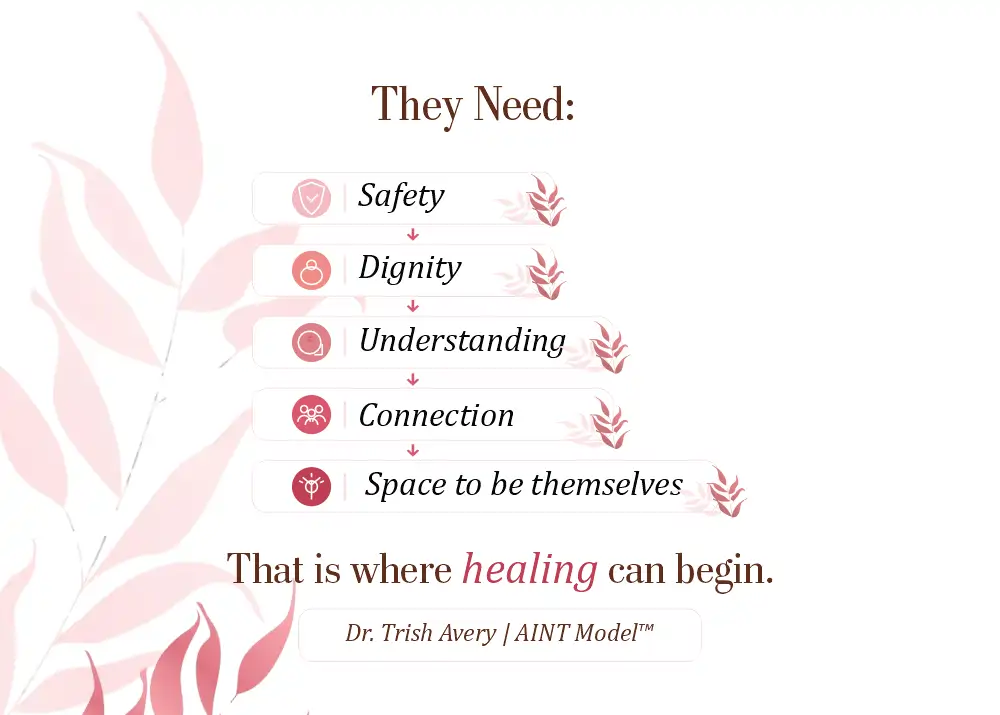
This understanding became the heart of the AINT Model. We created what we call human therapy because people need more than interventions or structured sessions. They need human connection. They need someone who shows up with care, attunement, cultural awareness, and the ability to meet them exactly where they are. The model was built on the truth that healing begins the moment someone feels safe enough to breathe, safe enough to exist, and safe enough to finally speak.
There wasn’t one dramatic moment that changed everything. It was the quiet, powerful moments when someone felt safe enough to open up. It was watching people transform not because of a technique, but because they felt cared for. That is when the belief became a foundation. That is when I understood that safety is not optional. It is the beginning of everything.
The AINT Model™ challenges traditional approaches by prioritizing humanity over judgment. What made you confident enough to question long-established practices and build a framework of your own?
My confidence to question long‑established practices didn’t come from being a confident person. In fact, confidence is not something that comes naturally to me. I struggle with crowded places. I struggle with conferences. I live with anxiety. I am not the loud voice in the room. I am the quiet one who observes, who listens, who feels deeply. But I learned to have a voice in my own way, and I use it to fight for the right causes.
I am someone who believes in seeing to believe, and I saw enough to know I didn’t like what I was seeing. I heard enough to know I didn’t agree with it. I know myself well enough to recognise what truly makes me happy and what I cannot accept. And I cannot accept a system where mistake follows mistake, judgement follows judgement, and people suffer because of it.
I watched people being misunderstood, dismissed, or labelled instead of supported. I watched humanity being replaced with procedure. I watched pain being treated as inconvenience. And I reached a point where I had to ask myself a simple question: am I really going to see all of this and do nothing? That is not who I am.
I want a fair system. I want humanity. I want people to be met with care instead of criticism, with understanding instead of assumptions. I want a model that reflects what healing actually looks like in real life, not just in textbooks. My strength came from witnessing the impact of human connection, not from feeling confident. It came from knowing that if I didn’t build something different, people would continue to fall through the cracks.
The AINT Model grew from that truth. It came from refusing to accept practices that lacked compassion. It came from choosing to create a framework that prioritises humanity over judgement, safety over performance, and connection over clinical detachment. I questioned long‑established practices because I saw the harm they caused. And I built my own framework because I could not stand by and watch people suffer when I knew there was a better way.
I may not be the loudest person in the room, but I am unwavering when it comes to protecting people. My voice may be quiet, but it is firm. And it is dedicated to building a system where humanity is not optional, but essential.
The AINT Model™ has since been recognized internationally for its contribution to mental health. Looking back, did you ever imagine that something born from such personal experiences would evolve into a movement used across healthcare, education, workplaces, and community organisations?
I never imagined that something born from my own personal experiences would grow into an international movement. AINT came from what I lived, what I saw, and what I could no longer accept. It started quietly, from a very personal place, never with the intention of becoming something recognised across the world.
Seeing companies, healthcare settings, workplaces, and organisations now using our model means the world to me. We still have a long way to go, but the fact that my work is recognised at all is something I am genuinely grateful for. I am not someone who ever expected this. I didn’t create AINT for recognition. I created it because people were suffering, and I wanted fairness, humanity, and a system that actually sees people.
To watch AINT grow the way it has reminds me that when something is built from truth, people feel it. They connect with it. They carry it forward. And I am grateful every day that something so personal became something that now belongs to everyone.
One of your strongest messages is that people don’t avoid asking for help because support doesn’t exist, but because they fear being judged. Why do you think judgment remains such a significant barrier to healing?
Judgment is still one of the biggest barriers to healing because in today’s world people are not allowed to be themselves. Everyone gets influenced to change just to be accepted. If a young person doesn’t drink, he becomes “the boring one.” If someone shows their real feelings, they are criticised or diminished. People learn very quickly that being authentic comes with consequences.
And this fear doesn’t stop at friendships or society. Many people avoid asking for help because they worry they will be judged by the therapist as well. When someone expects criticism instead of compassion, silence feels safer than speaking. No one can heal in a space where they feel pressured to fit in or afraid to be who they truly are.
You’ve described AINT as “not therapy, not counselling, something more.” For someone encountering the framework for the first time, what makes it fundamentally different from traditional approaches?
AINT is fundamentally different because it brings humanity back into the centre. Traditional approaches often focus on methods, labels, and clinical structure, but people don’t heal through techniques alone. They heal when they feel safe, understood, and met as a human being.
AINT is not therapy or counselling in the usual sense. It is human therapy. It is the space people should have had in their lives but never did. There is no judgement, no pressure to perform, no expectation to fit into a model. We don’t try to change who someone is. We meet them exactly where they are and support them with real care, real presence, and real understanding.
What makes AINT different is simple. It treats people like humans first. And that changes everything.
The AINT Foundation now works with healthcare professionals, schools, HR leaders, therapists, and community organisations. How has seeing the framework applied across different settings shaped your vision for its future?
Seeing the AINT Model used across healthcare, schools, HR, therapy, and community settings has shown me one thing very clearly: humanity is needed everywhere. Every environment has people who are scared to speak, scared to feel, scared to be judged. And every environment changes the moment safety is introduced.
Watching professionals, teachers, leaders, and therapists apply AINT has shaped my vision for its future because it proves that this isn’t just a framework for therapy. It is a framework for human connection. It works in classrooms, in workplaces, in clinical rooms, in communities, because people are people everywhere.
Seeing it in action has made my vision simple. I want AINT to become the standard of how we treat one another. Not a specialist approach, not an optional training, but a culture of humanity that every system adopts. Because when safety becomes normal, healing becomes possible.
Many founders talk about scaling businesses. You often speak about scaling safety, dignity, and connection. How do you measure success when your mission is fundamentally human?
I measure success by the way people feel. If someone finally feels safe, respected, and understood, that is success to me. I don’t scale numbers. I scale humanity.
And yes, I want AINT to grow. I want it to reach the NHS and major organisations. I want it to become one of the biggest modules because it was built from the gaps, from the failures, from everything people were missing. The fact that companies are already using it means the world to me. Every time AINT reaches a new place, I know we are moving in the right direction.
Mental health conversations have become far more common over the past decade. Do you believe our systems have evolved at the same pace as public awareness?
Public awareness has grown, but our systems have not evolved at the same pace. People talk more about mental health, but the structures meant to support them still operate with old habits, old models, and old ways of thinking. We hear the conversations, but we don’t see the same level of change in practice.
Awareness is rising. Humanity is rising. But the systems are still catching up. And until they do, people will continue to fall through the gaps that AINT was built to address.
Years from now, when people reflect on your life’s work, what do you hope they’ll say the AINT Model™ changed about the way we understand healing, humanity, and one another?
Years from now, I hope people say that the AINT Model changed the way we see one another. That it reminded the world that healing isn’t clinical, it’s human. That dignity, safety, and connection are not optional extras but the foundation of real support. I hope they say AINT made people feel seen, heard, and understood in ways they never experienced before. And that it helped shift systems from judgement to humanity. If that becomes part of my legacy, then the work was worth it.
If every person who has ever felt unheard, judged, or afraid to ask for help could hear one message from you today, what would you want them to know?
If you have ever felt unheard, judged, or afraid to ask for help, I want you to know this: nothing is wrong with you. You were never the problem. You were in the wrong environment. You deserved safety, dignity, and understanding long before you ever needed to ask for it. Your feelings are real. Your voice matters. And you are not alone.