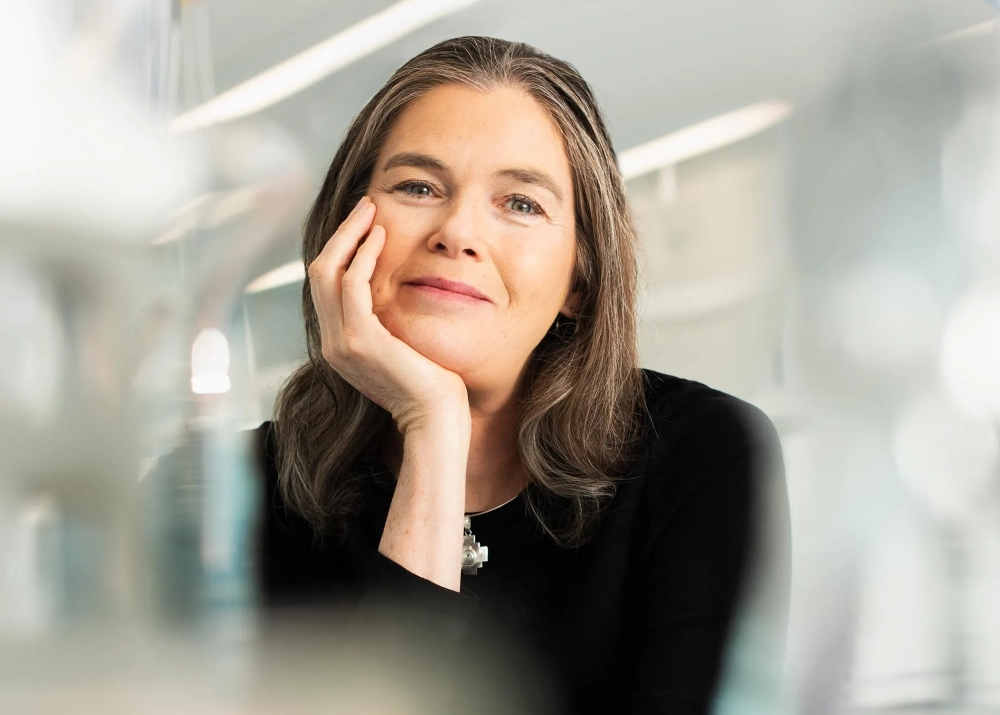
Education has always had a gatekeeping problem. The best professors, the sharpest ideas, the most rigorous coursework — locked inside campuses that only a fraction of the world could ever enter. Somebody had to break the lock. Daphne walked in and did exactly that.
She wasn’t an outsider making noise. She was inside the system, tenured, respected, a Stanford computer science professor with a resume most academics would kill for. That’s what makes her story land differently. She didn’t disrupt education because she failed to make it inside the establishment. She disrupted it from the establishment — and then walked away from the comfort of it.
A prodigy who didn’t stay in her lane
Daphne’s academic instincts showed up early. She finished her undergraduate and master’s degrees at the Hebrew University of Jerusalem, then moved to Stanford for her PhD, and was teaching there by the time she was in her mid-twenties. For nearly two decades, she built a career studying probabilistic graphical models — the mathematical backbone of how machines learn to reason under uncertainty. It’s dense, unglamorous work. It’s also the kind of work that quietly reshapes entire fields, which hers did.
But Daphne wasn’t content to let brilliant ideas stay trapped in journals only a handful of specialists would ever read.
The moment everything shifted
In 2012, Daphne and fellow Stanford professor Andrew Ng put a handful of computer science courses online, free, open to anyone with an internet connection. There was no marketing plan, no grand rollout. The courses simply drew in learners by the thousands — a signal too loud to ignore. Within months, universities like Princeton, Penn, and Michigan wanted in. That experiment became Coursera, and Daphne stepped in as co-founder, co-CEO, and later president, helping build what became one of the largest online learning platforms in the world.
That decision wasn’t small. She was pausing a celebrated academic career — the kind most people spend a lifetime building — to bet on an unproven idea: that a lecture hall didn’t need walls. It paid off. Coursera didn’t just digitize a few courses. It rewired how millions of adults, professionals, and career-switchers accessed serious, credentialed education without needing to relocate their entire lives to do it.
Refusing to stop at one industry
Here’s where Daphne’s story stops being a typical founder arc and becomes something rarer. She didn’t ride Coursera’s success into a comfortable advisory role. She went looking for the next hard problem.
She found it in drug discovery — a field notoriously slow, expensive, and resistant to change. In 2018, she founded Insitro, applying the same machine learning instincts that powered her academic career to the science of finding new medicines faster. Along the way, she also served as Chief Computing Officer at Calico, Alphabet’s biotech venture focused on human health and aging, and co-founded Engageli, a platform built around better digital learning experiences.
What sets Daphne apart
Most people build one thing and spend the rest of their career defending it. Daphne treats expertise like a tool she picks up, masters, and then redeploys somewhere the world needs it more. AI reasoning. Global education. Now, biomedicine. Each move looks unrelated on the surface. Underneath, it’s the same instinct running through all of it: find where deep technical rigor is missing from a system that affects millions of people, and go fix it from the inside.
Her list of honours reflects that range — a MacArthur Fellowship, membership in the National Academy of Sciences and the National Academy of Engineering, recognition from TIME and Newsweek as one of the most influential people in the world. But ask anyone who has worked alongside her, and the accolades aren’t the point. The point is that she keeps choosing the harder, riskier path over the safer, more comfortable one — and keeps being right about it.
For an industry that talks endlessly about “disruption,” Daphne is one of the rare figures who actually did it twice, in two entirely different fields, without ever losing the academic rigour that got her there in the first place. That’s not a résumé. That’s a blueprint.