Care, in veterinary medicine, is often measured in clinical outcomes. But behind every diagnosis, every surgery, every recovery, there is something far less quantifiable at play — instinct, resilience, and the quiet weight of responsibility that comes with holding another life in your hands. For some, this balance between science and sensitivity is learned over time. For others, it becomes a deeply personal pursuit.
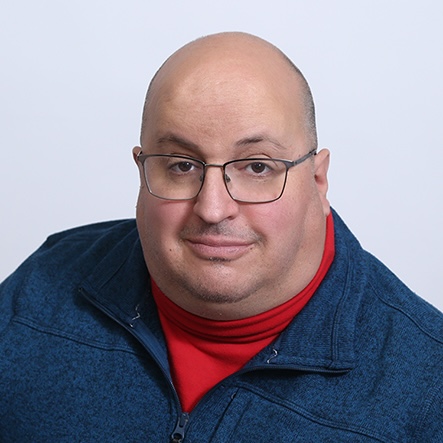
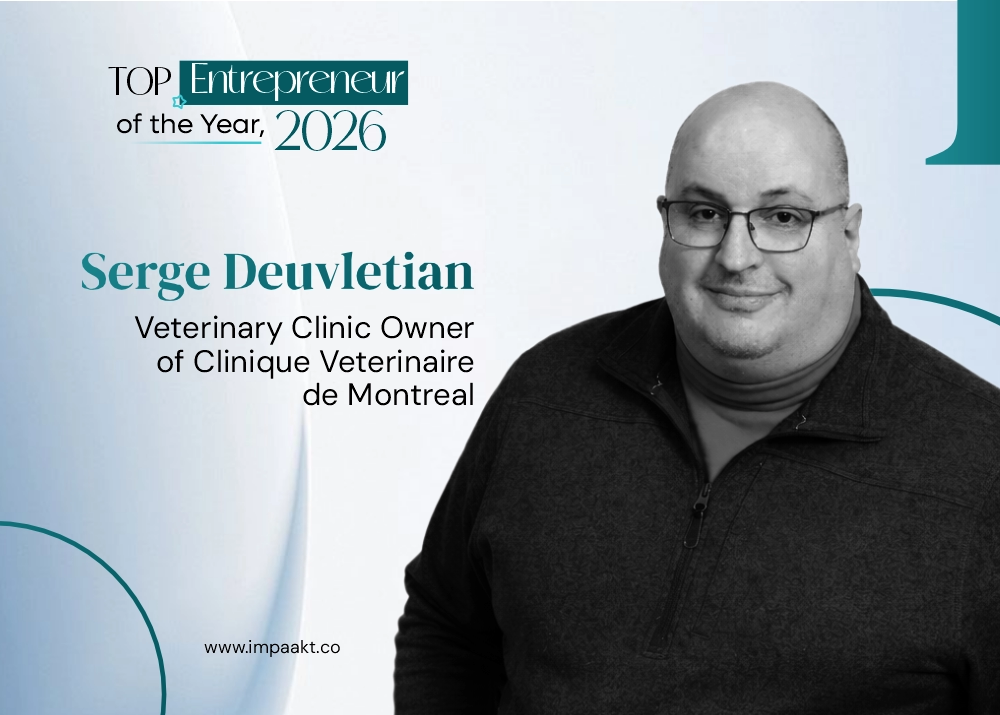
For Serge Deuvletian, the journey was never just about treating animals. It was about understanding survival; theirs and his own. What began as a fleeting childhood moment with a stray cat evolved into a 25-year practice shaped by persistence, unconventional thinking, and a relentless need to make sense of both his profession and himself. Running Clinique Veterinaire de Montreal was not simply an entrepreneurial decision. It was the only environment where he could truly function, build, and contribute on his own terms.
His story moves through challenges that most would struggle to articulate, let alone navigate, from operating on over 20,000 patients to confronting his own diagnosis of Asperger’s, and redefining what it means to be both a doctor and a human being. Along the way, he built a practice rooted less in textbook precision and more in instinct, honesty, and an unfiltered commitment to doing what felt right, even when it was difficult.
Serge’s journey is about endurance. About choosing to continue when the odds, the system, and even the self-feel misaligned.
Compelled by a story that feels as raw as it is rare, we sat down with him to uncover the layers behind the man who chose to build life, and meaning, entirely his own way.]
Below are the highlights from the interview:
Serge, you’ve spoken about caring for a stray cat as a child. When you look back today, do you see that moment as the beginning of your life’s work?
Yes, when I look back that stray cat was indeed the starting point. I did not however expect it to have that much of an impact in my life and somehow change the world.
I do not remember what it looked like or how long we kept it. I was 5 years old and my mind was set.
I ended up stuck as a 5-year-old for 50 years. My brain didn’t start developing until I unwittingly gave it enough fat. I had to gain over 100 lbs from stress eating after my Asperger diagnosis in 2008 to finally make eye contact in 2023.
I even had to gain a bit more after to cut down on meltdowns and sexual urges. It seemed to be the path to achieving mental health.
I am turning 54 with my brain now at 9 years old. I would probably go into sports management this time.
Pets were too much like children to me now and I am no pediatrician.
Veterinary practice requires both clinical precision and emotional intelligence. How did you learn to balance scientific decision-making with compassion?
I had no emotional intelligence. I just went with my gut and by feel.
I am the pet. I never lost a single patient on purpose or without purpose. It is impossible to see, treat and operate over 20,000 patients without losing 20 I found.
Like the 2007 New York Giants I had to be better than perfect. They were my favorite team growing up. Every day during that Super Bowl run I wore my Giants jacket as I waited to be tested for autism at Douglas Hospital in Verdun a suburb of Montreal. After I was confirmed, it was a long road to finding a cure. Every animal I lost against my will made me suffer to the point of finally making eye contact with no effort last 3 years.
2025 was my first full year after opening in 2001 that I didn’t perform any anaesthesia which was the source of most unwanted deaths. To be called a clinic here you had to perform anaesthesia otherwise you were just an office.
That changed only recently and I managed to do as well if not better without anaesthesia as a business.
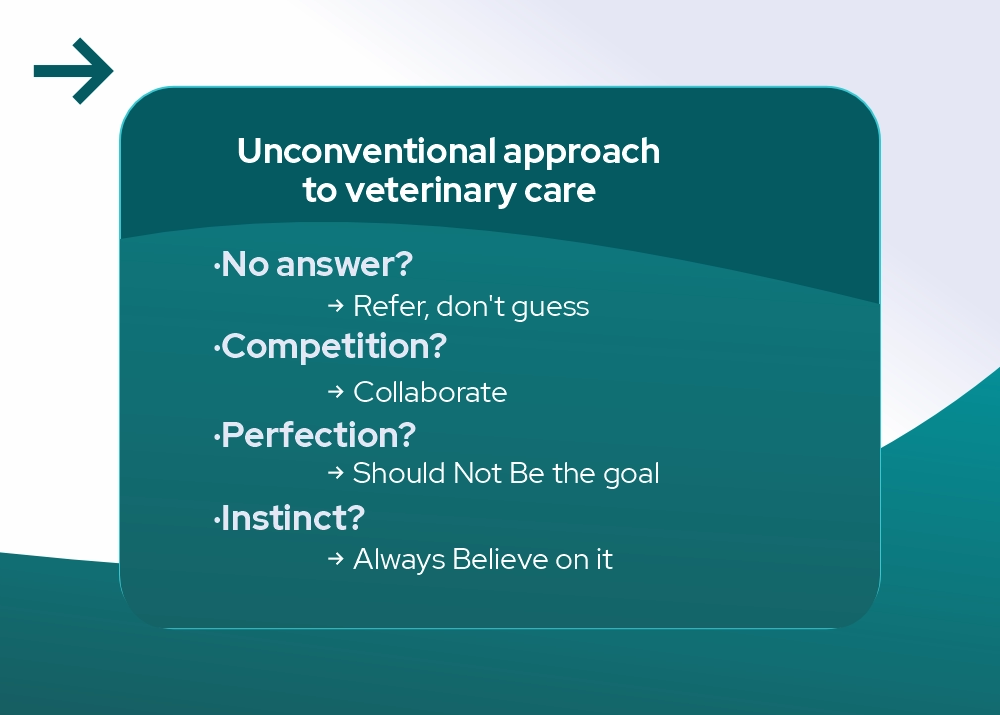
When I didn’t have an answer, I always referred. I used my competitors for my benefit as if I worked for them and they for me. We had that perfect relationship.
Running a clinic for over two decades means navigating business realities alongside patient care. What were the toughest entrepreneurial decisions you had to make?
Dad was the one running the clinic. In wrestling terms, he was management and I was talent. He had to find people who were inexperienced but could handle me and my special clients/pets.
The people who worked here were not typical employees, but they served our purpose. We made them feel special and needed.
My greatest challenge was actually firing one of my first employees after six years together. It was the only time I ever did, and it affected me to the point that I began my process toward diagnosis as if I was the problem.
I rarely worked with more than one person to keep costs down and relieve pressure. We somehow made it 25 years with a variety of people. I went into veterinary medicine to work with animals because dealing with humans was difficult at the time. In retrospect a B.Sc. in psychology might have been better suited than in biology or animal science. Clients have become more difficult and exhausting. At a recent seminar one psychologist suggested vets should charge double for both the pet and its master in the future.
Discovering your link to Armenian animal caretakers under the Ottoman Empire must have been powerful. How did that heritage influence your sense of purpose?
I was not made aware of that heritage until I turned 18. It was the last thing I needed to confirm I was heading in that direction. I was not influenced by James Herriot or Doctor Doolittle. My mentor was my Irish Setter Heros which is Armenian for hero. The first and the last day I saw him were the only two times he was quiet. Looking after him taught me discipline. He was my only friend.
I have no family tree that I know of before 1915. Turkey was our country of origin. I have never been there but whenever I eat Turkish food or hear or read Turkish words it feels like home.
My great grandfather was apparently held in high regard in his village. His knowledge of animals passed down from generations made him an important man. Helping Turks was always in our DNA. We have never strayed from that no matter what.
You have spoken openly about being diagnosed with Asperger’s syndrome. How has that shaped the way you work, lead, and interact with clients and teams?
I had this then nameless condition seemingly since birth. The 80s was the right time to grow up unaware of it. Sooner or later, I was going to find out what it was.
It was both a relief and a joy to discover what I had for so long. There was also some bitterness that it took so long. The psychologist who tested me called it cognitive realignment. I became aware of why I couldn’t make eye contact, speak clearly, have special interests and be clumsy. It was all under one name I had never heard of before then. As an older child I used to trace the letters AS everywhere not knowing then those letters were the path to my salvation. This stemmed from watching a 1967 Filmation cartoon that ran on CBS weekday mornings in a loop with three other cartoons from 1984 to 1987. It was called Journey to the centre of the earth. I did not know it was a Jules Verne novel until two years later during a trip to France.
The letters represented the path to the exit which well applied to me. They were my salvation of sorts.
Many professionals hesitate to discuss personal challenges. What made you choose openness — and what impact did that decision have on others?
I didn’t have a choice. I couldn’t hide my handicap. It was out in the open. Like a short-sighted person, I needed glasses only for my brain.
I applaud others who managed through life without eye contact and continue to do so. I couldn’t.
I had to be resilient in every way shape and form. I realize now how taboo this condition was more than any other. Being only mildly autistic was challenging because you were functional enough to not be in an institution but not enough to exist in a world you do not feel you belong in. Without knowing what I had when we started Dad knew what I needed. My own place with my own clients and patients. I had meltdowns when confronted by people who rubbed me the wrong way or didn’t press all the right buttons. The unexpected and unwilling loss of a pet was another source. It was too much for me after I found out what I had and accumulated 35 years of all that.
I could have succumbed like many others, but I didn’t. The centuries of resilience I inherited served me.
As you think about eventually stepping away from clinical practice, what excites you most about what comes next?
Nothing excites me more now doing nothing. Putting my feet up with a sense of accomplishment. Attending sports venues has been therapeutic since I was 9. I am alone in a crowd, but we are still connected. At work I felt weak but at a game I feel strong. I don’t get paid to be a sports fan, but it helps me to make a living. I look forward to broadening my horizons with books and music and movies.
I am content with just looking after mom and dad as if they were my children. I am a distant uncle to my two young cousins once removed.
I don’t live an expensive lifestyle and am content with the bare necessities. I feel like I made my contribution to society and I can rest and relax knowing I made a good life for myself. Work shouldn’t ever consume you like it did for me. Now I can take more time to recover from that lifestyle.
If you had to summarize what entrepreneurship has taught you — in one deep truth — what would it be?
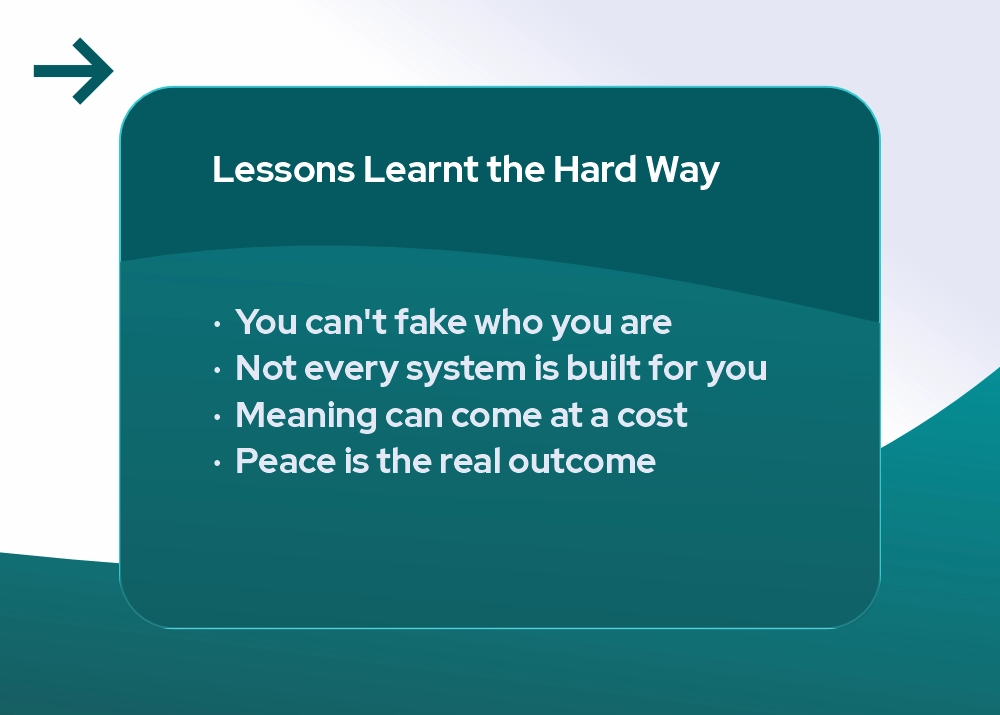
I learned a lot of things during my work career I never knew. What I did was not for the faint of heart. I had no choice but to open my own business because I could not adapt anywhere. I needed a special environment that suited me and my clientele. I would summarize by saying ‘Be true to yourself and success will follow.’
There is no sense in trying to be someone you’re not. You might not be seen on the surface as being as successful as your competitors because you don’t have as many clients or employees. I consider myself successful enough working alone as a vet with minimal stress.
I am content with what I have accomplished, and I did it my way. No other way was going to work. Ultimately the real purpose of my career was to find a cure for what I had. In that sense it was a success and that was enough for me. It made it all worthwhile. I would never go through all that again.
What would you say to young professionals who want their careers to feel meaningful, not just successful?
It’s hard for me to give any advice to anybody because nobody ever gave me any. ‘Don’t do what I did’ would be my only advice. I was pioneering for animals and autism so that no one else would have to go through what I went through and suffer like I did. I helped a few students get into vet school. My advice to them was to always do exactly what they were told while they were there. Wait until after you graduate to do your own thing. Many veterinarians left because their profession lost meaning to them.
Meaning can be hard thing to find if you don’t have a home life outside of work. I had to sacrifice myself time and work wise to make my clinic work. The clinic itself was my only meaning and now that it served its purpose I can find it elsewhere. I was ready to quit for a long time but held fast.
It’s satisfying to look back at 25 years of accomplishments. Now I prepare for the next step like a father whose bride is about to wed. The clinic became my daughter and it’s time for a suitor.
I don’t envy future generations. Things will get harder but at least it will be real. The time I grew up in was not real which is why it was easier. You didn’t have to know then what you have to now. There is no going back which is a good thing because it wasn’t best for us.
When people reflect on your life years from now, what do you hope they’ll say Serge gave to the world — through animals, writing, or simply being himself?
What Serge Deuvletian gave to the world can be summed up in 2 Spanish words ‘No mas’ which means no more. No more autism spectrum or Asperger’s syndrome.
At least not for me I’m tired of it. Living with that condition was like a mental prison I am finally free of.
The film Beverly Hills Chihuahua inspired me. Like Chloe I found my bark and am not looking back. My worst nightmare came true in my career after losing a Chihuahua during a routine neuter. It was the only dog for whom the anesthesia was too much to handle which is a rare occurrence even in humans.
I learned in an understanding human behaviour class at Concordia University that cognitive dissonance leads to motivation. That Chihuahua helped me find out what I had and beat it. He was tiny but mighty. There was also a Rat Terrier who had a different reaction but with the same outcome. I dedicate this piece to both dogs and the nine cat lives that were taken from me.
Each life was necessary for a cure. I can never look at pets the way I did when I first adopted that stray. I had an Exotic Shorthair after I graduated. She was my superstar.
I don’t own pets anymore. I don’t need to. All the pets I’ve seen were enough to complete my journey.