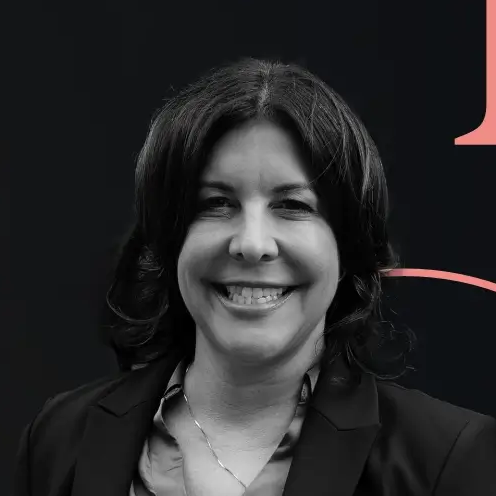
She started at a teller window.
Not as a footnote in a career biography, but as the most important classroom she would ever sit in. Standing at the frontline of a Wells Fargo branch during core account processing conversions, Joanna Radke watched technology arrive in the hands of real people. She saw when it worked. She saw when it did not. And she understood, in a way most executives never do, that behind every system migration is a customer trying to make sense of what just changed.
That ground-level clarity has traveled with her across twenty-five years, through five major organizations, and into some of the most complex enterprise deals in financial services.
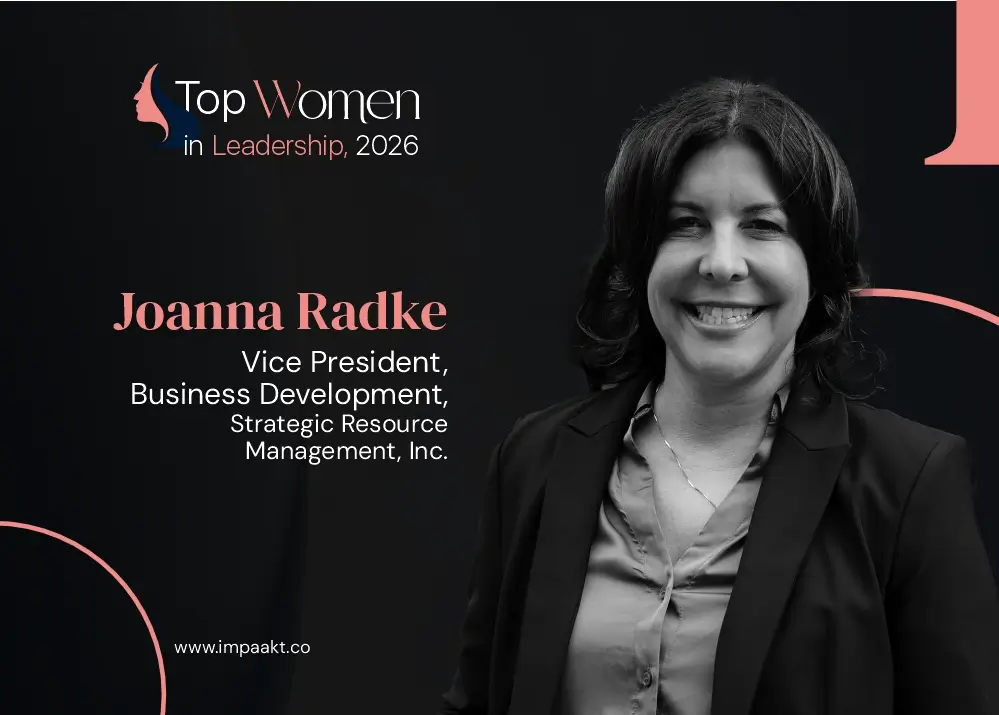
Joanna Radke is now Vice President of Business Development at SRM, a financial services advisory firm based in Memphis, Tennessee that partners with community banks and credit unions on strategic initiatives. She has closed a $42 million multi-product agreement across five product lines. She has walked back into client relationships where trust had collapsed and rebuilt them. She has been named to the Top 50 Women Leaders of Oregon. And she will tell you, without hesitation, that none of it happened by being the most aggressive person in the room.
This Women’s Month, IMPAAKT sat down with Joanna to understand what twenty-five years of principled selling actually looks like, and why the financial institutions that serve everyday Americans deserve advisors who were once one of those everyday Americans too.
Joanna, you’ve built a career across banking, fintech, and enterprise sales. What first pulled you into this world — and what made you stay?
My entry point was Wells Fargo, where I started as a bank teller before moving into branch administration during core account processing conversions. That teller experience was foundational — I was on the frontline of banking operations, the first person a customer interacted with, and I saw firsthand how technology either empowered or frustrated the people actually using it every day. When systems changed, I felt it immediately. That ground-level perspective is something I’ve carried with me through every role since.
What pulled me deeper was the people. I moved to the vendor side because I wanted to be part of solving the problems I’d witnessed from inside the bank. I joined Online Resources first, then Open Solutions, then Fiserv, and later NCR — and across all of those experiences, the constant was this: financial institutions are the backbone of communities, and the technology decisions they make ripple out to real people’s lives.
All this experience — the teller window, the branch operations, two decades on the vendor side spanning digital banking, payments, core processing, and enterprise sales leadership — is exactly what brought me to my current role as Vice President of Business Development at SRM. SRM is a financial services advisory firm based in Memphis, Tennessee. My role is to support community financial institutions with their strategic initiatives. It’s the role that pulls together everything I’ve learned, from every seat I’ve sat in.
What made me stay? Honestly, the relationships. Twenty-five years in, I still get energized by a conversation with an executive who’s wrestling with how to modernize without losing the trust. That problem — balancing innovation with the responsibility of stewardship — is endlessly interesting. I never woke up and thought, “I’ve figured all of this out.”
Having worked inside financial institutions and alongside them, how has that dual perspective shaped the way you sell, advise, and build trust?
It fundamentally changed the way I listened. When you’ve sat on the other side of the table — even briefly — you understand that a vendor’s call is rarely at the top of anyone’s priority list. There are regulatory pressures, board expectations, member or customer concerns, and staffing realities that have nothing to do with whatever solution you’re walking in with.
That experience taught me to ask about context before I ever talk about products. What keeps you up at night? What is your board asking you about? Where are your operations feeling the most strain? When I understand those layers, I can position what we do in a way that actually resonates — or, sometimes, I can tell a client honestly that what they need right now isn’t what I’m selling.
That kind of candor builds trust faster than any pitch deck. Clients remember the times you told them the truth, especially when it wasn’t your immediate interest in doing so. My Wells Fargo experience — however brief — gave me a reference point that I’ve drawn on in every role since. It reminds me that there’s a real institution, with real people, on the other side of every deal.
You’re known for reviving underperforming accounts. When you walk into a stalled relationship, what’s the first thing you listen to?
I listen for what isn’t being said. In a stalled relationship, there’s usually a reason buried beneath the surface — a promise that wasn’t kept, a transition that went poorly, a contact who felt ignored. People are rarely going to lead that in a first conversation. So, I pay attention to to tone, to hesitation, and to what topics get changed quickly.
From there, I focus on actions over words. Small commitments, followed by quickly, rebuild credibility faster than any presentation. I’ve walked back into account where the trust was essentially zero — and in most cases, the path forward was less about what we could offer and more about demonstrating that we were actually paying attention this time. One of my most meaningful wins at SRM, a community financial institution, came from exactly that approach. I acknowledged the gap plainly, without excuses, and we built something genuinely collaborative from there.
Your approach is described as consultative rather than transactional. What does that actually look like in high-stakes enterprise sales conversations?
It looks like slowing down when every instinct is telling you to speed up. High-stakes conversations create pressure — there’s a timeline, there’s a deal, there are people watching the outcome. The transactional instinct is to push toward close. The consultative instinct is to make sure the client is making the right decision, even if that means the timeline stretches.
In practice, it means I spend as much time asking questions as I do presenting solutions. I want to understand the internal dynamics — who are the decision-makers, who are the influencers, what are the competing priorities? I want to know what success looks like to them twelve months after implementation, not just on signing day.
I also try to be a connector, not just a seller. If I know someone who’s solved a similar problem at a peer institution, I’ll make that introduction. If there’s an industry event where the client can hear from others doing the work they want to do, I’ll point them toward it. That kind of generosity — of time, connections, perspective — is what separates a vendor from a trusted advisor. And trusted advisors get called first when the next opportunity arises.
You orchestrated a $42 million, multi-product agreement across five product lines. What did that deal teach you about patience, alignment, and timing?
That deal taught me that the most important work happens in the spaces between formal meetings. The relationship that made it possible had been built over years — through regular touchpoints, through candid conversations about where things weren’t working, through showing up consistently even when there wasn’t an active opportunity on the table.
By the time the conditions were right for a deal of that scale, we weren’t starting from zero. The trust was already there. What I had to do was align it across five product lines, multiple internal stakeholders on both sides, and a timeline that required everyone to move together. That coordination is genuinely difficult. It requires understanding what each stakeholder cares about most and finding the common thread that makes the larger vision compelling to all of them.
The lesson on timing was humbling. There were moments where I thought we were ready to close, and we weren’t. Pushing would have fractured the alignment we’d built. Patience — the discipline to let the client’s internal process run its course — was ultimately what made the deal possible. I learned that in enterprise sales, the best closers aren’t the most aggressive ones. They’re the ones who know when to wait.
Fintech sales today involve long cycles, multiple stakeholders, and layered technology stacks. How do you simplify complexity without underestimating your audience?
Simplifying complexity doesn’t mean dumbing things down — it means being precise about what matters most to the person across from you. Financial institution executives are sophisticated. They’ve heard a hundred vendor presentations. What they respond to is someone who’s done the homework, who understands their specific situation, and who can cut through the noise to show them what actually changes for them.
I also lean on proof points. Rather than describing what a solution does in the abstract, I’ll share what it accomplished for a peer institution in a similar market with similar constraints. That transparency is what earns the credibility to guide someone through it.
Fintech and enterprise sales are still heavily male-dominated. How did you learn to command the room — and what advice would you give women stepping into similar roles?
I learned it largely by trial and error, and by finding mentors — both women and men — who were willing to be direct with me about what was working and what wasn’t. Early in my career, I sometimes felt pressure to adapt my style to fit the room. Over time, I realized that my natural style — relationship-driven, curious, direct — was actually an asset, not a liability. The rooms that didn’t respond to that weren’t my rooms.
Commanding presence, for me, has never been about being the loudest voice. It’s about being the most prepared, the most curious, and the most honest when you walk in knowing more about a client’s business than they expected you to; the dynamic shifts. When you’re willing to say “I don’t know, but I’ll find out” rather than bluffing, people trust you. That trust is the foundation of influence.
For women stepping into these roles: don’t let anyone convince you that your instinct toward relationships and empathy is a weakness. In a relationship-driven business, those qualities are exactly what drive long-term performance. Find your allies early. Seek out mentors who will give you honest feedback. And build a track record that speaks before you enter the room — because credentials matter, and recognition like being named to the Top 50 Women Leaders of Oregon doesn’t happen without doing the work consistently over time.
You’re a consistent over-achiever in a pressure-driven environment. How do you personally define sustainable success?
Sustainable success, to me, starts with how you handle failure. In a high-pressure environment, you’re going to lose deals, misread a client, make a call that doesn’t pan out. What separates people who last isn’t that they fail less — it’s that they learn fast and get back up without dwelling. I’ve always tried to do a quick honest debrief when something doesn’t go the way I planned: what was in my control, what would I do differently, and then move forward.
For myself, it means staying genuinely curious. I still get excited by new problems, new markets, new conversations. I also believe deeply in life outside of work — my community engagement through the Jordan Schnitzer Museum of Art and the Eugene Symphony Association, time with my husband, our family and dog Johnny, moments that have nothing to do with a pipeline. Those things make me a better professional because they remind me of what I’m actually working toward.
Looking ahead, how do you see fintech vendors needing to evolve to remain relevant and trusted partners to financial institutions?
The institutions I work with today — credit unions and community banks — are under more pressure than they’ve ever been. Margin compression, talent retention, regulatory complexity, digital expectations from members and customers who compare them not to other banks but to Amazon. The vendors who will remain relevant are the ones who understand that pressure in its full dimension and position themselves as strategic partners, not product pushers.
That means investing in outcomes-based relationships. Not “we sold you this platform” but “how is this platform performing against the goals you had when you bought it, and what do we need to adjust?” It means bringing market intelligence proactively — sharing what’s working at peer institutions, what’s emerging in the competitive landscape, what regulatory changes are on the horizon. Being genuinely useful between contract cycles.
It also means being honest about the limits of what technology can solve. Some of the challenges facing community financial institutions are fundamentally about strategy, talent, or culture — and a vendor who pretends otherwise does their clients a disservice. The vendors who will earn long-term trust are the ones who can acknowledge that, and either help solve the bigger problem or connect clients with someone who can.
After years of wins, deals, and recognition, what still excites you when you step into a new opportunity or conversation?
The moment when you can see someone shift. There’s a specific look a client gets when the conversation moves from polite and guarded to genuinely engaged — when they start leaning in, asking questions, thinking out loud about possibilities. That moment never gets old.
I’m also energized by the community banking and credit union world specifically. These institutions exist because someone believed that a group of people deserved access to fair financial services — teachers, farmers, first responders, working families. There’s mission embedded in what they do that you don’t find everywhere. Helping them navigate decisions that affect how well they can serve those communities is work I find meaningful in a way that goes beyond the transaction.
And honestly? I still love the strategy of it. Every new opportunity is a puzzle. What does this client actually need versus what they think they need? Who are the right people to have in the room? What’s the timing? I find that problem-solving genuinely fun, even after all these years.
When people look back on your career, what do you hope they’ll say Joanna Radke changed — about sales, leadership, or how customers are truly heard?
I hope they say I made clients feel seen and connected. In an industry that can be very transactional, very metrics-focused, very much about the next deal, I want to have been the person who consistently showed up with genuine curiosity about the human being on the other side of the conversation. Their pressures, their goals, their constraints, their wins. Not just as context for a sale, but because it actually matters.
I also hope I played some small role in demonstrating that you can build an extraordinary career in enterprise sales without abandoning your values. You don’t have to be aggressive. You don’t have to overpromise. The most sustainable results I’ve produced have come from doing the right thing and paying attention to the details, consistently, over time.