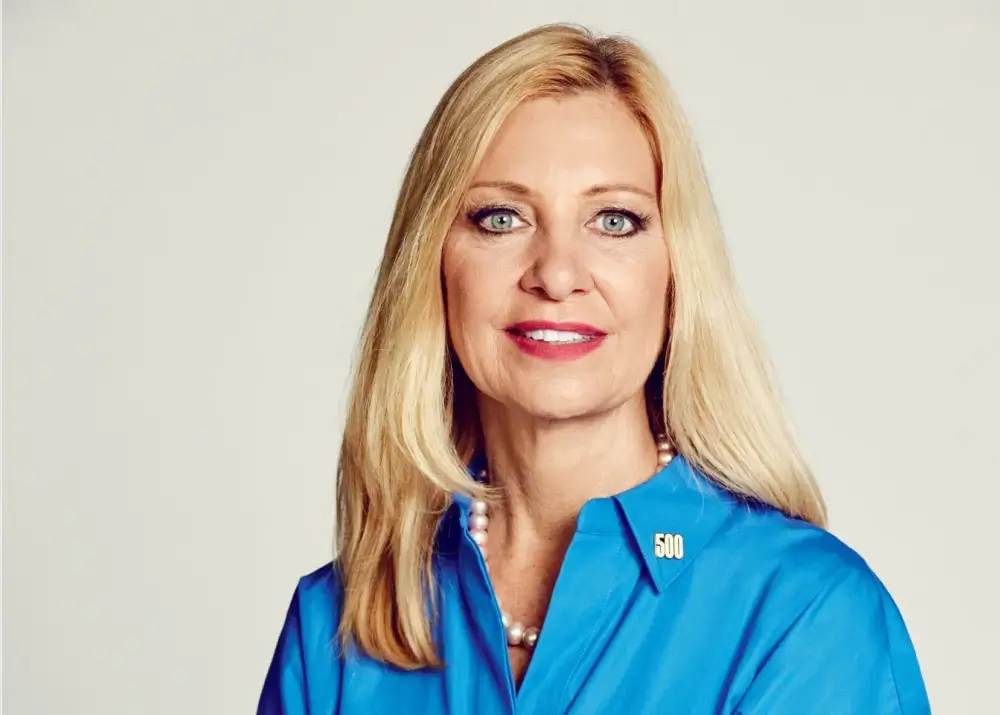
In February 2021, Karen Lynch took over as CEO of CVS Health, inheriting a company that was part pharmacy chain, part insurance giant, part healthcare provider—and wholly responsible for touching the lives of over 100 million Americans annually. The timing was extraordinary. COVID-19 vaccines were rolling out, the healthcare system was under unprecedented strain, and CVS had just completed a $70 billion merger with Aetna. Lynch had been part of that integration from the start. Now she was responsible for making the entire vision work.
The Weight of Loss, The Power of Resilience
Karen was twelve years old when her mother died by suicide. The trauma fractured her world. She and her three siblings were raised by their aunt, growing up without the stability most children take for granted. Her Aunt became her mentor as well as role model. Unfortunately, Karen lost her to emphysema, lung and breast cancer.
That loss shaped everything. It taught her that healthcare isn’t an abstract business challenge; it’s deeply personal. It instilled a work ethic born of necessity. And it gave her an empathy that would later define her leadership style in ways business schools can’t teach.
Lynch put herself through Boston College, relying on scholarships, student loans, resident assistant positions, and waitressing jobs. A high school teacher named Mr. Baltren, an active BC alum himself, had urged her to apply. She studied accounting, earning her bachelor’s degree before completing an MBA at Boston University’s Questrom School of Business. Her career began at Ernst & Young as a Certified Public Accountant, where she developed the financial acumen that would underpin every strategic decision to come.
Building an Empire
Lynch’s trajectory through healthcare was strategic. She held executive positions at Cigna and served as President of Magellan Health Services, mastering the complexities of behavioral health and pharmacy benefits. Each role expanded her understanding of healthcare’s fragmented ecosystem and its fundamental failures.
In 2012, she joined Aetna as executive vice president and head of specialty products. Three months in, she led the integration of Coventry Health Care, then the largest healthcare acquisition on record. It was a baptism by fire, and she emerged with a reputation for executing complex mergers while maintaining operational stability.
In 2015, Lynch became Aetna’s first female president—a position she held through CVS Health’s monumental $70 billion acquisition of Aetna in 2018. When most executives would have focused on protecting their turf during a merger, Lynch focused on integration. She understood that the real opportunity wasn’t in preserving two separate companies but in creating something entirely new: a healthcare ecosystem that connected insurance, pharmacy, and primary care.
Taking the Reins During a Pandemic
On February 1, 2021, Lynch became president and CEO of CVS Health. The timing couldn’t have been more challenging, or more consequential. COVID-19 was ravaging the country, and Americans needed solutions, not press releases.
Lynch delivered. Under her leadership, CVS Health administered COVID-19 vaccines in more than 40,000 long-term care facilities and CVS Pharmacy locations across all fifty states, Puerto Rico, and Washington, D.C. While other companies talked about their pandemic response, CVS became the pandemic response for millions of Americans. The scale was unprecedented; the execution was flawless.
But Lynch’s vision extended beyond crisis management. She overhauled CVS’s drug pricing model, introducing CVS CostVantage—a cost-plus approach that based prescription prices on what CVS paid plus a small markup. In an industry notorious for opaque pricing and inflated costs, this transparency was revolutionary. She was attacking the very business model that made healthcare unaffordable.
Her appointment made her the highest-ranking female CEO on the Fortune 500 list at the time, and she ranked number one on Fortune’s Most Powerful Women list for three consecutive years. The recognition reflected not just her title but her impact—leading a company with more than 300,000 employees and touching the lives of over 100 million people annually through 9,900 pharmacies, 1,000-plus MinuteClinic locations, and insurance products serving an estimated 34 million people.
When the Board Says Goodbye
In October 2024, CVS Health’s board replaced Lynch as president and CEO with David Joyner, an internal executive from CVS Caremark. The move came amid mounting challenges in the company’s Medicare Advantage business and pressure on medical costs. After nearly four years at the helm, Lynch’s tenure ended not with celebration but with tough questions about strategy and execution.
The departure was a reminder that even the most powerful leaders operate within constraints—market forces, board dynamics, quarterly expectations. Lynch transitioned to an advisory role, her legacy intact but incomplete. She had transformed CVS from a pharmacy chain into a healthcare platform, but the ultimate vision—simple, affordable, personalized care for every American—remained aspirational.
The Legacy of Showing Up
Karen Lynch’s story isn’t a simple arc from adversity to triumph. It’s messier, more human. She lost her mother at twelve, worked her way through college, climbed to the pinnacle of corporate America, delivered results during a pandemic, and then stepped aside when the board decided on different leadership. What remains is the example she set: that vulnerability is strength, that healthcare is personal, and that authentic leadership means taking up space even when others wish you wouldn’t.
Her aspiration was never about titles or rankings. It was about using healthcare’s vast resources to actually help people—to make their lives simpler, healthier, better. Whether at CVS or in whatever comes next, that mission continues. Because for Karen Lynch, healthcare was never just business. It was always personal.