Healthcare has mastered the art of intervention but struggles with anticipation. It waits for illness to escalate, for systems to overflow, for costs to spike and only then does it respond. The problem isn’t capability. It’s timing. And more importantly, it’s design.
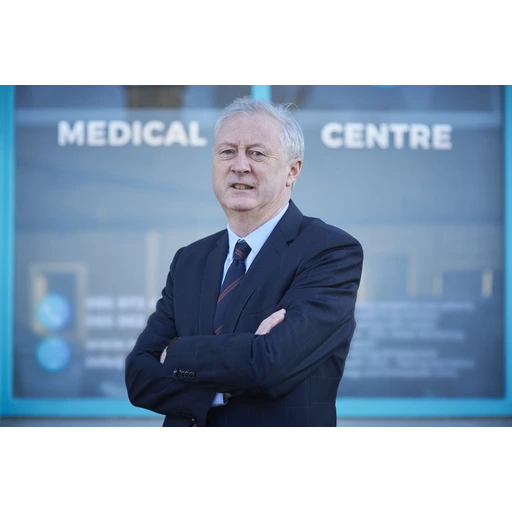
Martin Curley has spent years questioning that design.
Having worked at the intersection of technology, manufacturing, and global enterprise, he brings an outsider’s clarity to healthcare’s most entrenched challenges. Where others see complexity, he sees misalignment. Where others see constraints, he sees systems waiting to be reimagined. His approach borrows from industries that thrive on precision and applies that thinking to a sector that has long relied on reaction.
At the core of his work is a simple but radical shift: move care earlier, closer, and smarter. His “Stay Left, Shift Left – 10X” philosophy isn’t just a framework, it’s a call to redesign healthcare around people, not institutions.
Curley isn’t chasing incremental progress. He’s challenging the system to evolve to a higher level of maturity.
His recent book on Stay Left, Shift Left-10X has been well received around the world and BMJ Leader recently published a paper of his proposing a new theory of the business for health based on the concepts of staying and shifting left, leveraging exponential digital technologies.
Intrigued by this re-engineering of healthcare’s DNA, we engaged him in a conversation to unpack the thinking behind it.
Below are the excerpts from the interview:
Martin, you have led innovation across global giants like Intel, Mastercard, General Electric, and Philips. How have these diverse industry experiences shaped your approach to digital transformation in healthcare?
Well, it has been a real privilege to work for companies of this caliber all around the world, and there’s a real opportunity to practice what Franz Johansen calls the Medici Effect, which is the fact that breakthroughs happen at the intersections of disciplines and industries. Through my experiences—for example, helping lead at Philips on the Symphony project automating Philips’ first shaver line, or digital twin efforts at General Electric SuperAbrasives, or developing the diffusion intrabay technology at Intel—these are all technologies, and particularly the architecture and designs of these automation solutions, which can be applied in healthcare to drive significant improvements in outcomes and productivity.
One of the key problems that I see in healthcare, despite very hard-working clinicians, is productivity, and it’s my opinion that the marginal efficiency of capital for national health systems is decreasing significantly and almost approaching zero. We have examples of both in Ireland with the HSE and in the UK with the NHS: significant increases in expenditure and healthcare workforce have yielded very little increased output in terms of the number of patients seen or composite output.
We can think about healthcare almost as a manufacturing industry or indeed a service industry, but at the core of the approaches that I have used in the high-tech industry is the idea of synchronization of four components that are critically involved in the manufacture of a product or a service. These are man, machine, material, and methods, and this really applies in healthcare. For example, in Ireland, the slogan of Sláintecare, the national health strategy, is “right care, right place, right time,” and the synchronization of what I call the four M’s is at the core of this.
This means that we need to have the right man or woman, the right material, and the right method available on the right machine at the right time. So, taking automation approaches that have worked in other industries and applying this thinking to healthcare can be particularly beneficial.
Additionally, many modern factories or supply chains use the idea of the Theory of Constraints, originally developed by Elliott Goldratt in his book Critical Chain. This means designing the whole manufacturing process around the constraint, typically the most expensive piece of the production process. I think it can be very fruitful to apply this critical chain thinking, or Theory of Constraints thinking, to healthcare, and this is one of the core principles that underpins the strategy that I have developed and am advocating, called Stay Left, Shift Left 10X.
Unfortunately, for many health systems, the hospital is the constraint, and healthcare systems very often run on what A.R. Johnsen calls the “rule of rescue,” i.e., that we choose to give care at the last possible moment in the most expensive place—in an acute hospital. Typically, it costs 10 times, or 10X more, for care to be given in an acute hospital than, for example, in a primary care center or a GP surgery.
Unfortunately, very often, disease has progressed, and the costs of treating the disease are much higher. More unfortunately, mortality outcomes are a lot worse if a disease is discovered in a hospital setting. So, a core idea of Stay Left, Shift Left is to move the constraint out of the hospital by using modern digital tools and AI-powered diagnostics to detect disease earlier in a GP surgery, primary care center, or even in the home.
We can also use AI-powered digital tools to proactively help people manage their own health so that disease doesn’t occur or is delayed to the last possible moment. Increasingly, with the proliferation of vital signs sensing tools such as continuous glucose monitors and vital signs patches, we are now able to create digital twins of individuals and proactively monitor their health and give guided recommendations—for example, to take more exercise or eat healthier food to modulate blood sugar spikes.
There are many things that I’ve been able to take from other industries and apply to healthcare. However, it is important to recognize that there is a lot of sophistication in healthcare as well, with many brilliant clinicians (doctors and nurses) and amazing technologies. But I think what has been missing in healthcare, to a certain extent, has been an overall architecture and systems-thinking view.
The opportunity with digital now is to completely reimagine, re-architect, and re-engineer our health systems so that, in the future, they revolve around the person, their home, and their phone—not around the hospital and a hospital consultant. That is the great future prize.
As Professor of Innovation at Maynooth University and Director of the Digital Health Ecosystem at the Innovation Value Institute, how do you bridge academia, industry, and policy to accelerate meaningful digital health innovation?
At the core of our approach for transforming the health industry is the paradigm of Open Innovation 2.0, which I had the privilege of co-developing with Bror Salmelin and other leaders at the European Open Innovation Strategy and Policy Group, such as Geleen Meijer.
One of the core ideas is using the quadruple helix for all digital innovation efforts, where we have government, industry, academia, and most importantly, citizens and patients involved in the co-innovation process. Innovation is most powerful when it is conducted in the context of a common vision, and a core construct in Open Innovation 2.0 is the idea of a guided, open, collaborative ecosystem where many partners across the quadruple helix come together with shared values to co-innovate towards a shared vision.
In Ireland, for example, and globally, we use the vision of Stay Left, Shift Left 10X to guide our innovation efforts, and this is fully aligned with the Irish government’s policy of Sláintecare, which is all about shifting care to the community from the acute hospital sector and providing the right care in the right place at the right time.
By aligning our co-innovation efforts with national health policy, and then involving clinicians, patients, health leaders, academics, technologists, and particularly patients in the co-innovation process, we ensure alignment and that everybody has a voice in the innovation process.
The process of health living labs is particularly useful in allowing us to introduce disruptive technologies in a managed, non-threatening way, and the involvement of clinicians and patients in this agile, iterative co-innovation process is critical.
There are five key steps in this process. The first is developing the concept. Then we move to first patient, where we typically have a clinician and a patient involved, and we are trialing the digital solution. If that’s successful, we rapidly iterate and move to a proof of concept, which typically involves 10 patients and 2–3 clinicians. If that continues to be successful, we expand to a demonstrator, which can involve between 100 and 500 patients.
All the time, as we progress the digital solution through the innovation pipeline, we are iterating the innovation while checking for clinical, technical, and business efficacy. Finally, if the demonstrator is successful, we prepare a business case and move to the final phase, which is broad adoption.
A brilliant example of the health living lab process in use is the development and deployment of a mobile medical diagnostics (MMD) solution in Ireland, which is about moving equipment, not patients. Mary Jones, a radiographer, had the vision for this business and this solution sends a mobile X-ray machine to a nursing home or to a person’s home if somebody has fallen, rather than requiring the person to be transferred, typically by ambulance, to an ED department where they may have to wait 6–10 hours for an X-ray.
This solution has proved to be very valuable and worthwhile. It has gone through the living lab process and is now deployed across Ireland, adding significant value. Recently MMD Chief Medical Officer Dr John Sheehan reported that over 90% of hospital ambulance transfers are avoided.
During your tenure as CIO and Director of Digital Transformation at Ireland’s Health Service, what were the most critical systemic barriers to digital transformation, and how can health systems globally overcome similar challenges?
Unquestionably, the biggest systemic barrier to digital transformation is the culture that exists in many healthcare systems. Healthcare systems are typically hierarchical, command-and-control systems, and this kind of organizational architecture directly repels new innovations.
Professor Wim Van Haverbeke of the University of Antwerp has created an excellent business school case study looking at my experience trying to drive digital transformation in the Irish healthcare system in the HSE. To bring the case study to its essence, it is about the clash of cultures. The culture I was trying to drive, I would call “move fast and make things,” and unfortunately, the health system culture that this collided with has often been described as “the computer says no” by UK Health Secretary Wes Streeting.
There were so many innovative clinicians who wanted to innovate and adopt new solutions, but the culture and the processes were completely misaligned with innovation objectives. This created a lot of friction and stress.
The way I tried to address this issue was to create a subculture for my HSE digital transformation and innovation team. Using the Razzetti Culture Canvas, I was able to construct a culture that was agile, iterative, open to innovation, and executed at a fast beat rate.
For example, we used daily stand-up meetings, which are more common in software engineering and agile scrum processes, to actively manage and measure the performance of our digital innovations.
So, what I advocate is that health systems move to what I call a 4E culture rather than the 4C culture that is more common in health organizations. 4C is all about compliance, control, and constriction—and of course, we do need management processes in health systems—but 4E is about envisioning, enabling, and empowering employees to excel. I believe this would be a much more productive culture for health systems and health workers.
I’ve written about these two types of culture in my new book with Ester Baldwin, Managing Innovation in the Digital World.
The other systemic barrier is education and knowledge about systems innovation and new proactive digital health strategies. This is why, in 2019, I founded a national master’s in digital health transformation in Ireland and, thankfully, got support from most of the digital health professors in the eight research universities across Ireland.
We co-designed this new master’s and co-delivered it across many of the campuses of the research universities. The goal was to establish a critical mass of leaders—mainly clinical, but also technical and policy leaders—who were educated and embraced the principles of Stay Left, Shift Left 10X and the possibility of a wide-scale digital transformation of our health system.
It’s important to note that digital transformation is a series of deep, cohesive cultural, process, and technological changes. Ultimately, this is the goal—to achieve a metamorphosis of our health systems. I believe we were successful in Ireland, where we trained about 230 clinicians and health leaders. Through a process where students had to deliver a digital change project rather than writing a 30,000-word dissertation, we were able to introduce a stealth mechanism of change across the health system—and it made a real difference.
You have been instrumental in shaping the Open Innovation 2.0 paradigm through your work with the European Commission. How does open innovation specifically unlock exponential change in digital health ecosystems?
It was my privilege to chair the European Commission’s Open Innovation Strategy and Policy Group and to work with my colleague at the European Commission, Bror Salmelin, and to steward 10 years of research on open innovation around the world, which led to the creation of the Open Innovation 2.0 paradigm.
Open Innovation 2.0, or OI2 for short, is a systems innovation methodology for driving structural change in industries using digital technologies. Because OI2 works to deliver multiplicative rather than additive outcomes, the results it delivers are exponential and supranormal.
A core instrument of OI2 is the notion of a guided or directed open collaborative ecosystem. This is where many parties come together with a shared vision and shared values and work collaboratively to build an integrated solution that manifests that vision, rather than coming with point solutions, which then require an unnatural effort to fit together.
Academics at Politecnico di Milano published a paper on academics as orchestrators of continuous innovation systems in 2015 and made the point that these open collaborative ecosystems are a fundamental mutation in the business competitive landscape.
Because of the overarching vision that guides the open collaborative ecosystem, the collaboration and cooperation that occur—instead of cutthroat competition—mean that there is much better, and perhaps optimal, leverage of the assets, energy, intellect, and momentum of all the actors in the ecosystem.
This kind of approach can be particularly beneficial in healthcare systems, which can be described as complex adaptive systems. Open collaborative ecosystems exhibit a phenomenon known as emergence, which refers to the process where complex patterns, properties, or behaviors arise from the collective interactions of constituent members of the ecosystem—creating a whole that is not only different but far greater than the sum of the parts.
When these interactions and emergence take place in the context of a master-plan vision like Stay Left, Shift Left 10X, the outcomes and outputs can be extraordinarily powerful and large.
Professor Rina Yuana, based in Indonesia, has been simulating the outputs of open collaborative ecosystems, and her research shows that revenues from companies for the first two years or so in such ecosystems grow linearly. However, after about two years, when the ecosystem hits critical mass, companies start to experience exponential growth. This is a very interesting finding.
In Stay Left, Shift Left – 10X, you advocate for keeping populations “on the left side” of the health continuum. What practical steps can governments and healthcare providers take today to operationalize prevention and early intervention at scale?
There are many things governments and healthcare providers can do to operationalize prevention and early intervention at scale. One of the simplest and cheapest options, for example, is to roll out national health literacy programs to inform citizens about wise choices for nutrition, exercise, and related behaviors.
This is an area of very high leverage. If we think about the determinants of health, 40% of our health outcomes come from behavioral aspects such as the food we eat, quality of nutrition, the level of exercise we get, the quality of our sleep, and the level of stress we are under. Our genetics typically make up 30% of outcomes, environmental conditions make up 15%, but just 10% of outcomes are correlated with the quality and spend in the health system.
I talk about this extensively in my book on Stay Left, Shift Left 10X. In Europe, we spend, on average, 97% of our health budgets on illness—helping restore people from illness to health—and just 3% on proactive and preventative healthcare.
So, for me, the lowest-hanging fruit for governments would be to significantly increase spending on health literacy, education, digital literacy and proactive wellness initiatives. I would suggest that 10% of the overall health spend is a very good target. I believe this would have a disproportionately positive impact on improving population wellness and would also result in a significant reduction in costs.
The development of new digital health technologies is going to enable a rather dramatic shift to the left. Diagnostics that were previously only available in hospitals, often with long waiting lists, are now going to be routinely available in GP surgeries or even in the home.
Examples include, for instance, the Eko 500 stethoscope, which can now perform AI analysis of ECGs and detect heart valve issues in a GP surgery. Some doctors are even prescribing this directly to patients.
A very important development is the use of PPG (photoplethysmography) in mobile phones to allow individuals to check their own vital signs—such as heart rate, respiration rate, and blood pressure—or even infer results previously only available from blood tests.
The ability to use your mobile phone and, in just 60 seconds, run a comprehensive vital signs test covering areas like cardiovascular, respiratory, or even mental health is—and will be—a spectacular breakthrough. Companies like You(th) are bringing these capabilities to market as we speak.
Unquestionably, these are breakthrough technologies that will help center health around us as individuals—our homes and our phones—rather than around hospitals and consultants.
The “Shift Left” concept emphasizes earlier, digitally enabled intervention and patient empowerment. What role do interoperable platforms and ecosystem collaboration play in making this vision achievable?
Yes, the Shift Left concept emphasizes earlier, digitally enabled detection and intervention, along with patient empowerment. It is about optimizing lifestyle pillars such as nutrition, sleep and daily exercise, while achieving biomarker mastery monitoring metabolic health and vital health indicators to detect subtle shifts years before disease progresses and then early intervention, addressing sub-clinical changes before symptoms onset.
Each of the point-solution diagnostics that come to market—like continuous glucose monitors, AI-enabled stethoscopes, or AI-enabled VO2 max measurements—makes important contributions. But imagine the power of all this information being seamlessly collected onto a common platform, available for both the individual and their clinician, combined with an AI coach that can interpret that data and provide real-time feedback.
This is the vision of where we need to go.
At Maynooth University, we have a vision of something we call the SPINE—a Secure Patient Information Network Exchange—to enable this.
Colin Henry, the Chief Clinical Officer of the HSE, spoke at our International Digital Health Summer School in 2024 and suggested the vision of “one patient, one record.”
Within a year, we had built a minimum viable platform led by HSE Social Inclusion Lead Maxine Radcliffe, which we call the SPINE, which attempts to do exactly this.
At the International Digital Health Summer School in 2025, in collaboration with 16 ecosystem partners, we demonstrated 10 usage models for digital health where all the different solutions—whether apps, Internet of Things technologies, or diagnostics—worked seamlessly together, empowering patients and informing clinicians with a full picture of an individual’s health story.
The consequence of this is healthier people, earlier interventions, better outcomes, improved patient experiences, and better clinician experiences.
In the past, one of the key cognitive loads on clinicians was trying to synthesize fragmented patient data into a cohesive narrative. Now, with the SPINE, that information is unified—and even supported by AI-generated summaries that highlight the most pertinent insights for a given situation.
You describe digital transformation in healthcare as a moral imperative rather than a technological upgrade. Could you elaborate on why leadership mindset is as critical as technology adoption?
Yes, mindset is hugely important.
Satya Nadella and others talk about the importance of a growth mindset. Closely aligned with this is the concept of culture. Peter Drucker famously said, “Culture eats strategy for breakfast.”
Supporting this is a quote from Lou Gerstner, who said, “I came to see in my time at IBM that culture isn’t just one aspect of the game—it is the game.”
Leaders in an organization, and their observed behaviors, drive the culture. A technology, on its own—no matter how exciting or disruptive—will be useless unless it drives process and cultural change. This is either enabled or disabled by the mindset and culture within the organization.
We need to move beyond the culture of individual organizations. Health systems are complex adaptive systems, so we need to think about—and create—an ecosystem-wide culture.
While serving as Director of Digital Transformation and Open Innovation at Ireland’s HSE, I set up a subculture called “Move Fast and Make Things” and used the Razetti culture design canvas to shape it. Values included “seeing is believing,” which emphasizes building prototypes rather than just discussing ideas, and “showing up is 50% of success,” which highlights commitment and presence.
Another key focus was building high-trust, high-capability relationships that sustain projects when they inevitably encounter challenges.
Having delivered keynote talks across five continents, what global patterns are you observing in digital health maturity, and which regions are setting benchmarks for ecosystem-driven healthcare innovation?
There is a lot of innovation happening around the world.
I recently had the opportunity to do a speaking tour with my new book on Stay Left, Shift Left 10X across 11 cities in Southeast Asia, Australia, and New Zealand. I observed many impactful innovations.
Notably, the Australian Digital Health Agency, led by Amanda Cattermole, is ranked as the number one digital health agency in the world and is doing very important work in advancing Australia’s health system.
However, the best example of true ecosystem innovation—happening in a synergistic and coordinated manner—is Singapore.
In Singapore, there is strong government support and a clear vision for a healthier future through initiatives like Healthier SG, including population wide health literacy focus and where citizens are incentivized to walk a certain number of steps per day and adopt healthier eating habits.
I had the opportunity to deliver a masterclass at KTPH Hospital in Singapore, where I witnessed an immaculate hospital environment, a happy and healthy staff, and excellent use of digital and data throughout the system.
This is the outcome of a country where the government is proactive about health and has invested effectively across the ecosystem. It is no surprise that Singapore is consistently ranked among the top healthcare systems in the world and importantly Singapore is ranked number one globally in Health Life Expectancy at Birth (HALE). The Singapore average HALE is 76.2 years which is 12.5 years higher than the global HALE average demonstrating these approaches work.
Looking ahead to 2030 and beyond, what bold shifts must policymakers, clinicians, and technologists embrace today to build a predictive, personalized, and participatory healthcare future?
I would suggest that policymakers, clinicians, and technologists work together toward a shared vision—and I propose that vision to be Stay Left, Shift Left 10X as a new theory of the business for health.
This requires a transition from existing paradigms to future paradigms that I call the 10 Copernican Shifts of Health. These include shifts such as from illness to wellness, from hospital to home, from analog to digital, from paternalism to partnership, and from episodic to continuous care.
When these shifts are progressed in unison, they can create compounding and highly nonlinear results.
I believe that a leapfrog to a new kind of health system can be achieved within the current funding envelope of national health systems because modern technologies are far cheaper, faster, and more effective than the legacy systems that underpin today’s infrastructure.
What we need are bold, brave steps—and a demonstration of political and clinical will—to deploy digital with a proactive health mindset and drive a true metamorphosis of our health systems.
Not only is it possible—it is absolutely essential.
Let’s do this together.